Cryptomeria japonica: The Majestic Japanese Cedar
The Cryptomeria japonica, widely known as the Japanese cedar or Japanese redwood, is a towering evergreen conifer that holds a place of profound cultural and ecological importance. Known in Japan as Sugi (杉), this tree is the sole species within the monotypic genus Cryptomeria (meaning "hidden parts") and belongs to the cypress family, Cupressaceae.
While endemic to Japan, the Sugi has been introduced globally for its exceptional timber and ornamental beauty, becoming a staple in forestry plantations from the Azores to the eastern Himalayas.
Key Facts
- Scientific Name: Cryptomeria japonica
- Common Names: Japanese cedar, Japanese redwood, Sugi
- Conservation Status: Near Threatened (IUCN 3.1)
- Maximum Height: Up to 60 meters (200 ft)
- Native Range: Endemic to Japan
- Primary Uses: Construction timber, ornamental gardening, and spiritual symbolism
Botanical Description and Identification
The Japanese cedar is a massive evergreen capable of reaching heights of 60 meters with trunk diameters up to 4 meters. It is characterized by its reddish-brown bark that peels in distinctive vertical strips. Its needle-like leaves, measuring between 0.5 and 1 cm, are arranged spirally along the branches.
The tree produces globular seed cones approximately 1 to 2 cm in diameter, typically containing 20 to 40 scales. While it superficially resembles the giant sequoia (Sequoiadendron giganteum), it can be distinguished by its longer leaves, smaller cones, and harder trunk bark.
Growth and Habitat
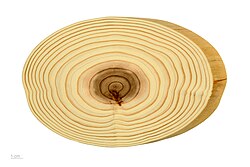
Cryptomeria thrives in forests with deep, well-drained soils and warm, moist conditions. Under these ideal circumstances, the species is fast-growing. However, it is highly intolerant of cold, dry climates and poor soil quality.
Distribution and Endemism
Although Cryptomeria japonica is native to Japan, it has a long history of cultivation elsewhere. In China, it has been grown for so long that it is often mistaken for a native species. However, genetic analysis of ancient populations, such as those on Tianmu Mountain, suggests these were introduced from Japan.
In the mid-19th century, the species was introduced to the Azores for wood production. Today, it is the most cultivated species in the archipelago, covering over 12,698 hectares—roughly 60% of the region's production forests.
Timber and Mechanical Properties
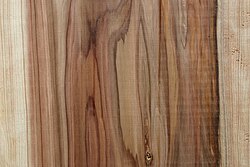
The timber of the Japanese cedar is highly prized for being lightweight, strong, and naturally resistant to decay, insects, and weather. It is characterized by a pleasant fragrance and a reddish-pink hue. In Japan, it is used for everything from interior panelling to general construction, while in India (where it is called Dhuppi), it is favored for house building.
The wood is easy to saw and season, making it ideal for veneers, plywood, boxes, and furniture. Interestingly, wood that has been buried turns a dark green color, which is highly valued by craftsmen.
| Property | Value/Detail |
|---|---|
| Initial Density (Dry Air) | 300–420 kg/m³ |
| Young's Modulus (Longitudinal) | 8017 MPa |
| Young's Modulus (Radial) | 753 MPa |
| Young's Modulus (Tangential) | 275 MPa |
| Resin Components | Cryptopimaric and phenolic acid |
Ornamental Use and Cultivars
Beyond forestry, Cryptomeria japonica is a popular ornamental tree in temperate regions of North America, Europe, and Britain. Many dwarf cultivars, such as 'Tansu' and 'Little Diamond', are used in bonsai and rock gardens.
A notable cultivar is 'Elegans', which retains its juvenile foliage throughout its life, resulting in a smaller, shrubby form (5–10 meters tall). Several varieties, including 'Golden Promise' and 'Spiralis', have received the Royal Horticultural Society's Award of Garden Merit.
Cultural Symbolism and History
In Japan, Sugi is deeply intertwined with spirituality and is frequently planted around shrines and temples. A famous example is the Cedar Avenue of Nikkō, a stately avenue over 65 km long planted to protect visitors from the sun.
One of the most iconic specimens is the Jōmon Sugi on Yakushima, a UNESCO World Heritage Site. This ancient tree is estimated to be between 2,170 and 7,200 years old, making it one of the oldest and largest of its kind.
Fossil Record
The genus has a extensive fossil history. The earliest records date back to the Late Eocene in Russia (C. kamtschatica) and the Oligocene in Primorye. During the Neogene, the genus was well-represented across Europe and Japan, with species like C. rhenana found in Germany and Italy, and C. anglica found in England, Spain, and Iceland.
Frequently Asked Questions
Is the Japanese cedar actually a cedar?
While commonly called the Japanese cedar or redwood, it is botanically a member of the cypress family (Cupressaceae) and is the only species in the genus Cryptomeria.
What is the difference between Cryptomeria and Giant Sequoia?
Cryptomeria has longer leaves (0.5–1 cm) and smaller cones (1–2 cm) compared to the Giant Sequoia. Additionally, Cryptomeria has harder trunk bark, whereas the Giant Sequoia's bark is thick, soft, and spongy.
Why is Sugi important in Japanese culture?
Sugi is often associated with sacred spaces, commonly planted around temples and shrines. It also appears frequently in Japanese literature, such as in Yasunari Kawabata's The Old Capital.
Does Cryptomeria cause allergies?
Yes, pollen from Sugi (along with hinoki) is a major cause of hay fever in Japan.
Where can I find the oldest Cryptomeria tree?
The Jōmon Sugi on Yakushima Island in Japan is one of the oldest, with age estimates ranging from 2,170 to 7,200 years.