Cromer: A Historic Coastal Gem of North Norfolk
Perched on the rugged north coast of Norfolk, England, Cromer is a picturesque coastal town and civil parish known for its dramatic cliffs, maritime heritage, and world-famous seafood. Located 23 miles north of Norwich and just east of Sheringham, this seaside destination blends a rich history of fishing and rescue with the elegance of a traditional English resort.
With a population of 7,683 as of the 2011 census, Cromer serves as a hub for the North Norfolk district. Its unique geography, characterized by high cliffs and a strategic position on the North Sea, has shaped its identity from a medieval settlement into a beloved tourist destination.
Key Facts
- Location: North Norfolk coast, 23 miles north of Norwich.
- Famous Export: The Cromer crab, a primary source of local income.
- Landmarks: Cromer Pier (151m long) and the 18m tall Cromer Lighthouse.
- Natural History: Home to Pleistocene fossils, including a 700,000-year-old rhino found nearby.
- Notable Connection: Believed to have inspired Arthur Conan Doyle's The Hound of the Baskervilles.
The History of Cromer
Cromer's early origins are shrouded in some mystery, as it does not appear in the Domesday Book of 1086. The name first appears in a 1262 will and is thought to derive from "Crows' mere" (lake) or a north-country term for a "gap in the cliffs." By the 14th century, the area around the parish church was known as Shipden-juxta-Felbrigg before becoming known as Cromer.
Intriguingly, a second Shipden once existed but now lies beneath the sea, northeast of the pier. This site, marked by the now-invisible Church Rock, was the location of a medieval church. In 1888, a pleasure steamer named Victoria struck the remains of the church tower, leading to the rock being demolished for maritime safety.
Economy and the Famous Cromer Crab
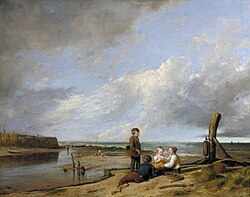
Historically, Cromer was a year-round fishing station. For centuries, the town's economy relied on a seasonal rotation: crabs and lobsters in the summer, longshore herring in the autumn, and cod during the winter. Since the 1980s, the focus has shifted almost exclusively to crustaceans.
The Cromer crab has become the town's most famous export and a vital economic driver. While lobster trapping continues, the crab trade remains the primary income for local fishermen, though the industry has faced challenges in attracting younger generations due to the demanding working hours.
Landmarks and Architecture
Coastal Wonders and the Pier
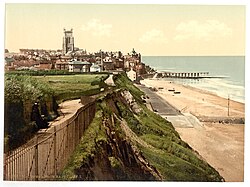
The town is framed by coastal cliffs reaching heights of 70 metres. These cliffs are a treasure trove for palaeontologists, containing Pleistocene fossils (fossils from the epoch between 2.5 million and 11,700 years ago). A notable find in nearby West Runton included a prehistoric rhino dating back 700,000 years.
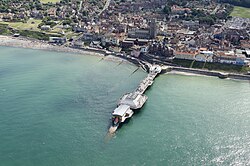
Dominating the seafront is Cromer Pier, a 151-metre structure dating from 1901 that houses the Pavilion Theatre. Nearby, the Cromer Lighthouse stands 81 metres above sea level, casting a light visible for 21 nautical miles.
Historic Buildings
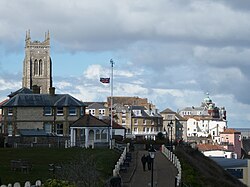
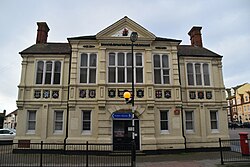
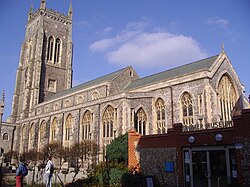
The Church of St Peter and St Paul, dating to the 14th century, features the highest bell tower in the county at 158 feet. The town also boasts several historic hotels, including the Hotel de Paris (originally a residence for Lord Suffield built in 1820), the 17th-century Red Lion Hotel, and the Victorian Sandcliff Hotel.
To the south lies Cromer Hall, rebuilt in 1829 in the Gothic Revival style. The hall is famously linked to Sir Arthur Conan Doyle, who visited in 1901. It is believed that local legends of the Black Shuck—a ghostly black dog—inspired Doyle to write The Hound of the Baskervilles.
Maritime Safety and the Lifeboat Station
Due to the lack of natural harbours along the North Norfolk coast, Cromer's lifeboat station became legendary. A station was established at the end of the pier in the 1920s to launch motor lifeboats beyond the breakers. Between 1917 and 1941, the town gained national fame for its daring rescues. Today, both offshore and inshore lifeboats continue to perform approximately two dozen rescues annually.
Transport and Education
Cromer's connectivity was transformed in 1877 with the arrival of the railway. While the original "High" station closed, the "Beach" station remains today. Historically, the town was linked to major cities including London, Manchester, and Birmingham. The area also featured the only railway tunnel ever built in Norfolk.
For education, the town is served by Cromer Academy for secondary students (ages 11-16), alongside a junior school and infants school. Residents are also served by various local radio stations, including BBC Radio Norfolk and Poppyland Community Radio.
Sport and Leisure
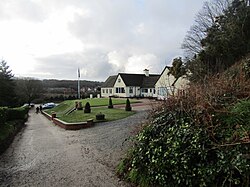
The Royal Cromer Golf Club, founded in 1888 and designed by the legendary Old Tom Morris, is one of Norfolk's oldest courses. It has a prestigious history, having hosted the British Ladies Amateur Golf Championship in 1905 and various PGA events.
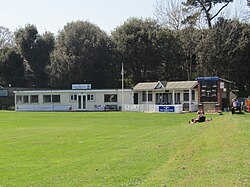
Other local sporting facilities include the Cromer Cricket Club and various football and tennis clubs, ensuring a vibrant community life.
Town Summary
| Category | Details |
|---|---|
| Population (2011) | 7,683 |
| Total Area | 4.66 km² |
| Primary Industry | Crab and Lobster Fishing |
| Key Landmark | Cromer Pier & Pavilion Theatre |
| Twin Towns | Crest (France), Nidda (Germany) |
Frequently Asked Questions
What is the Cromer crab?
The Cromer crab is a locally caught crab that has become the town's most famous culinary export and the primary source of income for the local fishing fleet.
How is Cromer linked to Sherlock Holmes' creator?
Sir Arthur Conan Doyle stayed at Cromer Hall in 1901. It is widely believed that the local legend of the Black Shuck, a spectral black dog, inspired him to write The Hound of the Baskervilles.
What is unique about the cliffs in Cromer?
The cliffs are rich in Pleistocene fossils. A significant find in the nearby West Runton area included a prehistoric rhino fossil dating back approximately 700,000 years.
Is there still a railway service to Cromer?
Yes, although the original Cromer High station closed, the Cromer Beach station (renamed simply "Cromer" in 1969) continues to serve the town.
What is the significance of the lifeboat station?
Because the North Norfolk coast lacks natural harbours, Cromer's lifeboat station became vital for maritime safety, gaining national fame for its rescues between 1917 and 1941.