Crocus: Botany, Taxonomy, and the Saffron Tradition
The genus Crocus represents a diverse group of flowering plants within the Iridaceae family. Known for their striking blooms that often signal the transition of seasons, these monocots are prized both for their ornamental beauty in gardens and their immense economic value in the form of saffron. From the snowy landscapes of early spring to the golden fields of autumn, the crocus is a botanical marvel of resilience and utility.
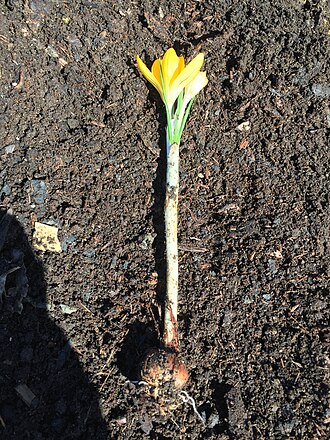
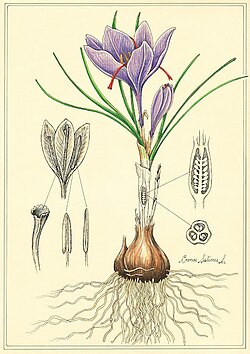
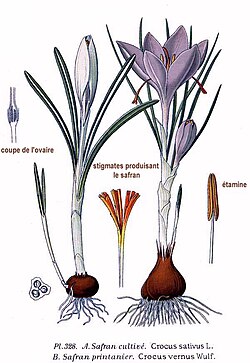
Botanically, crocuses are characterized by their corms—underground storage organs wrapped in a net-like papery tunic that allow the plant to survive dormant periods. Their growth cycle is a testament to efficiency, producing leaves and flowers that emerge directly from the soil.
Key Facts
- Scientific Classification: Belongs to the family Iridaceae and the order Asparagales.
- Primary Species: Crocus sativus is the most famous species, used to produce saffron.
- Morphology: Features a trifid (three-parted) stigma and three stamens.
- Distribution: Widely distributed across Europe and Asia.
- Cultivation: Includes both spring-blooming and autumn-blooming varieties.
Botanical Description and Morphology
The structure of the crocus is specialized for rapid growth. The plant consists of a corm, narrow leaves, and a distinct floral arrangement. The flower typically features three stamens surrounding a central style, which terminates in a trifid stigma—a three-branched structure that projects above the corolla (the petals of the flower).
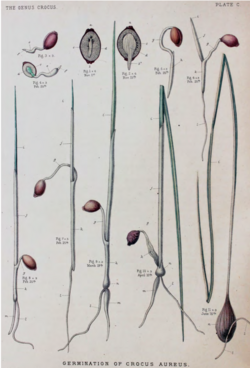
The reproductive cycle involves the development of capsules, or seedpods, which contain the seeds necessary for propagation. In some species, the germination process moves through successive stages from seed to seedling, ensuring the continuation of the species in various climates.
Taxonomy and Phylogeny
The classification of the genus Crocus is complex, with historians and botanists tracing its descriptions back to Linnaeus in 1753. Modern taxonomy divides the genus into two primary sections based on specific morphological traits:
- Section Crocus: A large group divided into six series.
- Section Nudiscapus: Species that lack a prophyll (a basal spathe or protective leaf-like sheath). The type species for this section is C. reticulatus.

Phylogenetic studies using DNA barcoding and molecular analysis continue to refine these groupings, exploring the evolutionary relationships between species across their native ranges in Europe and Asia.
The Saffron Crocus (Crocus sativus)
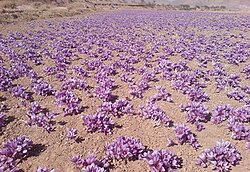
Among the many species, Crocus sativus stands out due to its role in producing saffron, one of the world's most expensive spices. Saffron is derived from the dried stigmas of the flower. This practice is ancient, as evidenced by Minoan frescoes from approximately 1650 BC depicting saffron gatherers.
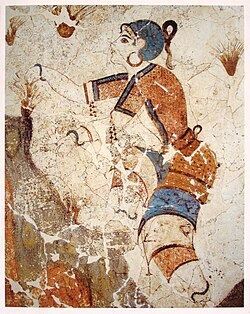
Today, large-scale cultivation continues in regions such as Iran, Turkey, and Kashmir, where the labor-intensive process of harvesting the delicate stigmas remains a vital economic activity.
Horticulture and Cultivation
Crocuses are popular in floriculture due to their ability to bloom in challenging conditions, sometimes appearing even through the snow. They are generally categorized by their blooming season.
Autumn-Flowering Species
Several species are cultivated specifically for autumn color. These include C. speciosus (hardy in zones 3-8), C. sativus (zones 5-8), and C. kotschyanus (zones 5-8). Other notable autumn varieties include C. banaticus, C. nudiflorus, and C. serotinus.
Spring-Flowering Species
Spring crocuses are often the first signs of life after winter. Hybrids such as C. 'E.A. Bowles' (a C. chrysanthus hybrid) are frequently used in landscape design to provide early-season vibrancy.
Summary of Crocus Characteristics
| Feature | Description |
|---|---|
| Family | Iridaceae |
| Storage Organ | Corm with papery tunic |
| Key Floral Parts | 3 stamens, trifid stigma |
| Primary Use | Ornamental and Spice (Saffron) |
| Major Sections | Crocus and Nudiscapus |
Frequently Asked Questions
What is the difference between Section Crocus and Section Nudiscapus?
The primary distinction is the presence or absence of a prophyll, which is a basal spathe. Species in Section Nudiscapus lack this structure.
Which species is used to produce saffron?
Saffron is produced from the stigmas of Crocus sativus.
In which climate zones can autumn crocuses be grown?
Depending on the species, autumn crocuses can be grown in various zones; for example, C. speciosus is hardy in zones 3-8, while C. sativus typically thrives in zones 5-8.
What is a corm in a crocus plant?
A corm is a swollen underground stem base that serves as a food storage organ, allowing the plant to survive dormancy and regrow each season.
Where are crocuses naturally distributed?
The genus Crocus is naturally distributed across various regions of Europe and Asia.