Lapeirousia: The Elegant Cormous Plants of Sub-Saharan Africa
In the diverse landscapes of sub-Saharan Africa, particularly within the unique fynbos ecosystems, grows a genus of plants known for their elegance and biological complexity: Lapeirousia. Belonging to the Iridaceae family, these plants offer much more than just visual beauty; they represent fascinating evolutionary adaptations and hold significant historical importance for both botanists and early human inhabitants.
While many species are modest in appearance, they are highly specialized organisms that have developed intricate relationships with the local insect populations. From their unique underground storage organs to their varied floral structures, Lapeirousia species are a testament to the evolutionary ingenuity found in Southern African flora.
Key Facts
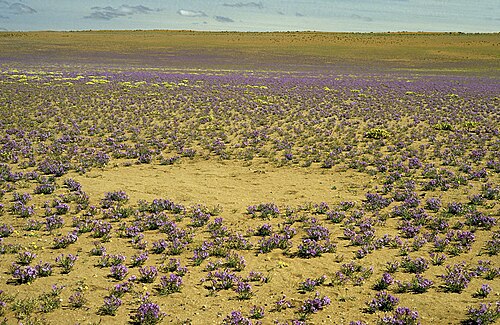
- Family: Iridaceae
- Distribution: Endemic to sub-Saharan Africa, with one-third of species found in fynbos.
- Growth Habit: Cormous plants (growing from underground storage organs called corms).
- Pollination: Highly adapted to specific flies, including the Nemestrinidae family.
- Historical Use: Corms were used as food sources by early hunter-gatherers.
Botanical Classification and Origins
The genus Lapeirousia was formally described by Pierre André Pourret in 1788. The name was chosen to honor his friend, the botanist Philippe-Isidore Picot de Lapeyrouse. Due to inconsistent historical spellings, the name has occasionally been misspelled as "Lapeyrousia" in various scientific references. It is important to note that the genus is not named after the French mariner Jean-François de Galaup, comte de Lapérouse, despite common misconceptions.
Scientific Taxonomy
Lapeirousia is classified within the following biological hierarchy:
- Kingdom: Plantae
- Clade: Embryophytes, Tracheophytes, Angiosperms, Monocots
- Order: Asparagales
- Family: Iridaceae
- Subfamily: Crocoideae
- Tribe: Watsonieae
Physical Characteristics and Morphology
Lapeirousia are cormous plants, meaning they grow from a corm—a swollen, underground stem base used for nutrient storage. These corms are typically small, ranging from a campanulate (bell-shaped) to a triangular outline, and feature flat bases. The corms are protected by tunics, which are hard, woody layers.
The foliage consists of basal, often solitary, deciduous leaves. Depending on the species, these leaves may be linear and ribbed or plane and falcate (sickle-shaped). The plant's reproductive structures emerge on a scape (a leafless flower stalk), which can be either subterranean or aerial, and may be simple or branched.
The inflorescence—the arrangement of flowers on the plant—can take the form of a spike or a corymbose panicle. A defining feature is the presence of firm, green bracts (specialized leaves associated with flowers). These bracts can be small and equal in size, or one may be significantly larger, often featuring a keeled or ribbed texture.
The flowers themselves exhibit diverse symmetry. They can be actinomorphic (radially symmetrical) or zygomorphic (bilaterally symmetrical). The perianth (the outer part of the flower) may have a short or very long tube. Long, slender tubes are often an evolutionary adaptation to facilitate pollination by long-tongued flies. The fruit is a membranous capsule that contains numerous small, globose or angled seeds.
| Feature | Description |
|---|---|
| Storage Organ | Corm (campanulate to triangular) |
| Leaf Type | Basal, deciduous, linear or falcate |
| Flower Symmetry | Actinomorphic or Zygomorphic |
| Fruit Type | Membranous capsule |
| Primary Habitat | Sub-Saharan Africa (including Fynbos) |
Species Diversity and Regional Names
Approximately 26 species have been identified in Southern Africa. Because of their presence across different regions, they are known by various local names, such as painted petals, cabong, chabi, or koringblom (Afrikaans for "wheat flower"). Many species are noted for being scented, though the fragrance may only be released at specific times of the day.
Notable Species List
- Lapeirousia anceps
- Lapeirousia angustifolia
- Lapeirousia arenicola
- Lapeirousia barklyi
- Lapeirousia divaricata
- Lapeirousia dolomitica
- Lapeirousia exilis
- Lapeirousia fabricii
- Lapeirousia jacquinii
- Lapeirousia kalahariensis
- Lapeirousia kamiesmontana
- Lapeirousia littoralis
- Lapeirousia macrospatha
- Lapeirousia montana
- Lapeirousia odoratissima
- Lapeirousia oreogena
- Lapeirousia plicata
- Lapeirousia purpurascens
- Lapeirousia purpurea
- Lapeirousia pyramidalis
- Lapeirousia silenoides
- Lapeirousia simulans
- Lapeirousia spinosa
- Lapeirousia tenuis
- Lapeirousia verecunda
- Lapeirousia violacea
Evolutionary Significance and Pollination
One of the most compelling aspects of the Lapeirousia genus is its evolutionary relationship with pollinators. These plants have developed highly specific adaptations to attract various fly families, including Tabanidae, Acroceridae, Bombyliidae, and most notably, Nemestrinidae. This specialized interaction is a key area of study for biologists interested in co-evolution.
Beyond their scientific value, these plants hold cultural and historical weight. The names "cabong" and "chabi" are derived from Khoisan languages, reflecting the long-standing relationship between indigenous peoples and the local flora. Historically, the corms of several species served as an important food source for early hunter-gatherer societies.
Frequently Asked Questions
What is a corm?
A corm is a rounded, underground storage organ that functions similarly to a bulb but is composed of a solid stem tissue rather than fleshy leaf bases. It allows the plant to store nutrients and survive unfavorable conditions.
Where can Lapeirousia be found in the wild?
Lapeirousia is endemic to sub-Saharan Africa. A significant portion of its species diversity is concentrated in the fynbos biome.
Why are the flowers shaped differently in various species?
The variation in flower shape, such as long perianth tubes, is often an evolutionary adaptation to specific pollinators. For example, long tubes are designed to accommodate the mouthparts of long-tongued flies.
Are Lapeirousia plants edible?
Historically, the corms of several species were used as food sources by early hunter-gatherers, though they are primarily studied today for their biological and botanical importance.
What does "endemic" mean in relation to these plants?
When a plant is described as endemic to sub-Saharan Africa, it means that the genus is naturally found only in that specific geographic region and nowhere else in the world.