Criollos: The Social and Political Evolution of Spanish Descendants in the Americas
In the complex social hierarchy of the Spanish colonial empire, the Criollos (Creoles) occupied a unique and often contentious position. Defined as individuals of Spanish descent born in the Americas, Criollos were the bridge between the European motherland and the burgeoning societies of the New World. While they shared the same ancestry as the peninsulares (Spanish-born officials), their place of birth created a social and political divide that would eventually ignite revolutions across the continent.
Contrary to some historical narratives that portray Criollos solely as a small, wealthy elite, they were a diverse group. While many held significant land and power, others were menial workers or lived in poverty. In colonial cities, they often constituted the most numerous ethnic group, maintaining strong endogamous ties; for instance, records from Acatzingo in 1792 show that 73% of Spanish men married Spanish women.
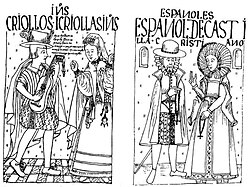
Key Facts
- Definition: People of Spanish descent born in the American colonies.
- Social Status: Ranked highly in the colonial caste system but generally below the peninsulares.
- Religion: Predominantly Roman Catholic.
- Political Role: Led the majority of the independence movements against Spain in the early 19th century.
- Regional Terms: Known as Californios (California), Tejanos (Texas), Nuevomexicanos (New Mexico), and Floridanos (Florida) in North America.
Colonial Culture and Social Dynamics
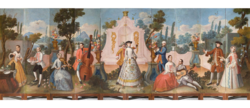
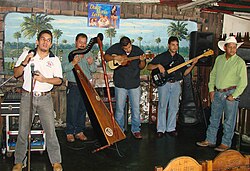
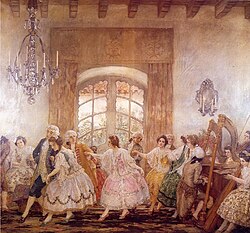
The culture of the Criollos was a synthesis of European traditions and local influences. This was most evident in music, where Spanish Baroque styles merged with indigenous and African elements. The Spanish introduced a wider musical scale than the indigenous pentatonic system, along with instruments such as guitars, violins, harps, and organs.
Religious life also served as a cultural melting pot. The Jesuits employed a "pedagogy of theatricality," using music and dance to attract indigenous and Black populations to the church. This resulted in a vibrant scene where European dances, like the Sarabande, were performed alongside the Zambra mora, a dance common among Black populations.
The Path to Freedom for Enslaved Populations
Within this colonial framework, the Law of Coartación (slave law) provided a legal mechanism for enslaved Black people to purchase their freedom through periodic payments. This, along with freedom granted through baptism or recognition by white fathers, led to a significant population of free Black people in Spanish America. Notably, the Spanish government offered refuge to fugitive slaves from the British Thirteen Colonies in Florida, leading to the establishment of Santa Teresa de Mose, the first legally sanctioned free Black town in what is now the United States.
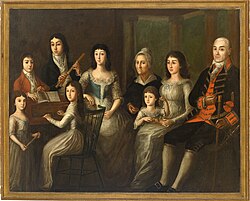
The Struggle for Independence
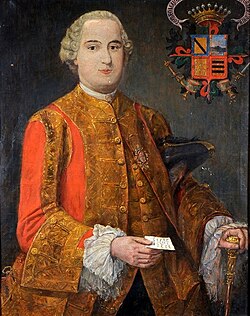
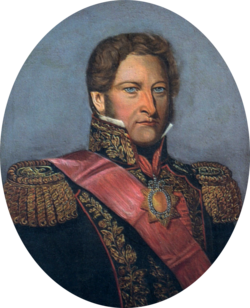
For much of the colonial era, the Spanish Habsburgs allowed the American provinces broad autonomy. However, the 18th-century Bourbon Reforms under Charles III shifted this dynamic. To fund global wars, the Spanish Crown increased wealth extraction and prioritized peninsulares for high administrative and ecclesiastical offices, displacing the Criollos.
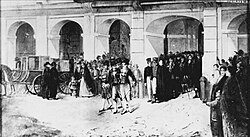
This systemic discrimination, coupled with the inspiration of the American and French Revolutions, pushed Criollo factions toward rebellion. Between 1809 and 1826, these factions led the fight for independence, eventually splitting the empire into several independent republics.
The Mexican Experience
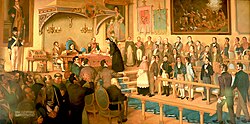
In New Spain (Mexico), the tension was particularly acute. Criollos initially used the term gachupines as an insult for peninsulares. Early attempts at autonomy, such as the 1563 plot by the sons of Hernán Cortés, were brutally suppressed. By 1810, priest Miguel Hidalgo y Costilla launched a campaign for independence.
Interestingly, many wealthy Criollos were initially hesitant to join Hidalgo, fearing that a total overthrow of Spanish rule would force them to share power with Amerindians and Mestizos. It was only when the Spanish Crown threatened their property rights and church power that the Criollo elite fully committed to independence. In 1821, a coalition led by Agustín de Iturbide established the Mexican Empire, concentrating power in the hands of the Criollo elite.
Central America and the United States
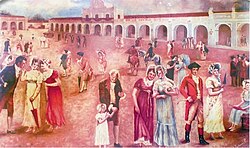
In Central America, independence was consolidated by 1821. While some conservative elites briefly joined the Mexican Empire, Central America became an independent republic by 1823. This era was marked by a struggle between liberal factions, led by General Francisco Morazan, and conservative elites, eventually leading to the collapse of the Federation in 1841.
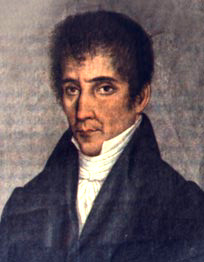
In the northern territories, Criollo identity evolved into localized identities: the Californios of Alta California, the Tejanos of Texas, and the Nuevomexicanos of New Mexico.
Summary of Criollo Social Structure
| Group | Origin | Typical Social Status | Political Power |
|---|---|---|---|
| Peninsulares | Born in Spain | Highest | Controlled top government/church offices |
| Criollos | Spanish descent, born in Americas | High | Local administration, land ownership |
| Mestizos | Mixed Spanish and Indigenous | Middle/Low | Limited political influence |
| Indigenous/Black | Native or African origin | Lowest | Minimal to no political power |
Frequently Asked Questions
![The Fagoaga Arozqueta family. A colonial Mexican criollo couple of Spanish [basque] ancestry with their ten children in Mexico City, New Spain, anonymous painter, ca. 1735. Museo Nacional de San Carlos of Mexico City.[26]](/images/44/6a/446a41743b4e430840a2da437526d082b389cb9f9fc204a0f85f3953bfdc9483.jpg)
What is the difference between a Criollo and a Peninsular?
The primary difference was their place of birth. Peninsulares were born in Spain (the Iberian Peninsula), while Criollos were of Spanish descent but born in the American colonies. This distinction led to significant social and political inequality.
Why did Criollos lead the independence movements?
Criollos were frustrated by the Bourbon Reforms, which stripped them of administrative power and privileges in favor of peninsulares. Their desire for political autonomy and the protection of their economic interests drove them to rebel against the Spanish Crown.
Did all Criollos support the Mexican independence movement from the start?
No. Many wealthy Criollos initially feared that a revolution would empower the lower castes (Amerindians and Mestizos) and threaten their own social standing and wealth. They joined the movement primarily when their own property and church privileges were threatened.
What was the Law of Coartación?
The Law of Coartación was a legal mechanism in Spanish colonies that allowed enslaved people to pay their owners in installments to purchase their own freedom, contributing to a larger population of free Black people in the region.
What happened to Criollo power after independence in Mexico?
Following independence in 1821, Criollos took firm control of the state and expelled many peninsulares. However, the early republic faced severe political instability, with leadership changing hands 48 times between 1825 and 1855.