Creatinine: Biological Role, Kidney Function, and Clinical Significance
Creatinine is a metabolic byproduct derived from the breakdown of creatine phosphate in muscles and protein metabolism. Produced at a relatively constant rate based on an individual's muscle mass, it serves as a critical biomarker in clinical medicine, primarily used to assess how well the kidneys are filtering waste from the blood.
While often confused with creatine—a compound used for energy production—creatinine is the waste product that the body must eliminate. Because it is excreted unchanged by the kidneys, measuring its concentration in the blood and urine provides a window into renal health.
Key Facts
- Primary Function: Acts as a key indicator of kidney function and glomerular filtration rate (GFR).
- Origin: Formed from the spontaneous breakdown of creatine and phosphocreatine in muscle tissue.
- Excretion: Removed from the blood mainly via glomerular filtration and proximal tubular secretion.
- Reference Range: Typically 0.6–1.3 mg/dL (53–115 μmol/L), though this varies by sex and muscle mass.
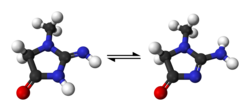
- Chemical Nature: A lactam and an imidazolidinone with the formula C4H7N3O.
Biological Production and Metabolism
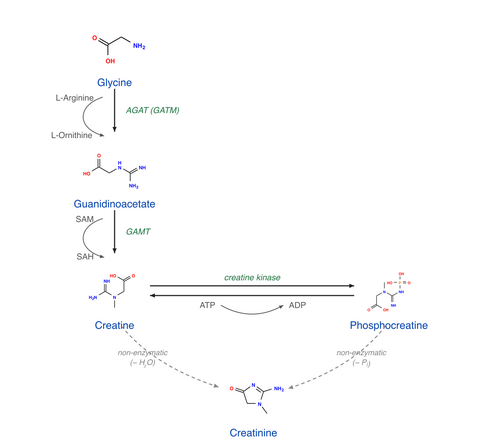
The journey of creatinine begins with creatine, which is synthesized primarily in the liver from the amino acids arginine and glycine. Once transported to the muscles and brain, creatine is phosphorylated into phosphocreatine (creatine phosphate), a high-energy compound that helps supply immediate energy via adenosine triphosphate (ATP).
Creatinine is formed through the spontaneous, non-enzymatic breakdown of these compounds. This process occurs continuously, meaning the amount of creatinine in the blood is generally stable unless kidney function is impaired or muscle mass changes significantly.
Creatinine and Kidney Function
The kidneys are the primary organs responsible for removing creatinine from the bloodstream. This occurs through glomerular filtration (the initial filtering of blood in the kidney's nephrons) and proximal tubular secretion. Because very little creatinine is reabsorbed back into the blood, its clearance rate is a reliable proxy for the Glomerular Filtration Rate (GFR).
Measuring Renal Health
Clinicians use several methods to interpret creatinine levels:
- Serum Creatinine: A direct blood measurement. A rise in this level often indicates damaged nephrons, though it is typically a late marker of kidney disease.
- Creatinine Clearance (CrCl): Calculated using both blood and 24-hour urine samples to estimate GFR.
- Estimated GFR (eGFR): A calculated value using serum creatinine along with variables like age, sex, and weight.
In cases of severe kidney dysfunction, CrCl may overestimate GFR because the kidneys may rely more heavily on tubular secretion to remove creatinine. To improve accuracy, certain substances like cimetidine or ketoacids can be used to reduce this secretion.

Factors Influencing Creatinine Levels
A high serum creatinine reading does not always signify kidney failure. Several non-renal factors can influence the results:
- Diet and Supplements: Consuming cooked meat (where heat converts creatine to creatinine) or taking creatine supplements can raise levels.
- Physical Activity: Intense exercise can increase muscle breakdown, leading to higher creatinine production.
- Muscle Mass: Individuals with higher muscle mass naturally produce more creatinine. Interestingly, research suggests women may have higher muscle protein turnover across their lifespan, which influences these algorithms.
- Hydration: Hypovolemia (low blood volume) can reduce GFR, leading to a pre-renal increase in creatinine.
Chemical Properties and Other Uses
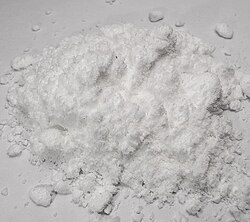
Chemically, creatinine is a white crystalline powder with a molar mass of 113.120 g/mol. It is soluble in water and decomposes at approximately 300 °C.

Beyond diagnostics, studies have indicated that creatinine possesses antibacterial properties, effective against various Gram-positive and Gram-negative strains, including some antibiotic-resistant bacteria. Notably, it does not affect the growth of fungi or yeasts, allowing researchers to use it to isolate fungi from environmental samples. There are also reports suggesting potential immunosuppressive properties.

Summary of Creatinine Properties
| Property | Value/Description |
|---|---|
| Chemical Formula | C4H7N3O |
| Molar Mass | 113.120 g/mol |
| Appearance | White crystals |
| Melting Point | 300 °C (decomposes) |
| Water Solubility | 90 g/L at 20°C |
| CAS Number | 60-27-5 |
Frequently Asked Questions
What is the difference between creatine and creatinine?
Creatine is a compound used by the body to produce energy in muscles and the brain. Creatinine is the waste product created when creatine and phosphocreatine break down naturally.
Why is serum creatinine used to test kidney function?
Because creatinine is produced at a constant rate and is excreted almost entirely by the kidneys, any significant increase in blood levels usually indicates that the kidneys are not filtering waste efficiently.
Can diet affect my creatinine test results?
Yes. Eating large amounts of cooked meat or taking creatine supplements can artificially increase serum creatinine levels, which may be misinterpreted as reduced kidney function.
What is eGFR and why is it better than a simple creatinine test?
eGFR (estimated Glomerular Filtration Rate) is a calculation that adjusts the serum creatinine level based on age, sex, and weight. This provides a more accurate picture of kidney health than a single creatinine value, which varies based on muscle mass.
How does the IDMS method affect creatinine readings?
The standardized isotope dilution mass spectrometry (IDMS) method often yields lower creatinine values than older methods. This can lead to an overestimation of GFR in patients with normal function, which may impact the dosing of certain medications like carboplatin.