Coupe de France: History, Format, and Legacy of the French Cup
The Coupe de France, known in English as the French Cup, stands as the premier knockout football competition in France. Organized by the French Football Federation (FFF), this prestigious tournament is celebrated for its inclusivity, opening its doors to every amateur and professional club across the nation, including those in overseas departments and territories.
Since its inception in 1917, the competition has evolved from a modest gathering of 48 clubs into a massive sporting event featuring over 8,500 teams. It is a tournament where the "magic of the cup" is truly alive, often pitting small-town amateur sides against the giants of Ligue 1.
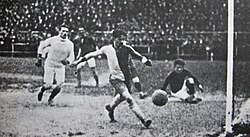
Key Facts
- Founded: 1917 (originally as the Coupe Charles Simon).
- Organizer: French Football Federation (FFF).
- Most Successful Club: Paris Saint-Germain (16 titles).
- Current Champions: Lens (2025–26 winners).
- Final Venue: Stade de France.
- Rewards: Qualification for the UEFA Europa League group stage and the Trophée des Champions.
The Evolution of a National Tradition
The tournament was created on January 15, 1917, by the French Interfederal Committee (CFI), the predecessor to the FFF. Driven by general secretary Henri Delaunay, the competition was designed under the spirit of union sacrée to be open to all clubs regardless of status. While major clubs initially resisted this egalitarian approach, the federation remained firm, establishing a tradition of inclusivity that persists today.
In its early years, the final migrated between various venues, including the Parc des Princes and the Stade Olympique Yves-du-Manoir in Colombes, before eventually settling at the Stade de France. A notable tradition began in 1927 when the President of France first attended the final to present the trophy to the winning captain, a practice that continues to this day.
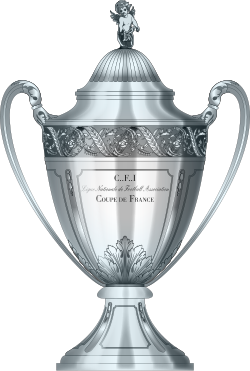
The "Petit Poucet" and Amateur Success
The Coupe de France is famous for its upsets. The Petit Poucet Plaque is awarded to the amateur club that achieves the best performance in the competition. Because rules often mandate that professional teams play away when drawn against lower-league opposition (specifically those two levels below them), amateur clubs gain a significant home-field advantage.
While rare, amateur success is possible. Since professionalism was introduced in 1932, only three amateur clubs have reached the final: Calais RUFC (2000), US Quevilly (2012), and Les Herbiers VF (2018). Furthermore, only two clubs from outside the top flight (Ligue 1) have actually won the trophy: Le Havre in 1959 and Guingamp in 2009.
Competition Format and Rules
The Coupe de France operates as a single-elimination knockout tournament. Pairings are determined by random draws, and each tie is decided in a single match. To avoid the endless replays seen in the early years—which once led to a coin flip to decide a winner between Olympique Lyonnais and Angoulême CFC—the FFF introduced extra time in 1968 and penalty shootouts in 1969.
Tournament Structure
The competition consists of 14 rounds. To manage travel costs, the early stages are organized regionally. The professional clubs enter the fray gradually as the tournament progresses:
- Rounds 1–3: District and regional league teams.
- Round 3: National 2 teams enter.
- Round 4: National 1 teams enter.
- Round 5: Ligue 3 teams enter.
- Round 7: Ligue 2 teams enter.
- Round of 64: Ligue 1 teams enter.
Overseas territories, including Guadeloupe, Martinique, French Guiana, and Réunion, hold their own qualifying competitions to earn a spot in the 7th round.
Player Numbering and Sponsorship
A unique quirk of the competition is the numbering rule: players are traditionally restricted to shirts numbered 1–20, with starters wearing 1–11. However, from the quarter-finals onward, players are now permitted to wear their standard club squad numbers. Regarding sponsorship, the FFF allows its own partners (such as Coca-Cola and Hyundai) to appear on kits, sometimes superseding the clubs' own sponsors.
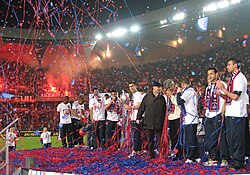
Historical Records and Dominance
Paris Saint-Germain (PSG) is the most dominant force in the competition's history, holding a record 16 titles and appearing in 21 finals. The club has frequently achieved domestic doubles and trebles, including a continental treble in 2025.
Regionally, the Île-de-France area has produced the most champions (25), followed by the Provence-Alpes-Côte d'Azur region. Individual records include managers Guy Roux and André Cheuva, who both led four different clubs to victory, and players Marquinhos and Marco Verratti, who have each won six titles.
| Club | Titles | Runners-up | Notable Years Won |
|---|---|---|---|
| Paris Saint-Germain | 16 | 5 | 1982, 2004, 2025 |
| Marseille | 10 | 9 | 1924, 1969, 1989 |
| Saint-Étienne | 6 | 4 | 1962, 1975, 1977 |
| Lille | 6 | 3 | 1946, 1955, 2011 |
| Monaco | 5 | 5 | 1960, 1985, 1991 |
Frequently Asked Questions
What happens if a Coupe de France match ends in a draw?
Since the late 1960s, matches that end in a draw after regulation time proceed to extra time and, if necessary, a penalty shootout to determine the winner. Replays were completely scrapped after the 1974–75 season.
Which amateur clubs have reached the final?
Only three amateur clubs have reached the final since professionalism began in 1932: Calais RUFC in 2000, US Quevilly in 2012, and Les Herbiers VF in 2018.
How do overseas teams participate in the tournament?
Teams from overseas departments and territories (such as Martinique or New Caledonia) compete in their own local knockout cups. The winners of these competitions earn a qualification spot to enter the Coupe de France at the 7th round.
What are the rewards for winning the Coupe de France?
The winning club receives the trophy, a place in the Trophée des Champions match, and qualification for the group stage of the UEFA Europa League.
Why do professional teams sometimes play at amateur stadiums?
To support smaller clubs, the rules state that if the team drawn second is competing two levels below the team drawn first, the second team is automatically granted hosting duties, regardless of the initial draw order.