Country Joe McDonald: The Voice of Psychedelic Rock and Anti-War Activism
Few artists embody the spirit of the 1960s counterculture as vividly as Country Joe McDonald. From the neon-soaked stages of the San Francisco psychedelic scene to the muddy fields of Woodstock, McDonald blended irreverent rock 'n' roll with fierce political conviction. Over a career spanning five decades, he evolved from a pioneer of psychedelic rock into a dedicated solo artist and lifelong activist.
The Rise of Country Joe & the Fish
In the mid-1960s, McDonald led Country Joe & the Fish, a band that became central to the San Francisco sound. Signed to Vanguard Records in 1966 and produced by Sam Charters, the group released the seminal psychedelic work Electric Music for the Mind and Body in May 1967, which spent 38 weeks on the Billboard charts.
The band was a staple of the era's most iconic venues, including the Avalon Ballroom and the Fillmore Auditorium. They shared the stage with legendary acts such as the Grateful Dead, Jefferson Airplane, and the Jimi Hendrix Experience. Their presence at the 1967 Monterey Pop Festival and the original 1969 Woodstock Festival cemented their status as architects of the psychedelic era.
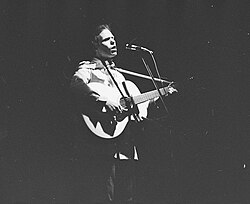
The Anthem of a Generation
McDonald's most enduring contribution to music is "The Fish Cheer/I-Feel-Like-I'm-Fixin'-to-Die Rag" (1965). Written in just 20 minutes for an anti-war play, the song is a piece of black comedy that critiqued the Vietnam War. Its famous chorus, "One, two, three, what are we fighting for?", became a rallying cry for Vietnam veterans and the Woodstock generation.
The song's live evolution was as controversial as its lyrics. Originally a call-and-response spelling "F-I-S-H," it evolved into the "Fuck Cheer" following the Berkeley Free Speech Movement. This modification led to the band being banned from the Schaefer Music Festival tour and caused The Ed Sullivan Show to cancel their appearance. Despite these setbacks, and a $500 obscenity fine in Worcester, Massachusetts, the song became a cultural touchstone, later appearing in films like Hamburger Hill and the series Generation Kill.
Solo Career and Musical Evolution
Following the disbandment of Country Joe & the Fish after their final Vanguard album CJ Fish (1970), McDonald transitioned into a prolific solo career. His early solo work was heavily influenced by folk traditions, specifically the work of Woody Guthrie.
His first two solo albums, Thinking of Woody Guthrie (1969) and Tonight, I'm Singing Just For You (1970), were recorded in Nashville with the "A-Team" of session musicians. McDonald's dedication to Guthrie led to a historic collaboration with the Guthrie family, where he set the poem "Woman At Home" to music—the first time the family collaborated with a recording artist to score Woody's lyrics.
Throughout the 1970s, McDonald continued to explore diverse themes, from the poetry of Robert W. Service in War, War, War (1971) to feminist themes in the Paris Sessions (1973).
A Lifetime of Activism
For McDonald, music was always a vehicle for social change. His activism spanned several decades and various causes:
- Anti-War Efforts: He testified as a witness during the Chicago Seven Trial in 1970 and performed with the FTA Show, an anti-war vaudeville troupe. His involvement with the FTA Show eventually landed him on Richard Nixon's "enemies list."
- Environmentalism: In the mid-70s, he became a vocal advocate for the Save the Whales movement, recording the song "Save the Whales!" and collaborating with Greenpeace and the Cousteau Society.
- Modern Protest: In 2005, he protested budget cuts at the California State Capitol and supported Cindy Sheehan's protests against the Iraq War, which inspired his song "Support the Troops."
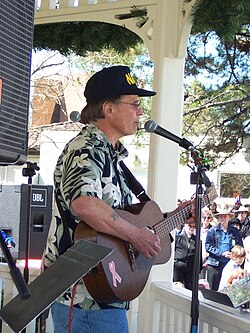
Key Facts
- Seminal Album: Electric Music for the Mind and Body (1967) spent 38 weeks on the Billboard charts.
- Signature Song: "I-Feel-Like-I'm-Fixin'-to-Die Rag" is a black comedy novelty song about the Vietnam War.
- Woodstock Legacy: Performed at the original 1969 Woodstock Festival and the 1979 reunion.
- Guthrie Connection: One of the first artists to record a major tribute to Woody Guthrie.
- Legal Battle: Successfully defended a copyright suit in 2003 regarding the chorus of his signature song.
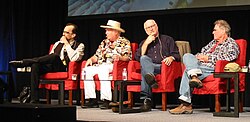
Later Years and Legacy
In the 1980s and 90s, McDonald co-founded Rag Baby Records. Through this label, he released albums like Superstitious Blues (1991) and Carry On (1995), both featuring collaborations with Jerry Garcia. He also ventured into atmospheric composition with Bernie Krause on the 2005 project Natural Imperfections, which blended field recordings with music.
McDonald has periodically reunited with former bandmates, touring as the "Country Joe Band" in 2004 and forming The Electric Music Band in 2017 to perform early psychedelic material in its entirety.

| Period/Year | Key Project/Event | Significance |
|---|---|---|
| 1967 | Electric Music for the Mind and Body | Seminal psychedelic rock album |
| 1969 | Woodstock Festival | Performed the "Fuck Cheer" and anti-war anthems |
| 1969-1970 | Woody Guthrie Tributes | Established as a primary interpreter of Guthrie's work |
| 1970s | Save the Whales / Greenpeace | Pioneered environmental music and activism |
| 1980s-90s | Rag Baby Records | Collaborated with Jerry Garcia on multiple tracks |
Frequently Asked Questions
Why was Country Joe & the Fish banned from the Schaefer Music Festival?
The band was banned for life after drummer Gary "Chicken" Hirsh suggested changing the "Fish Cheer" to the "Fuck Cheer," a modification that festival management found unacceptable.
What is the significance of the song "I-Feel-Like-I'm-Fixin'-to-Die Rag"?
It served as a powerful anti-Vietnam War anthem, using black comedy and a call-and-response format to highlight the lack of choice soldiers had in following orders.
How did McDonald contribute to the legacy of Woody Guthrie?
He recorded one of the first major Guthrie tribute albums and was the first recording artist to collaborate with the Guthrie family to set Woody's lyrics to music.
Did Country Joe McDonald have a relationship with Jerry Garcia?
Yes, Jerry Garcia performed on several of McDonald's Rag Baby Records releases, including the tracks "Clara Barton" and "Starship Ride," and they performed together live in San Francisco in 1989.
What happened during the 2003 copyright lawsuit?
McDonald was sued by the daughter of Kid Ory, claiming the chorus of his signature song derived from "Muskrat Ramble." The court ruled in McDonald's favor based on a laches defense, as the copyright holders had known about the song for decades without taking action.