Council of Chalcedon: Defining the Nature of Christ
The Council of Chalcedon stands as one of the most pivotal events in early Christian history. Convened in 451 AD, this fourth ecumenical council sought to resolve deep-seated theological disputes regarding the identity of Jesus Christ. By establishing a definitive statement on the relationship between Christ's divinity and humanity, the council shaped the doctrinal foundation for the majority of modern Christian denominations.
Convoked by the Roman Emperor Marcian, the council took place in Chalcedon, Bithynia (modern-day Kadıköy, Istanbul, Turkey) from October 8 to November 1, 451. It was a massive assembly, attended by approximately 520 bishops or their representatives, making it the largest and most thoroughly documented of the first seven ecumenical councils.
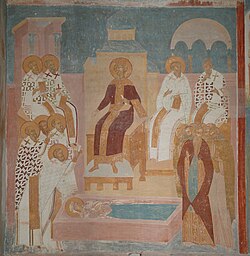
Key Facts
- Date: October 8 – November 1, 451 AD.
- Location: Chalcedon, Bithynia (modern Istanbul, Turkey).
- Convoked by: Emperor Marcian.
- Primary Outcome: The Chalcedonian Definition, asserting Christ is fully God and fully man.
- Attendance: Approximately 520 bishops or representatives.
- Key Documents: The Chalcedonian Creed and 28 disciplinary canons.
The Theological Conflict: Nestorianism vs. Monophysitism
The primary objective of the Council of Chalcedon was to re-assert the teachings of the earlier Council of Ephesus and address two conflicting views of Christ's nature:
- Nestorianism: A doctrine that viewed Christ's divine and human natures as separate and distinct.
- Monophysitism: A view that suggested Christ possessed only a single, divine nature, effectively absorbing his humanity.
These debates were exemplified by the controversy surrounding Eutyches, an archimandrite who argued that Christ's two natures merged into one after the incarnation. This had led to the contentious Second Council of Ephesus in 449, where Eutyches was rehabilitated despite previous excommunication.
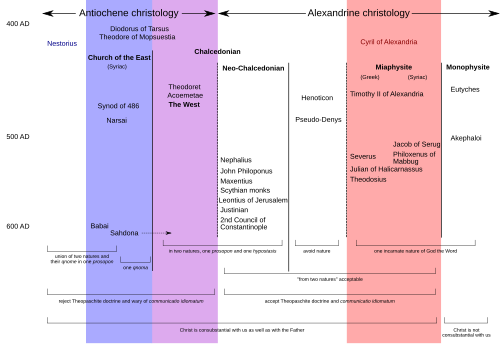
The Chalcedonian Definition and Results
To resolve these disputes, the council issued the Chalcedonian Definition. This landmark statement declared that Jesus is "perfect both in deity and in humanness," and that this single person is "actually God and actually man." This established the doctrine of the two natures of Christ existing without confusion or change.
Beyond theology, the council addressed ecclesiastical discipline and jurisdiction. It approved several key texts, including the Creed of Nicaea (325), the Creed of Constantinople (381), and the Tome of Pope Leo I. The council also produced 28 (and in some records, 30) disciplinary canons to govern church order.
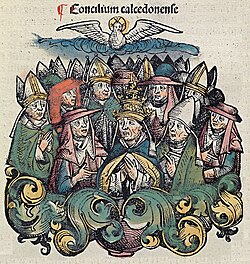
Ecclesiastical Shifts and the Pentarchy
The council brought about significant changes in the hierarchy of the early church, specifically regarding the status of major cities, or "sees."
The Status of Jerusalem
The metropolitan of Jerusalem was granted autocephaly (independence) from the metropolitan of Antioch. This move eventually led to Jerusalem becoming a patriarchate, part of the pentarchy—the five primary sees of Christendom recognized under Emperor Justinian.
The Status of Constantinople
The council confirmed the high status of Constantinople in Canon XXVIII, granting it a prerogative of honor second only to Rome because it was the "New Rome." While Rome initially protested this reduction in the relative honor of Alexandria and Antioch, the papacy eventually accepted the council's canons, though the 28th canon remained a point of contention for some time.
The following table summarizes the core details of the council:
| Category | Details |
|---|---|
| Presiding Authority | Patriarch Anatolius and a board of government officials |
| Key Theological Statement | Jesus is fully divine and fully human (Two Natures) |
| Major Opponents | Eutyches (Monophysitism) and Nestorius (Nestorianism) |
| Accepted By | Catholic, Eastern Orthodox, Anglican, Lutheran, and Reformed Churches |
| Administrative Change | Jerusalem granted autocephaly; Constantinople's honor confirmed |
Frequently Asked Questions
What was the main purpose of the Council of Chalcedon?
The main purpose was to resolve Christological disputes by defining the relationship between the divine and human natures of Jesus Christ, specifically rejecting both Nestorianism and Monophysitism.
What is the Chalcedonian Definition?
It is the official statement of the council asserting that Jesus Christ is one person with two distinct natures—fully God and fully man—without confusion, change, division, or separation.
How did the council affect the city of Jerusalem?
The council granted the bishop of Jerusalem independence (autocephaly) from Antioch, which paved the way for Jerusalem to become one of the five patriarchates of the pentarchy.
Who convoked the council and where was it held?
The council was convoked by the Roman Emperor Marcian and was held in the city of Chalcedon, Bithynia, in the church of St. Euphemia.
Which churches today accept the decisions of Chalcedon?
The decisions are accepted by the Catholic Church, Eastern Orthodox Church, Anglican Churches, Lutheran Churches, and Reformed Churches, among others.