Cottage Gardens: The Timeless Charm of Informal English Planting
The cottage garden is a distinct horticultural style defined by its informal design, traditional materials, and dense, lush plantings. Unlike the rigid symmetry of formal estate gardens, the cottage garden relies on grace, charm, and a seamless mixture of ornamental flowers and edible plants. While these gardens have been connected to rural dwellings for centuries, their stylized reinvention as a celebrated aesthetic emerged in 1870s England as a romantic reaction against the highly structured, greenhouse-dependent gardens of the Victorian era.
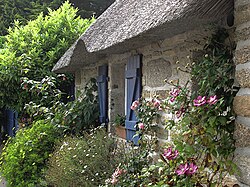
At its heart, the cottage garden is a celebration of the "jumble." It is a space where flowering shrubs mingle with herbaceous plants, climbers scramble over hedges, and seedlings find their own way to sow themselves. This approach creates a sense of effortless beauty that masks the careful selection of plants required to achieve such a look.
Key Facts
- Origin: Emerged from practical, functional plots used for food and herbs, later romanticized by the British leisured class.
- Core Aesthetic: Informal, dense, and charming rather than grand or structured.
- Key Plants: Traditional roses, climbing plants, herbs, and self-sowing annuals.
- Historical Movement: Heavily influenced by the 19th-century Arts and Crafts Movement.
- Modern Variation: Today includes native plants and ornamental grasses alongside traditional varieties.
The Evolution of the Cottage Garden
From Practicality to Romance
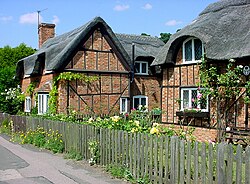
Historically, the earliest cottage gardens were far more utilitarian than the ornamental spaces we recognize today. They served as essential local sources for herbs, fruits, and vegetables. In some regions, such as Ireland and the Scottish Highlands, these plots were often dedicated almost exclusively to potatoes. Early gardens might have included fruit trees, a beehive, or even small livestock.
While legend suggests these gardens were created by village workers to provide food, historical analysis by scholars like Helen Leach suggests a different origin. The romanticized version of the cottage garden was actually a discovery by the leisured classes, who sought the simplicity of hardy, unadorned plants. This shift was supported by figures like John Claudius Loudon, who designed estates where workers were provided with smallholdings to grow food and keep animals.
The Influence of the Arts and Crafts Movement
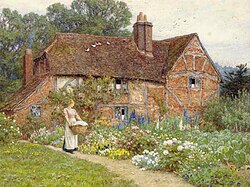
The 19th century saw a significant shift in garden philosophy. Writers like Alexander Pope had long advocated for the "amiable simplicity of unadorned nature," but it was the Arts and Crafts Movement that truly codified the cottage garden aesthetic. This movement, led by figures such as William Morris, advocated for a return to informal styles and traditional craftsmanship.
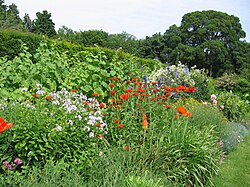
Two pivotal figures in this movement were William Robinson and Gertrude Jekyll. Robinson, through his work The Wild Garden, championed the use of simple materials to achieve great effects. Jekyll took these principles and applied them to larger, more structured country house designs, focusing on sophisticated color harmonies. Their work helped transform the "old-fashioned" garden into a fashionable accessory for the artistic middle class, eventually spreading the aesthetic to America.
Essential Elements of Design and Planting
The Role of Roses
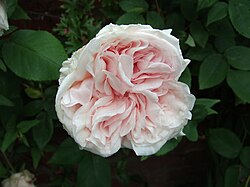
Roses are the undisputed stars of the cottage garden. Unlike the gangly hybrid tea roses often seen in modern landscaping, cottage gardens favor old garden roses with lush foliage and intoxicating fragrances. These include:
- Rosa gallica: Dense, mounded shrubs with pink to purple blooms.
- Damask Roses: Known for their arching canes and use in perfumes.
- Provence (Rosa centifolia): The famous "cabbage rose" with a floppy, romantic habit.
- Alba Roses: Hardy varieties that perform well even in partial shade.
A key characteristic of these roses is that they are not isolated in bare mulch; instead, they are casually blended with groundcovers and other flowers. Many older varieties bloom on the previous year's wood, allowing them to coexist beautifully with climbing plants.
Climbers, Herbs, and Perennials
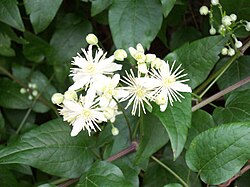
To achieve the signature "jumbled" look, cottage gardens utilize climbing plants to add vertical interest. Clematis is a frequent companion to roses, often using the rose branches for support. This symbiotic relationship allows for a dense layering of textures and colors.
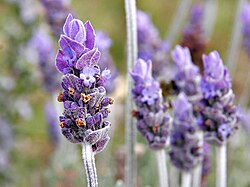
The inclusion of herbs and perennials is equally vital. Traditional gardens used plants like lavender, calendula, and various culinary herbs for both beauty and utility. Modern versions may incorporate ornamental grasses or native species, but the principle remains the same: a mix of self-sowing annuals and freely spreading perennials that fill every available space.
Summary of Cottage Garden Characteristics
| Feature | Traditional Cottage Garden | Modern Cottage Garden |
|---|---|---|
| Primary Purpose | Subsistence (Vegetables, herbs, livestock) | Aesthetic and ornamental enjoyment |
| Plant Selection | Local food crops, primroses, violets | Disease-resistant roses, native plants, grasses |
| Design Style | Strictly functional and enclosed | Stylized, romantic, and varied |
| Key Flora | Potatoes, cabbage, beans, old roses | Hybrid "English" roses, climbers, perennials |
Frequently Asked Questions
What is the main difference between a formal garden and a cottage garden?
A formal garden relies on symmetry, structured layouts, and mass plantings of specific varieties. In contrast, a cottage garden is characterized by informal design, dense and varied plantings, and a mixture of ornamental and edible species.
Why are roses so important to this style?
Roses, particularly old-fashioned varieties, provide the lush foliage, fragrance, and romantic structure that define the aesthetic. They serve as anchors in the garden, often intertwining with climbers like Clematis.
Can I grow a cottage garden if I have a large space?
Yes. Historically, the term has been applied to gardens of various scales. Even large, sophisticated gardens like Hidcote Manor have been described as "cottage gardens on a glorified scale" due to their carefully contrived color harmonies and informal planting.
Do I need to be a professional to maintain a cottage garden?
While they look effortless, cottage gardens benefit from plants that are well-suited to their environment. Using self-sowing annuals and spreading perennials can help create that "natural" look with less intensive intervention.
What are "old roses"?
Old roses refer to traditional varieties, such as Gallica or Damask roses, which often have a more fragrant, full-petaled appearance and a different growth habit than modern hybrid tea roses. Many of these bloom on the previous year's wood.