Corporal Punishment: History, Legality, and Global Evolution
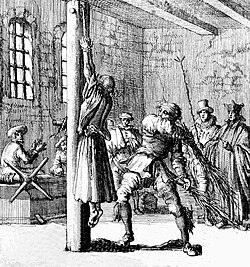
Corporal punishment, also known as physical punishment, is any disciplinary action intended to cause physical pain to a person. Depending on the recipient and the setting, the methods vary significantly. For minors, this often manifests as spanking or paddling in home and school environments. For adults, such as prisoners or enslaved people, it may involve more severe methods like whipping with a belt or a horsewhip.
Historically, physical penalties—including floggings, brandings, and mutilations—were common across most ancient civilizations. However, the rise of humanitarian ideals following the Enlightenment led to a shift in perception, with these practices increasingly viewed as inhumane. By the late 20th century, most developed nations had removed corporal punishment from their legal systems.

Key Facts
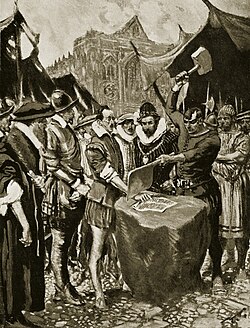
- Definition: Punishment designed to inflict physical pain.
- Global Trend: A steady decline in legal use since the Enlightenment, with many developed nations abolishing it by the late 1900s.
- First Prohibition: Poland made the first recorded attempt to prohibit the corporal punishment of children in 1783.
- Total Ban: Sweden was the first country to prohibit corporal punishment in all spheres (home, school, and penal system) in 1966.
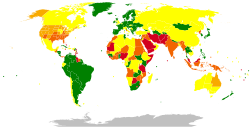
- Current Status: As of 2021, 63 nations and 3 constituent nations have completely outlawed the corporal punishment of children.
Historical Perspectives
Antiquity
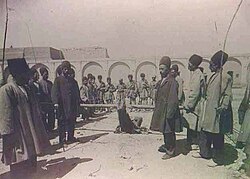
In ancient Egypt, China, Greece, and Rome, corporal punishment was a primary tool for maintaining judicial and educational discipline. In Egypt, criminals who suffered disfigurement were exiled to regions like Tjaru and Rhinocorura, known as the "cut-off noses." China utilized tattooing and disfigurement, while Sparta employed a rigorous disciplinary regime to foster physical strength and willpower.
Ancient Israel prescribed corporal punishment but limited it to 40 lashes. Similarly, in the Roman Empire, the maximum legal penalty for a citizen was 40 lashes or strokes, delivered either with a whip to the back and shoulders or with fasces (bundles of 8–10 willow lengths) applied to the buttocks. These punishments were often public and frequently drew blood.
The Middle Ages and Modernity
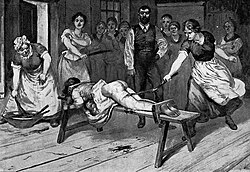
The 19th century marked a turning point in Europe and North America. Public scandals involving severe injuries or deaths—such as the 1846 death of Private Frederick John White after a military flogging and the 1860 death of Reginald Cancellor at the hands of a schoolmaster—mobilized public opinion against the practice in Britain.
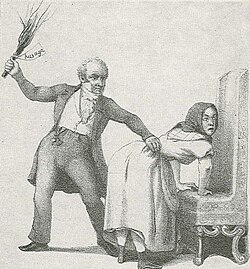
Legal shifts also occurred regarding domestic relations. In the 1870s, U.S. courts began overruling the common-law principle that husbands could physically chastise their wives. The United Kingdom followed suit in 1891, removing the traditional right of a husband to inflict "moderate" corporal punishment on his wife.
20th Century Transitions
Judicial corporal punishment declined sharply in the UK during the first half of the 20th century, culminating in the Criminal Justice Act of 1948, which outlawed whipping and flogging except in extreme prison discipline cases. Despite this, the use of the cane, paddle, or tawse (a leather strap) remained common in many UK and US schools until the 1980s, and persists in some rural areas of the Southern United States.
International Law and Human Rights
The late 20th and early 21st centuries saw the integration of human rights law into the debate over physical punishment. Several United Nations (UN) treaties have addressed this:
- International Covenant on Civil and Political Rights (1966): Prohibits torture and cruel, inhuman, or degrading treatment.
- Convention against Torture (1984): Further prohibits cruel and inhuman punishment.
- Beijing Rules (1985): Specifically states that juveniles shall not be subject to corporal punishment.
- Convention on the Rights of the Child (1989): Mandates that states protect children from all forms of physical or mental violence and abuse.

Current Legal Status
Global Prohibitions
The legal status of corporal punishment varies widely by jurisdiction. While Sweden led the way in 1966, many other nations followed. By 2021, 63 nations had outlawed the practice for children entirely.
| Setting | Prohibited (Approx. Countries) | Not Prohibited (Approx. Countries) |
|---|---|---|
| Home | 67 | 131 |
| Schools | 130 | 68 |
| Penal System | 156 | 41 |
| Alternative Care | 117 | 77 |
| As Sentence for Crime | 39 | 159 |
Regional Variations
In the UK, the legal landscape is fragmented. In England and Northern Ireland, spanking is legal provided it does not cause actual bodily harm (such as bruising or broken skin). Scotland banned corporal punishment in 2020, and Wales followed in 2022.
Judicial Punishment in Islamic Law
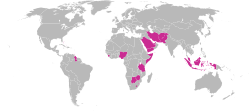
Some countries with Islamic legal systems, including Iran, Brunei, and Sudan, continue to use judicial whipping. Some may also employ amputation or mutilation. Notably, the Saudi Supreme Court ended flogging in April 2020, replacing it with fines or jail time. In some regions of Pakistan, ad hoc Islamist courts have reintroduced corporal punishment amid government instability.
Frequently Asked Questions
Which country was the first to fully ban corporal punishment for children?
Sweden was the first country to prohibit corporal punishment in all spheres of life—including homes, schools, and the penal system—in 1966.
What is the difference between judicial and school corporal punishment?
Judicial corporal punishment is a legal sentence handed down by a court for a crime (such as flogging), whereas school corporal punishment is a disciplinary measure used by educators to maintain order (such as paddling).
Is spanking legal in the United Kingdom?
It depends on the region. It is illegal in Scotland and Wales. In England and Northern Ireland, it remains legal as long as it does not result in actual bodily harm, such as visible bruising.
What are the UN's guidelines on corporal punishment for minors?
The UN's Beijing Rules (1985) explicitly state that juveniles should not be subject to corporal punishment, and the Convention on the Rights of the Child (1989) requires states to protect children from all forms of physical violence.
How has the definition of corporal punishment changed over time?
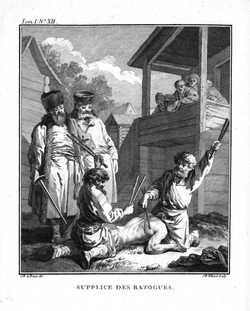
Originally, the term included extreme penalties like death, branding, and mutilation. Since the 19th century, it has more commonly referred to the infliction of bodily pain through methods like caning, flagellation, or bastinado.