Corona, Queens: A Vibrant Hub of Culture and History
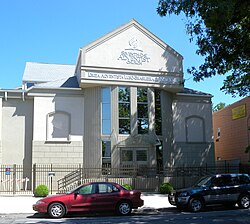
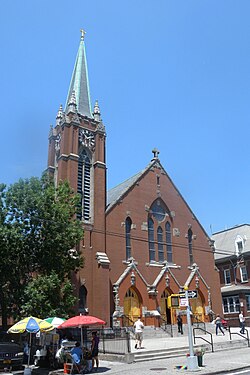
Located in the heart of the borough of Queens, Corona is a dynamic New York City neighborhood known for its rich cultural diversity and deep historical roots. Founded in 1854 and named after the Crown Building Company, Corona has evolved from its early beginnings into a bustling urban center. Today, it serves as a vital residential and commercial area, characterized by a strong sense of community and a legacy of artistic achievement.
The neighborhood is geographically defined by key intersections such as Corona Avenue, 108th Street, and 52nd Avenue, and is primarily served by the 11368 ZIP code.
Key Facts
- Founded: 1854, named after the Crown Building Company.
- Population: 109,695 (2010 Census), including North and South Corona.
- Demographics: Predominantly Hispanic (73.6%), followed by Asian (10.0%), Black (9.5%), and White (5.3%).
- Public Health: Average life expectancy of 85.4 years (2018), exceeding the NYC median of 81.2.
- Notable Legacy: Home to the Louis Armstrong House museum.
Demographics and Economic Profile
Corona is a melting pot of ethnicities. According to 2020 census data from the New York City Department of City Planning, the neighborhood hosts 51,500 Hispanic residents, between 10,000 and 19,999 Asian residents, and 5,000 to 9,000 Black residents.
Economically, the area presents a complex picture. As of 2017, the median household income for Community Board 4 (which encompasses Corona and Elmhurst) was $51,992. While 27% of residents lived in poverty in 2018, the area is considered high-income relative to the rest of the city and is not currently undergoing gentrification. However, rent burden—the percentage of residents struggling to pay rent—is high at 62%, surpassing both boroughwide and citywide averages.
Public Safety and Infrastructure
The neighborhood is patrolled by the NYPD's 110th and 115th Precincts. Corona is statistically safer than many other parts of the city; in 2018, its violent crime rate per capita was lower than the citywide average, and its incarceration rate (227 per 100,000 people) was also lower than the city average.
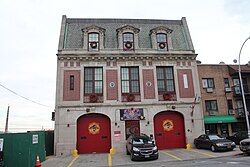
Fire protection is provided by the FDNY through two primary stations:
- Engine Co. 324/Satellite 4/Division 14 on the Horace Harding Expressway.
- Engine Co. 289/Ladder Co. 138 on 43rd Avenue.
Education and Community Resources
Corona offers a comprehensive network of public education. Elementary schools (K–5) include PS 14 Fairview, PS 16 the Nancy Debenedittis School, PS 19 Marino Jeantet, PS 143 Louis Armstrong, and the Pioneer Academy. Specialized early childhood education is provided by PS 28 Thomas Emanuel (PK–2) and PS 92 Harry T Stewart Sr (PK–5).
For older students, the neighborhood features IS 61 Leonardo da Vinci, the Corona Arts & Sciences Academy (grades 6–8), and the High School for Arts and Business (grades 9–12).
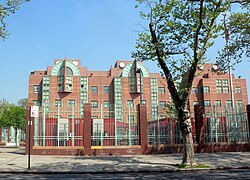
The Queens Public Library supports the community with three dedicated branches: the Corona branch, the Langston Hughes branch, and the LeFrak City branch.
Transportation and Connectivity
Connectivity is a hallmark of Corona, making it accessible for residents and visitors alike. The IRT Flushing Line (7 and <7> trains) provides rapid transit with stops at Mets–Willets Point, 111th Street, 103rd Street–Corona Plaza, and Junction Boulevard. Additionally, a wide array of bus routes—including the Q14, Q23, Q58, Q63, Q66, Q72, Q88, Q90, and Q98—serve the area.
Notable Residents and Cultural Legacy
Corona has been home to some of the most influential figures in music, art, and science. Most notably, jazz legend Louis Armstrong lived here, and his former residence now operates as a museum. Other jazz icons including Dizzy Gillespie, Cannonball Adderley, and Cecil Taylor have ties to the neighborhood.
The area's influence extends beyond music. It was the birthplace of cosmetics mogul Estée Lauder and chemist Marie Maynard Daly, the first African American woman in the U.S. to earn a Ph.D. in chemistry. Even modern pop icons like Madonna spent time here during the late 1970s. In the realm of art, Louis Comfort Tiffany operated his glass factory and studio in Corona starting in 1893.
Neighborhood Summary
| Category | Details |
|---|---|
| Founded | 1854 |
| Primary ZIP Code | 11368 |
| Major Ethnicity | Hispanic (73.6%) |
| Life Expectancy | 85.4 Years |
| Subway Line | IRT Flushing Line (7) |
Frequently Asked Questions
What is the demographic makeup of Corona?
Corona is a highly diverse neighborhood. As of the 2020 census, it is predominantly Hispanic (73.6%), with significant Asian (10.0%) and Black (9.5%) populations, and a smaller White population (5.3%).
How does Corona's safety compare to the rest of New York City?
Corona is generally safer than the city average. As of 2018, its violent crime rate per capita and its incarceration rate were both lower than the overall New York City averages.
Which famous people have lived in Corona?
The neighborhood has a prestigious list of former residents, including jazz legend Louis Armstrong, cosmetics founder Estée Lauder, and chemist Marie Maynard Daly, as well as musicians like Dizzy Gillespie and Madonna.
How is the neighborhood served by public transportation?
Corona is well-connected via the IRT Flushing Line (7 train) with multiple stops, and is served by numerous bus routes including the Q14, Q23, Q58, and others.
What was the impact of COVID-19 on the area?
In 2020, Corona and surrounding areas like Elmhurst were among the hardest hit by the pandemic in NYC. ZIP codes 11368 and 11369 recorded some of the highest case numbers in the city.