Copa América 2011: Uruguay's Historic Triumph in Argentina
The 2011 Copa América, officially known as the 43rd edition of the Campeonato Sudamericano, brought the elite of South American football to Argentina. Organized by CONMEBOL (the South American football governing body), the tournament took place from July 1 to July 24, 2011. It featured 12 national teams competing across eight host cities in a high-stakes battle for continental supremacy.
The tournament was defined by dramatic shifts in momentum and unexpected journeys. While the host nation and defending champions sought glory, it was Uruguay that ultimately rose to the top, securing a record-breaking victory that cemented their place in football history.
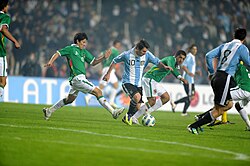
Key Facts
- Champion: Uruguay (15th title)
- Runner-up: Paraguay
- Host Country: Argentina
- Top Scorer: Paolo Guerrero (5 goals)
- Best Player (MVP): Luis Suárez
- Total Attendance: 882,621 spectators
- Total Goals: 54 goals across 26 matches
Tournament Structure and Participation
The competition began with a draw in La Plata on November 11, 2010, dividing the 12 teams into four groups. While the tournament is primarily for CONMEBOL members, invitations were extended to teams from other confederations to increase the level of competition.
The Guest Nations
Mexico and Japan were originally invited. Mexico participated by sending their 2012 U-23 Olympic Team supplemented by five over-age players, though their campaign was hampered by the suspension of eight players due to indiscipline. Japan's participation was fraught with difficulty; after the 2011 Tōhoku earthquake and tsunami, the Japan Football Association initially confirmed their attendance but eventually withdrew twice—first due to J. League scheduling conflicts and finally because European clubs would not release their players. Consequently, Costa Rica was invited as a replacement.
Venues and Logistics
Matches were hosted in eight cities, utilizing stadiums with varying capacities to accommodate the massive crowds. The largest venue was the Estadio Monumental in Buenos Aires, holding 65,921 fans, while the Estadio Padre Ernesto Martearena in Salta was the smallest at 20,408.
The Road to the Final
The group stage saw a mix of dominance and struggle. Colombia topped Group A, Brazil and Venezuela led Group B, and Chile won Group C. A notable rule change for the 2011 edition was the introduction of 30 minutes of extra time in the knockout stages if a match ended in a draw, rather than proceeding immediately to a penalty shoot-out.
The Knockout Drama
The quarter-finals provided one of the tournament's biggest shocks when the defending champions, Brazil, were eliminated by Paraguay. After a 0–0 draw through extra time, Brazil failed to convert any of their penalties in the shoot-out.
Paraguay's journey was statistically anomalous; they reached the final without winning a single match in regulation or extra time, advancing through the final stages exclusively via penalty shoot-outs.
Meanwhile, Uruguay navigated a tense quarter-final against Argentina, winning 5–4 on penalties after a 1–1 draw. They then defeated Peru 2–0 in the semi-finals to secure their place in the championship match.
The Grand Finale and Awards
The final took place on July 24 in Buenos Aires. Uruguay delivered a commanding performance, defeating Paraguay 3–0. Goals from Luis Suárez and two from Diego Forlán secured Uruguay's 15th Copa América title—their first since 1995.
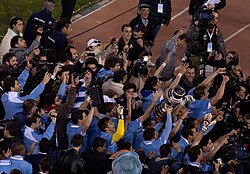
While Uruguay took the trophy, Peru secured third place by defeating Venezuela 4–1. Venezuela's fourth-place finish marked the best performance in the nation's history at the tournament.

Individual brilliance was recognized through several awards. Luis Suárez was named the best player of the tournament, while Paolo Guerrero of Peru finished as the top scorer with five goals.

Tournament Summary
| Category | Detail |
|---|---|
| Champions | Uruguay |
| Runners-up | Paraguay |
| Third Place | Peru |
| Fourth Place | Venezuela |
| Top Scorer | Paolo Guerrero (5 goals) |
| Best Player | Luis Suárez |
| Best Young Player | Sebastián Coates |
| Best Goalkeeper | Justo Villar |
Frequently Asked Questions
How many titles did Uruguay have after winning in 2011?
Uruguay achieved a record 15th Copa América title following their victory in the 2011 tournament.
Which team had the most unusual path to the final?
Paraguay reached the final without winning a single match during the entire tournament, advancing through the knockout stages via penalty shoot-outs.
Why did Japan withdraw from the competition?
Japan withdrew twice: first due to scheduling conflicts with the J. League following the Tōhoku earthquake and tsunami, and finally because of difficulties in getting European clubs to release their players.
Who was the top goalscorer of the 2011 Copa América?
Paolo Guerrero of Peru was the top scorer, netting a total of five goals.
What was the significance of Venezuela's performance?
Venezuela finished in fourth place, which represented their best-ever performance in the history of the Copa América tournament.