Convention of Peking 1860: Territorial Shifts and Diplomatic Consequences
The Convention of Peking, signed in 1860, stands as a pivotal moment in East Asian diplomacy, marking a period of significant territorial loss for the Qing dynasty. This agreement not only ratified previous treaties but fundamentally redrew the borders of China, granting substantial land and strategic advantages to the British and Russian Empires.
Key Facts
- The Xianfeng Emperor ratified the 1858 Treaty of Tientsin as part of the convention.
- Britain acquired the Kowloon Peninsula (south of Boundary Street) and Stonecutters Island in perpetuity.
- Russia gained approximately 400,000 square kilometers of Outer Manchuria.
- The agreement effectively blocked Chinese access to the Sea of Japan.
- Territory under Korean jurisdiction, specifically Noktundo, was ceded to Russia without Korea's knowledge.
British Gains and the Cession of Kowloon
The diplomatic landscape of 1860 saw a shift in the status of Kowloon. While initial negotiations in March of that year focused on a lease, the Convention of Peking finalized a permanent transfer. On October 24, 1860, the land was formally ceded to the British.
According to Article 6 of the Convention between China and the United Kingdom, the ceded territory included the portion of the Kowloon Peninsula located south of the present-day Boundary Street, as well as Hong Kong and Stonecutters Island. These lands were transferred in perpetuity.
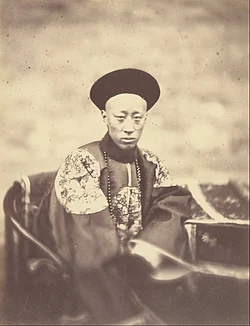
Simultaneously, a separate agreement between China and France addressed religious protections. Article 6 of the Sino-French convention mandated that religious and charitable establishments confiscated from Christians during previous persecutions be returned to their owners via the French Minister in China.
The Loss of Outer Manchuria to Russia
One of the most consequential aspects of the convention was the confirmation of the cession of Outer Manchuria to the Russian Empire. This vast region, totaling 400,000 square kilometers, included the Ussuri krai (part of modern-day Primorye), which corresponded to the ancient Manchu province of East Tartary.
This territorial shift achieved a critical strategic objective for Russia: the complete sealing off of Chinese access to the Sea of Japan. Furthermore, the treaty ceded Noktundo—an island, now a peninsula at the southern end of Primorsky Krai—which was under Korean jurisdiction. Because Korea was not a party to the treaty, they remained unaware of this loss until the 1880s, leading to official protests asserting that the Qing dynasty lacked the authority to cede Korean land.
The Tumen River Demarcation Controversy
The modern border between Russia and North Korea was shaped by what the Institute of Qing History describes as mismanagement during the demarcation process. While Article 1 of the 1860 Convention defined the border from the Bailing River to the Tumen River, a subsequent 1861 agreement suggested China would maintain a 3km wide coastal strip separating Russia from Korea.
However, a 1862 Russian document, the "Border Map from the Ussuri River to the Sea," shifted the boundary 20km north of the Tumen River estuary. This discrepancy is attributed to Cheng Qi, the special Chinese envoy for the border survey. Allegedly addicted to opium, Cheng Qi left the establishment of border markers to Russian representatives while he visited Jilin City to obtain drugs. This allowed Russia to unilaterally redraw the map, connecting their territory to the Korean Peninsula and blocking China's passage to the Sea of Japan. Cheng Qi was subsequently dismissed from all official posts.
Summary of Territorial and Diplomatic Changes
| Entity | Territory/Right Acquired | Key Terms |
|---|---|---|
| United Kingdom | Kowloon Peninsula & Stonecutters Island | Ceded in perpetuity south of Boundary Street |
| Russian Empire | Outer Manchuria (400,000 sq km) | Includes Ussuri krai; blocked Chinese sea access |
| France | Return of religious properties | Restoration of confiscated Christian establishments |
| Russia (via Qing) | Noktundo | Ceded despite being under Korean jurisdiction |
Frequently Asked Questions
What was the primary result of the Convention of Peking for Britain?
Britain secured the permanent cession of the Kowloon Peninsula south of Boundary Street and Stonecutters Island, moving beyond the initial lease negotiations held earlier in 1860.
How did the treaty affect China's geography?
China lost 400,000 square kilometers of Outer Manchuria to Russia, which strategically blocked China's direct access to the Sea of Japan.
Why was the cession of Noktundo controversial?
Noktundo was under Korean jurisdiction, yet the Qing dynasty ceded it to Russia without Korea's knowledge or consent, leading to protests in the 1880s.
Who was Cheng Qi and what was his role in the border dispute?
Cheng Qi was the Chinese envoy for the Sino-Russian border survey. Due to his opium addiction and negligence in overseeing the placement of border markers, Russia was able to unilaterally redraw the boundary map to their advantage.
What happened to Christian properties under the Sino-French agreement?
The convention stipulated that religious and charitable establishments confiscated during persecutions were to be returned to their owners through the French Minister in China.