Constitution of the Argentine Nation
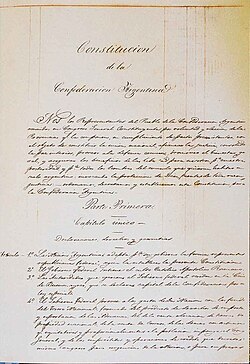
The Constitution of the Argentine Nation (Spanish: Constitución de la Nación Argentina) serves as the supreme law of Argentina and the primary foundation for all existing legislation within the country. Ratified on May 1, 1853, it stands as the seventh oldest national constitution currently in effect globally. Its original framework was developed by a constitutional assembly in Santa Fe, drawing significant doctrinal inspiration from the United States Constitution.
Over the decades, the document has evolved through several reforms to adapt to the changing political and social landscape of the country. While the 1853 version established the bedrock, the current legal framework is based on the reformed text of 1994.

Key Facts
- Supreme Law: The highest legal authority in Argentina.
- Original Ratification: May 1, 1853.
- Current Version: The 1994 reform.
- Government Type: Representative federal republic.
- Structure: Comprises a Preamble and two normative parts.
- International Status: Various international human rights treaties hold constitutional status via Article 75, paragraph 22.
Historical Evolution
The journey toward a unified constitution was marked by conflict between Federalists (who favored provincial autonomy) and Unitarians (who sought a strong central government). Early attempts at power division began after the May Revolution, but early constitutions in 1819 and 1826 failed due to these ideological divides.
Between 1820 and 1853, several pacts were signed, including the Treaty of Pilar (1820) and the Federal Pact (1831). However, the influence of Juan Manuel de Rosas delayed the calling of a General Federal Congress. Following Rosas's defeat in 1852, the Treaty of San Nicolás paved the way for the Constitutional Congress in Santa Fe, leading to the 1853 enactment.
Major Constitutional Reforms
- 1860: Occurred after Buenos Aires rejoined the Confederation; the state was officially named the República Argentina (Argentine Republic).
- 1866 & 1898: Minor amendments regarding tax destinations and the proportional apportionment of the Chamber of Deputies.
- 1949: A major revision under Juan Domingo Perón that introduced social rights and allowed indefinite presidential reelection.
- 1957: Following the deposition of Perón, this reform largely repealed the 1949 version, though it retained social protections in the now-famous Article 14 bis.
- 1994: The most recent reform, which reduced the presidential term to four years, allowed one consecutive reelection, granted autonomy to the City of Buenos Aires, and abolished the requirement that the President be Roman Catholic.
Structure and Organization
The Constitution is organized into a Preamble and two primary normative sections. The Preamble establishes the nation's goals, including the creation of a representative government and a welcoming stance toward immigration.
| Section | Content | Scope |
|---|---|---|
| Preamble | Foundational goals and legitimacy | Introductory |
| First Part | Declarations, Rights, and Guarantees | Articles 1–43 |
| Second Part | Authorities of the Nation | Articles 44–129 |
| Transitory Provisions | Temporary placeholders for future laws | Post-Article 129 |
Declarations, Rights, and Guarantees
The Constitution provides a comprehensive Bill of Rights for all inhabitants, regardless of nationality. These are categorized into four groups: Civil (e.g., right to life and expression), Patrimonial (e.g., right to own property), Politic (e.g., right to vote), and Social (e.g., fair wages and education).
The 1994 reform introduced three critical legal protections:
- Amparo judicial: An injunction to protect citizens from imminent damage.
- Habeas corpus: Protection of physical freedom.
- Habeas data: The right to access and correct personal information held by others.
The Form of Government
Argentina is organized as a representative federal republic. This means power is shared between the national government, the provinces (which have their own constitutions), and the Autonomous City of Buenos Aires.
Division of Powers
To prevent the concentration of power, the Constitution mandates a strict separation into three branches and a Public Ministry:
- Executive Branch: Led by the President, who serves as both head of state and head of government. The 1994 reform added the Chief of the Cabinet Ministers to manage day-to-day operations and reduce excessive presidentialism.
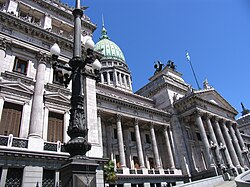
- Legislative Branch: A bicameral system consisting of the Senate and the Chamber of Deputies. Notably, the Vice President serves as the President of the Senate. This branch also includes the Ombudsman, an independent body dedicated to protecting human rights.
- Judicial Branch: Responsible for the administration of justice and interpreting the law.
- Public Ministry: Composed of the Prosecutor General and the Defender General of the Nation.
Frequently Asked Questions
Which international treaties have constitutional status in Argentina?
Under Article 75, paragraph 22, several instruments have constitutional status, including the Universal Declaration of Human Rights, the American Convention on Human Rights, and the Convention on the Rights of the Child, among others.
What is the significance of Article 14 bis?
Article 14 bis is a result of the 1957 reform that preserved essential social and labor rights from the 1949 Constitution, such as the right to a just salary, limited working hours, and social security benefits.
How did the 1994 reform change the presidency?
The 1994 reform reduced the presidential term from six to four years, allowed for one consecutive reelection, and removed the requirement that the President or Vice President be Roman Catholic.
What are Transitory Provisions?
These are 17 temporary articles added in 1994 that act as placeholders for issues not fully resolved during the assembly, such as the specific relationship between the Federal Government and the Autonomous City of Buenos Aires or the Falkland Islands sovereignty dispute.
What is the difference between the Argentine Republic and the Argentine Nation?
Following the 1860 reform, the country is officially named the República Argentina (Argentine Republic), while the term Nación Argentina (Argentine Nation) is used for legal purposes.