Communist Romania's Re-education Centers and Political Prisons
Between 1946 and 1989, Romania operated a brutal system of detention centers designed to break the will of political dissidents. Central to this system was the concept of re-education—a process of forced ideological conversion intended to transform prisoners into adherents of communist ideology. While some centers focused on psychological pressure, others employed systemic, extreme violence to achieve their goals.
The primary sites for these activities included Suceava, Pitești, Gherla, Târgu Ocna, Târgșor, Brașov, Ocnele Mari, and Peninsula. These institutions served as the machinery for the regime's attempt to eliminate opposition, particularly targeting members of the Iron Guard and students.
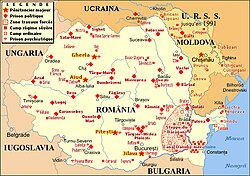
Key Facts
- Purpose: To convert political prisoners to communist ideology through psychological and physical torture.
- Pitești Experiment: The most violent phase of re-education, resulting in 22 deaths and over 1,000 mutilated survivors.
- The Canal: A massive social engineering project (Danube-Black Sea Canal) where approximately 6,355 detainees died.
- Key Figure: Eugen Țurcanu, a former prisoner who became a lead perpetrator of the violent re-education process.
- Methods: Included starvation, isolation, severe beatings, and forced "unmasking" of fellow prisoners.
The Origins of Re-education: Suceava Prison
Suceava prison served as an early hub for the detention of Iron Guard members, particularly following mass arrests in May 1948. It was here that the concept of re-education first took root, initiated by prisoners such as Alexandru Bogdanovici and Eugen Țurcanu.
The motivation for prisoners to switch sides and assist the regime varied; many hoped for reduced sentences or basic amenities like mail and food packages. By April 1949, nearly 100 prisoners had joined the re-education plan, creating a blueprint for the more violent methods that would follow in other facilities.
The Pitești Experiment: Violent Re-education
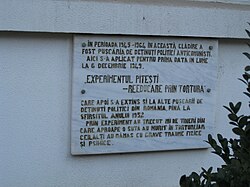
On April 21, 1949, Eugen Țurcanu and his group were moved to Pitești. Under the guidance of the Operational Service and political officer Ion Marina, a program of violent re-education was launched. This was a response to the failure of non-violent methods to break the resolve of legionnaire students.
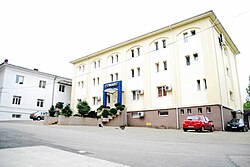
Conditions at Pitești were intentionally dehumanizing. Prisoners were kept in overcrowded cells with a diet of fewer than 1,000 calories per day. Medical care was non-existent, and prisoners were often forced to use food tins as toilets. The most severe punishment was the casimca—a freezing, lightless isolation cell with floors flooded with water and urine.
The process involved a "shock group" of re-educated prisoners who tortured a "target group" to force them to renounce their beliefs and betray others. This psychological and physical onslaught led many to commit suicide or die from their wounds. Alexandru Bogdanovici, an early initiator of the process, was himself tortured to death in April 1950.
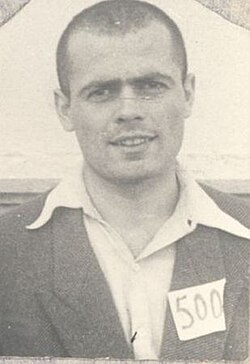
The violent regime at Pitești ended in August 1951 following an official inquiry by Colonel Ludovic Czeller. The remaining political prisoners were transferred to Gherla, leaving behind a legacy of 22 deaths and over a thousand permanently mutilated individuals.
Târgșor: The Pupil Detention Center
Târgșor Prison was specialized for detainees aged 16 to 20. Initially, conditions were lighter, featuring weaving workshops and lectures on the works of Marx and Engels. However, after a group of re-educated prisoners arrived from Suceava in 1949, they established a Re-education Committee that eventually controlled key prison functions.
Unlike Pitești, re-education at Târgșor remained largely non-violent. This was attributed to the youth of the prisoners, who were not believed to possess critical intelligence, and a prison layout that prevented the isolation of small groups. Most prisoners were eventually transferred to Gherla or the Danube-Black Sea Canal by late 1950.
Gherla Prison and the Diversion Plan
Gherla Prison, housing roughly 1,500 people, became a site for re-education after the Pitești group arrived in June 1950. Under warden Tiberiu Lazăr, beatings were common, including a mass beating of over 100 detainees in 1950.
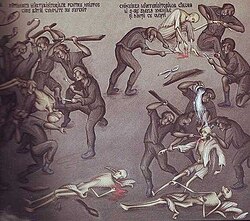
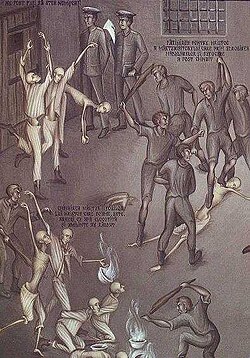
When the regime ordered a cessation of violent re-education due to negative publicity, Eugen Țurcanu developed a "Diversion and re-education plan." This was a strategic attempt to continue the "unmasking" process through non-violent means. Between 500 and 1,000 people underwent the process at Gherla, with approximately 20 deaths resulting from torture before the isolation rooms were dissolved in February 1952.
The Danube-Black Sea Canal: Forced Labor
The Danube-Black Sea Canal was a massive project initiated in 1949. While presented as an economic venture, it was primarily a social engineering project designed to create the "New Man" according to Marxist-Leninist doctrine.
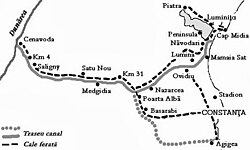
Twelve labor camps were established, with Poarta Albă serving as the distribution center. The Peninsula labor camp, established in June 1950, was particularly harsh. Detainees lived in clay-plastered shacks and survived on a meager diet of roast barley soup and black bread, sometimes resorting to eating snakes to survive.
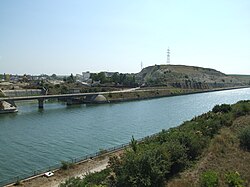
Work quotas were grueling; prisoners often had to move 3 to 3.5 cubic meters of earth daily—three to four times the quota of free workers. Failure to meet these quotas resulted in food reductions or solitary confinement. Violent re-education also occurred here in "disciplinary brigades," culminating in events like the "St. Bartholomew's Night" of June 21, 1951, where inmates were brutally beaten.
The death toll at the canal was staggering. Following the death of Dr. Ion Simionescu in 1951, reports of the atrocities reached the West via Radio Ankara. Investigations later estimated that 6,355 detainees died during the 1949–1953 period.
Summary of Major Detention Centers
| Location | Primary Target | Methodology | Key Outcome |
|---|---|---|---|
| Suceava | Iron Guard members | Initial ideological conversion | Birth of the re-education concept |
| Pitești | Students/Legionnaires | Extreme violent torture | 22 deaths; 1,000+ mutilated |
| Târgșor | Youth (16-20 years) | Non-violent indoctrination | Control of prison by re-educated group |
| Gherla | Workers/Peasants/Pitești transfers | Mixed violent and "diversion" plans | Approx. 20 deaths from torture |
| Danube Canal | Political prisoners | Forced labor and disciplinary torture | Estimated 6,355 deaths |
Frequently Asked Questions
What was the primary goal of the re-education process?
The goal was to force political prisoners to renounce their previous beliefs and fully adopt communist ideology through a process of "unmasking," where prisoners were forced to betray their comrades and themselves.
Who was Eugen Țurcanu?
Eugen Țurcanu was a former Iron Guard member who became a collaborator with the communist regime, leading the violent re-education efforts at both Pitești and Gherla prisons.
How did the re-education at Târgșor differ from Pitești?
Re-education at Târgșor was non-violent, focusing on reading communist literature and ideological pressure, whereas Pitești utilized systemic physical and mental torture.
What was the "New Man" in the context of the Danube-Black Sea Canal?
The "New Man" was a Marxist-Leninist ideal of a citizen stripped of "bourgeois" or "reactionary" tendencies and rebuilt as a loyal, technical, and political servant of the communist state.
Why was the Danube-Black Sea Canal project so lethal?
The high death toll was caused by a combination of inhumane living conditions, extreme caloric deficits, grueling work quotas far exceeding those of free laborers, and the use of torture in disciplinary brigades.