Understanding the Common Pheasant: Biology, History, and Global Presence
The common pheasant (*Phasianus colchicus*) is one of the most recognizable birds in the world. Known for the striking, iridescent plumage of the male and its widespread presence across various continents, this species occupies a unique position in both natural ecosystems and human culture. From its ancient roots in the Caucasus to its massive role in modern gamekeeping, the pheasant is a bird of remarkable adaptability and complex biological history.
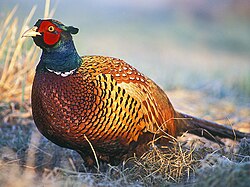
Key Facts

- Scientific Name: Phasianus colchicus
- Conservation Status: Least Concern (IUCN 3.1)
- Weight: Males average 1.2 kg; females average 0.9 kg
- Wingspan: 56–86 cm (22–34 in)
- Flight Speed: Cruising at 43–61 km/h; up to 90 km/h when chased
- Primary Habitat: Copses, heaths, commons, and agricultural lands
Physical Characteristics and Sexual Dimorphism
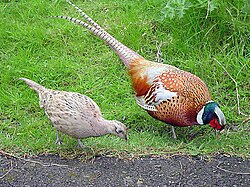
The common pheasant exhibits significant sexual dimorphism, a biological term describing the distinct difference in size or appearance between males and females of the same species. This difference is most visible in their coloration and ornamentation.
The Male (Cock)
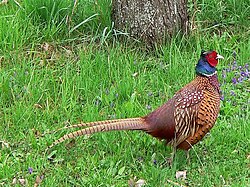
Adult males are highly ornamental. The nominate subspecies, P. c. colchicus, typically measures 60–89 cm in length. Their plumage is a vibrant mix of bright gold, fiery copper-red, and chestnut-brown, often featuring an iridescent green and purple sheen. A distinctive feature is the red wattle (a fleshy skin appendage) near the eyes and a small crest on the head. While some subspecies possess a white neck ring, others do not. Their long, dark tails can account for nearly 50 cm of their total body length.
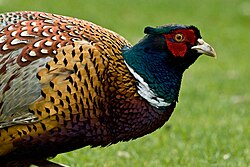
Due to extensive captive breeding and hybridization—the interbreeding of different subspecies—male colors can vary wildly, ranging from nearly white to almost black (melanistic forms). In many regions, such as Europe and North America, the birds seen in the wild are actually "hybrid swarms" rather than pure single subspecies.
The Female (Hen) and Juveniles
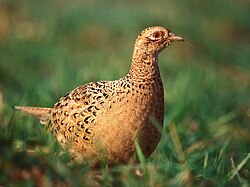
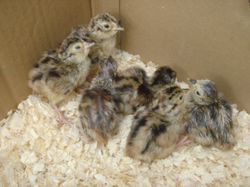
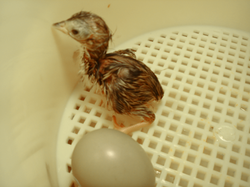
In contrast to the males, females and juveniles are much more subtle. They possess a mottled brown plumage that provides excellent camouflage. Females generally measure between 50–63 cm in length. Juvenile birds look similar to adult females, but young males will begin to develop their characteristic bright feathers on the head, breast, and back approximately 10 weeks after hatching.
Taxonomy and Subspecies Groups
The pheasant is divided into several subspecies groups, generally categorized by their geographical range from west to east. It is important to note that many pure subspecies are at risk of disappearing due to interbreeding with introduced stocks.
| Clade/Group | Notable Subspecies | General Range | Key Features |
|---|---|---|---|
| Western Clade (Red-rumped) | P. c. colchicus group | Caucasus to W. Turkestan | No or vestigial neck ring; bronze to brown plumage. |
| Central Group (Kyrghyz) | P. c. mongolicus group | Central Turkestan | Broad neck ring; copper plumage. |
| Tarim Group | P. c. tarimensis group | SE Turkestan | No or vestigial neck ring; buff to brown plumage. |
| Eastern Clade (Grey-rumped) | P. c. elegans & formosanus groups | Yunnan to Taiwan | Varies by specific island/region group. |
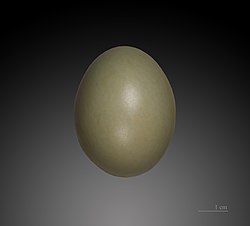
Ecology and Behavior
Common pheasants are ground-dwelling birds. While they are capable of short-distance flight, they much prefer to run. Their flight is characterized by a sudden, explosive burst of speed accompanied by a distinctive "whirring" sound from their wings. When startled, they may also emit "kok kok kok" calls to alert other birds in the area.
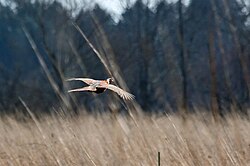
Global Distribution
The pheasant's history is a mix of natural range and human-assisted expansion:
- Europe: While often thought to be introduced by Romans, archaeological evidence suggests pheasants may have reached the Balkans naturally as early as the 6th millennium BC. Today, the last indigenous black-necked populations in Europe are found in the Nestos river delta in Greece.
- United Kingdom: Naturalized around AD 1059, the pheasant became a staple of the British countryside. Today, massive numbers are released annually for game shooting, creating a fluctuating population that relies heavily on human intervention.
- North America: Introduced starting in 1773, pheasants have become well-established across the Great Plains, the Midwest, and the Rocky Mountain states, though they have struggled to establish in more humid southern regions.

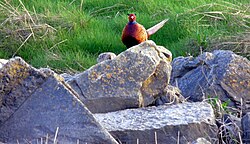
Human Relationship and Management
The common pheasant is widely managed as a gamebird. In the UK, millions of birds are reared in captivity and released each summer for traditional "driven shoots." This practice creates a unique population dynamic where the number of birds fluctuates significantly between the summer release and the winter shooting season.
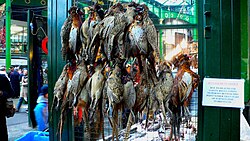
Because of their presence in agricultural and roadside areas, they also interact with human infrastructure. In the UK, collisions between pheasants and vehicles are a common occurrence.
![Collisions between pheasants and road vehicles are common in the UK.[69]](/images/49/a4/49a4be173a966bf72ee0bf9426ef62bcfb966c3ada7619e18f65d91d4dc42abc.jpg)
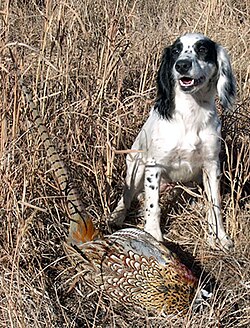
Hunting often involves specialized equipment and trained animals. Field lines of dogs, such as the English Cocker Spaniel, are frequently used to flush and retrieve the birds.
Frequently Asked Questions
Why do some pheasants have neck rings and others do not?
The presence of a neck ring depends on the subspecies. For example, the "ring-necked" pheasants common in North America and parts of Europe are often hybrids. The original Caucasian subspecies (*P. c. colchicus*) often lacks a white neck ring.
How fast can a pheasant fly?
When cruising, a pheasant flies at a moderate speed of 43–61 km/h. However, if they are being chased by a predator or startled, they can reach speeds of up to 90 km/h.
Are pheasants native to the United Kingdom?
Pheasants have been in Britain for centuries, with records dating back to the Roman era or slightly earlier. However, the modern populations are heavily influenced by various subspecies introduced over time and are extensively managed through captive breeding and releases.
What is the difference between a cock and a hen?
A "cock" is an adult male, characterized by bright, iridescent colors and long tails. A "hen" is a female, which has much duller, mottled brown plumage designed for camouflage while nesting.
Why are pheasant populations in the UK so unstable?
The population fluctuates because of the massive scale of human management. Approximately 50 million birds are released each year for shooting; consequently, the population can drop from 50 million in July to fewer than 5 million by June.