Common Names vs. Scientific Nomenclature in Biology and Chemistry
In the study of the natural world, how we name things matters. Whether it is a flower in a garden or a compound in a laboratory, the names we use generally fall into two categories: common names and scientific names. While common names are rooted in the everyday language of a specific culture or region, scientific names provide a universal framework that transcends borders and languages.
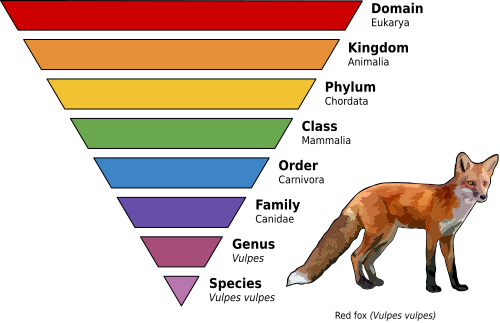
A common name, also known as a vernacular or colloquial name, is based on the normal language of daily life. In biology, these names are often contrasted with scientific names, which are typically based in Latin. While common names are intuitive, they can vary wildly depending on where you are in the world.
Common Names Across Different Disciplines
Biology and Taxonomy
In biological contexts, common names allow the general public—such as farmers and fishermen—to refer to species without needing to master complex Latin terminology. However, this convenience comes with a lack of standardization. Because common names are often part of folk taxonomy (an informal classification system), they do not always follow logical or consistent rules.
For example, not all insects called "flies" are biologically flies (such as dragonflies), and some actual flies may not be called flies at all (such as bee lice). In contrast, scientific nomenclature is a global system governed by formal rules, such as those set by the ICZN, to ensure every taxon is uniquely and definitively identified.
Chemistry and IUPAC Standards
The distinction between naming conventions is equally important in chemistry. The International Union of Pure and Applied Chemistry (IUPAC) defines a common name as one that unambiguously defines a chemical but does not follow systematic naming conventions. For instance, "acetone" is a common name, while its systematic name is "2-propanone."
Chemistry also utilizes vernacular names, which are used in trade or industry but may be ambiguous. A prime example is "copper sulfate," which could refer to either copper(I) sulfate or copper(II) sulfate.
The Evolution of Binomial Nomenclature
The modern system of binomial nomenclature—the practice of giving every species a two-part name—was popularized by Carl Linnaeus. Interestingly, this scientific approach was preceded by vernacular binomials. In his 1745 work Flora Svecica, Linnaeus recorded Swedish common names that already used a noun-adjective format (e.g., Råg-losta and Ren-losta) before he formalized the global scientific system.
Geographic and Linguistic Variations
The reach of a common name varies from highly local to nearly universal. While the word for "cat" is recognizable across many Germanic and Romance languages, many other names are restricted to a single country or district. Some languages use poetic or descriptive terms that differ significantly from the English common name.
| Scientific Name | English Name | Irish Term | Literal Translation |
|---|---|---|---|
| Vulpes vulpes | Red fox | Madra rua / sionnach | Red dog |
| Lutra lutra | Otter | Madra uisce / dobharchú | Water dog |
| Canis lupus | Wolf | Mac Tíre / faolchú | Son of the land |
| Chiroptera (order) | Bats | Sciathán leathair / ialtóg | Leather wing |
Challenges and Constraints of Common Names
Despite their ease of use, common names present several problems for professionals:
- Local Distribution: A single species may have multiple names in one area, or one name may apply to several different species.
- Morphological Confusion: Laypeople may give different names to the same species based on gender, maturity, or ecophenotypic variation (physical changes caused by the environment).
- Lack of Relationship: Unlike taxonomic names, common names do not imply biological relationships between species.
- Absence of Names: Many rare or economically unimportant species have no widely recognized common name at all.
The Process of Coining New Names
To fill gaps in nomenclature, biologists sometimes coin new common names, often by translating scientific Latin into English. However, this can lead to inaccuracies; for example, the Latin gratiosus does not actually mean "gracile."
Historically, some authorities, such as de Candolle in 1868, discouraged the fabrication of "vulgar names," arguing that they create unnecessary confusion. Despite this, many organizations now create official lists to standardize terminology. Examples include the Australian Fish Names List (AFNS), the Entomological Society of America's insect database, and the Society for the Study of Amphibians and Reptiles (SSAR) database.
The danger of arbitrary coining is seen in the term "thick-knee" for the genus Burhinus. Not only do these birds exist primarily in non-English speaking regions (where they are known as "Dikkop" in South Africa), but the "thick knee" is actually the intertarsal joint—the ankle—not the knee.
Key Facts
- Scientific names are universal and based in Latin, while common names are based on everyday language and vary by region.
- Folk taxonomy is an informal classification system that lacks the strict rules of biological nomenclature.
- Binomial nomenclature uses a two-part name to uniquely identify a species.
- In chemistry, IUPAC distinguishes between common names (unambiguous but non-systematic) and vernacular names (potentially ambiguous).
- Many species lack common names if they are rare or have no economic value.
Frequently Asked Questions
Why are scientific names preferred over common names in research?
Scientific names provide a unique, global identifier for a species, eliminating the confusion caused by regional dialects or the fact that one common name might refer to several different species.
What is folk taxonomy?
Folk taxonomy is the informal way people classify objects and organisms using common names. It does not follow formal scientific rules and is often inconsistent.
Can a common name be official?
Yes. Organizations like the Entomological Society of America or the Australian Fish Names Committee create official lists to standardize common names for industry and public use.
What is the difference between a common name and a vernacular name in chemistry?
According to IUPAC, a common name unambiguously defines a specific chemical but ignores systematic rules, whereas a vernacular name is used in trade or labs and may refer to more than one chemical.
Why do some animals have different common names in the same language?
This often happens due to ecophenotypic variation, where animals of the same species look different based on their age, gender, or environment, leading observers to believe they are different species.