Common Cuckoo: The Master of Brood Parasitism
The Common cuckoo (Cuculus canorus) is perhaps one of the most famous examples of biological deception in the animal kingdom. Known for its distinctive call and its complex reproductive strategy, this bird does not build its own nest. Instead, it practices brood parasitism—the act of laying eggs in the nests of other bird species, leaving the foster parents to raise the cuckoo chick as their own.
From its wide distribution across the Northern Hemisphere to its sophisticated evolutionary "arms race" with host species, the common cuckoo is a subject of intense scientific study. Its ability to mimic both the appearance of predators and the eggs of its hosts ensures its survival in a competitive natural environment.
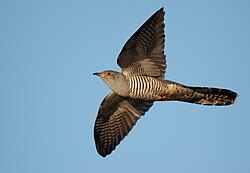
Key Facts
- Scientific Name: Cuculus canorus
- Conservation Status: Least Concern (IUCN 3.1)
- Reproductive Strategy: Obligate brood parasite
- Taxonomy: Four recognized subspecies worldwide
- Key Behavior: Egg mimicry and chick eviction of host offspring
Taxonomy and Physical Description
The common cuckoo belongs to the family Cuculidae and the order Cuculiformes. It has existed since the Pleistocene epoch and is currently classified into four distinct subspecies. While they vary slightly by region, they generally share a streamlined build suited for flight and a plumage that serves a specific evolutionary purpose.
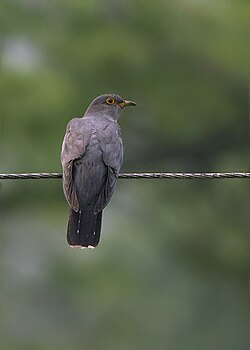
Adult Mimicry
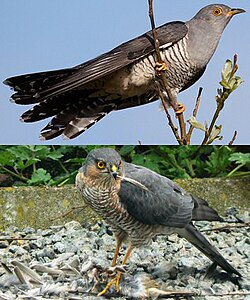
One of the most fascinating aspects of the adult cuckoo is its visual mimicry. Some adults possess plumage that closely resembles a sparrowhawk. This mimicry is believed to intimidate host birds, granting the female cuckoo the necessary time to sneak into a nest and lay her egg without being chased away by the rightful owners.
The Art of Brood Parasitism
The life cycle of the common cuckoo is defined by its reliance on other species. The female cuckoo targets a wide variety of hosts, ranging from reed warblers and pipits to robins and buntings.
Egg Mimicry and Placement
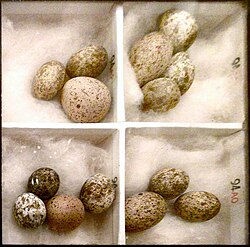
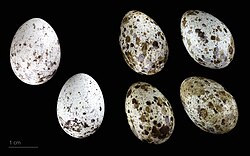
To avoid detection, cuckoos have evolved egg mimicry, where the color and pattern of the cuckoo egg closely match those of the host species. However, this is an ongoing evolutionary struggle. In some populations, such as the great reed warblers in central Hungary, parasitism rates are exceptionally high, with 64% of nests being targeted.
Research indicates that female cuckoos are opportunistic. When laying in a nest that has already been parasitized, they may remove one egg at random, regardless of whether it belongs to the host or another cuckoo.

The Cuckoo Chick
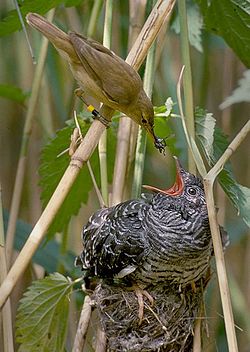
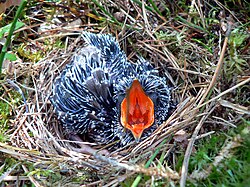
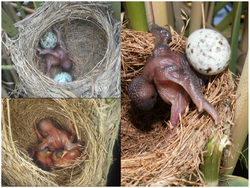
Once the cuckoo egg hatches—often earlier than the host's eggs due to shorter incubation times—the cuckoo chick begins its survival strategy. Almost immediately, the blind and featherless chick uses a specialized instinct to push all other eggs or newly hatched chicks out of the nest.
This eviction behavior ensures that the cuckoo chick receives 100% of the food and attention provided by the foster parents, even if the cuckoo grows significantly larger than the adults raising it.
Host Species and Biodiversity
The common cuckoo is a generalist, utilizing a vast array of host species. This diversity allows the cuckoo to thrive across different habitats. Common hosts include various warblers (such as the Eurasian reed warbler), pipits, and a wide range of buntings and flycatchers.
| Host Group | Example Species |
|---|---|
| Warblers | Eurasian reed warbler, Great reed warbler, Sedge warbler |
| Pipits | Tree pipit, Meadow pipit, Water pipit |
| Buntings | Corn bunting, Yellowhammer, Reed bunting |
| Other Passerines | European robin, Common chaffinch, House sparrow |
Cultural Significance
Beyond biology, the cuckoo has a deep presence in human culture, particularly in European folklore and music. In Middle English poetry, the cuckoo's song is a herald of summer ("Svmer is icumen in"). In modern English literature and folk songs, the bird is often associated with the concept of "cuckoldry" or betrayal, reflecting the bird's parasitic nature in the nest.
Frequently Asked Questions
Why does the cuckoo push other eggs out of the nest?
The cuckoo chick evicts other eggs and chicks to eliminate competition for food. By being the sole occupant of the nest, it ensures that the foster parents dedicate all their resources to its growth.
How do cuckoos trick other birds into raising their young?
They use a combination of adult mimicry (looking like a predator to scare hosts) and egg mimicry (laying eggs that look like the host's eggs) to avoid detection.
Do all cuckoos use the same host species?
No. While the common cuckoo can use many different hosts, there is genetic evidence of female host-specific races, meaning some lineages specialize in specific host species to better match their eggs.
Is the common cuckoo an endangered species?
No, the common cuckoo is currently listed as "Least Concern" by the IUCN, indicating that its global population is stable.