Comanche History: From the Shoshonean Expansion to the Southern Plains
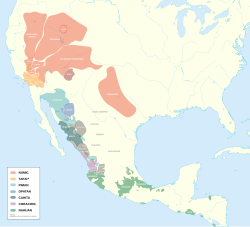
The story of the Comanche is one of remarkable adaptation, strategic brilliance, and resilience. Originally part of a larger movement known as the Shoshonean Expansion—the spread of the Shoshonean language family across the Great Basin and into Wyoming—the Proto-Comanche migrated toward the Great Plains. Among the first to make this move were the Kotsoteka, or "Bison Eaters," followed by other groups who maintained ties with the Shoshones of Wyoming until the 1830s.
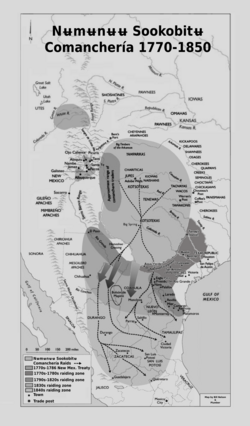
As they moved into the southern Great Plains, the Comanche established a vast territory known as Comancheria, extending from the Arkansas River to central Texas. This migration fundamentally altered the region's power dynamics, as the Comanche drove the Apache off the Plains, culminating in legendary conflicts such as the battle at La Gran Sierra del Fierro around 1724.
The Rise of a Horse Culture
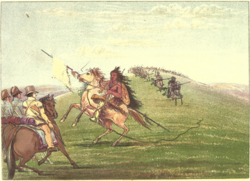
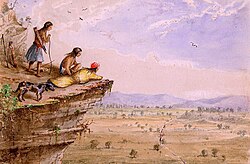
While horses became available to various Plains peoples after the Pueblo Revolt of 1680, the Comanche's adoption of the animal transformed them into a dominant military and economic force. Early records from 1725 suggest they initially used large dogs to carry bison-hide campaign tents, but they soon became masters of equestrian warfare.
The Comanche developed sophisticated strategies for fighting on horseback and became primary suppliers of horses and mules. By 1795, they were trading with Anglo-American merchants, and by the mid-19th century, their livestock flowed into St. Louis through middlemen like the Osage, Seminole, and Shawnee.
The "Comanche Moon"
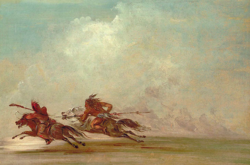
Warfare was central to Comanche life. They were feared for their deep-penetration raids into Mexico, which often occurred during the full moon to provide visibility for night riding. This phenomenon became known as the Comanche Moon, a period when warriors raided for weapons, captives, and horses, sometimes striking hundreds of miles into Mexican territory during the 1840s.
Social Structure and Tribal Divisions
Traditional Comanche society was organized into four levels of socio-political integration: the patrilineal nuclear family, the extended family group (nʉmʉnahkahni), the division (the most tribe-like unit), and the broader Nation. Unlike some neighboring tribes, the Comanche did not historically recognize a single unified political unit; instead, divisions acted independently to pursue their own goals.
Major Bands and Regional Groupings
The Spanish and later American settlers categorized the Comanche into several dominant bands, often based on geography:
- Northern Comanche: Included the Yaparʉhka (Root Eaters) and Kotsoteka (Buffalo Eaters), who utilized the protection of Palo Duro Canyon.
- Southern Comanche: Primarily the Penatʉka (Honey Eaters), the largest band and the first to interact with Spanish and Texan settlements.
- Western Comanche: The Kwaarʉ (Antelope Eaters), who lived on the Llano Estacado. They were the most isolated band and the last to cease resistance against the U.S. government.
Diverse Group Identities
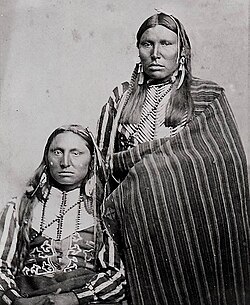
Comanche society was inclusive, absorbing bands from other peoples, including the Arapaho (Saria Tʉhka), Eastern Shoshone (Pohoi), and Plains Apache (Tasipenanʉʉ). Over time, names evolved; for example, the Hʉpenʉʉ (Timber People) likely merged into the Nokoni and Kwahadi bands.
Key Facts
- Origin: Emerged from the Shoshonean Expansion from the Great Basin/Wyoming area.
- Territory: Controlled Comancheria, spanning from the Arkansas River to central Texas.
- Economy: Heavily based on bison hunting and the trade of horses and mules.
- Military: Renowned for equestrian warfare and long-distance raids into Mexico.
- Population Decline: Dropped from approximately 20,000 in the late 18th century to a few thousand by the 1870s due to Eurasian diseases.
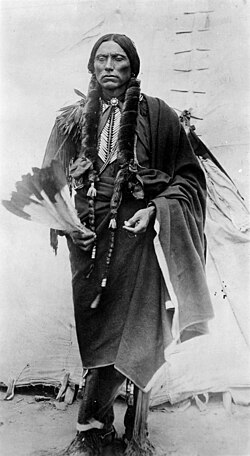
- Final Surrender: The last free band, led by Quanah Parker, surrendered in May 1875.
Conflict and Colonization
The relationship between the Comanche and European settlers was complex. While they were valued trading partners via the Comancheros of New Mexico, they were simultaneously feared for their raids. Political efforts to secure peace, such as Sam Houston's 1844 Treaty of Tehuacana Creek, failed when the Texas Legislature refused to establish official boundaries.
The 19th century brought devastating epidemics of smallpox, measles, and cholera. Simultaneously, the U.S. government sought to relocate the Comanche to reservations. The Treaty of Medicine Lodge (1867) promised schools and annuities in exchange for land, but the government failed to stop the extermination of the bison herds, which were the foundation of the Comanche way of life.
The Path to Reservation Life
Resistance continued through events like the Second Battle of Adobe Walls (1874) and the Battle of Palo Duro Canyon. By 1875, the remaining bands moved to the Fort Sill reservation in Oklahoma. Subsequent agreements, including the 1892 Cherokee Commission, further reduced their land holdings to 480,000 acres, eventually opening the remaining land to white settlement.
Notable Treaties and Figures
| Agreement/Person | Date | Key Detail |
|---|---|---|
| Meusebach–Comanche Treaty | 1847 | Private peace treaty between the Penateka band and the German Immigration Company. |
| Fort Martin Scott Treaty | 1850 | Unratified treaty between the U.S. government and local tribes. |
| Quanah Parker | Late 19th C. | Prominent chief who campaigned for tribal rights and land management. |
| Herman Lehmann | 1877–1878 | German captive adopted by Quanah Parker; later granted 160 acres of land. |
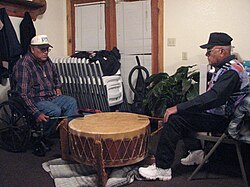
In the early 20th century, the Comanche faced the challenge of integrating into the Western economy. Chief Quanah Parker became a pivotal figure, navigating Washington politics to secure better deals for his people. A cultural legacy of this era is preserved in the 1920 silent film The Daughter of Dawn, which featured over 300 Comanche and Kiowa cast members.
Frequently Asked Questions
What was the "Comanche Moon"?
The "Comanche Moon" refers to the period of the full moon, which provided enough light for Comanche warriors to conduct night raids into Mexico for horses, weapons, and captives.
Which Comanche band was the most resistant to U.S. control?
The Kwaarʉ (Kwahadi/Quohada) were the most resistant; they were the only band that never signed a contract with Texans or Americans and were the last to surrender.
How did the bison affect the end of the Comanche way of life?
The systematic slaughter of the great bison herds by hunters, which the U.S. government failed to prevent, destroyed the primary food and resource source for the Comanche, forcing them onto reservations.
Who was Quanah Parker?
Quanah Parker was a prominent chief of the Comanche who led the last free band to surrender in 1875 and later served as a political advocate for his people in Washington, D.C.
What was the significance of the Meusebach–Comanche treaty?
It was a unique, brief, and simple private agreement between the Penateka band and the German Immigration Company for mutual cooperation and land sharing, independent of any government.