Colorado: A Comprehensive Overview of the Centennial State
Colorado, known as the Centennial State, is a land of dramatic contrasts, ranging from the high peaks of the Rocky Mountains to the expansive Colorado Plateau. With a diverse landscape and a rich history of mining and exploration, it serves as a vital hub for outdoor recreation, military operations, and academic research in the Western United States.
The state is characterized by its unique geography, featuring the Colorado Piedmont (the foothills and plains east of the mountains) and various regional divisions including Northern, Central, Western, Northwestern, and Southwestern Colorado.
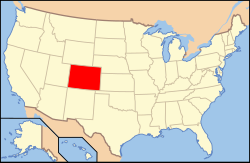
Key Facts
- Population: 5,029,196 (2010 U.S. Census)
- Total Area: 268,657.7 km²
- Population Density: 18.39 km² (2008 estimate)
- ISO 3166-2 Code: US-CO
- High Peaks: 51 "fourteeners" (peaks over 14,000 feet) and 55 major summits over 4,000 meters.
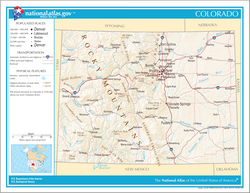
Geography and Terrain
Colorado's topography is dominated by the Rocky Mountains, which divide the state into distinct ecological and geological zones. The Colorado Plateau defines much of the western landscape, while the eastern portion is characterized by the Piedmont.
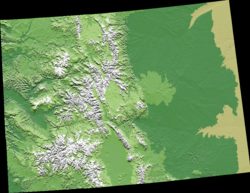
The state's elevation is a defining feature, most notably seen in its "fourteeners"—the 51 peaks that exceed 14,000 feet in elevation. These mountains provide the backdrop for world-renowned ski areas, such as Aspen Mountain, which opened in 1946.
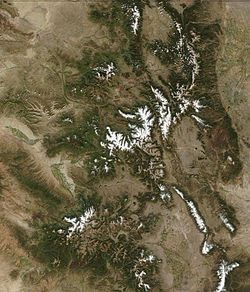
Administrative Divisions
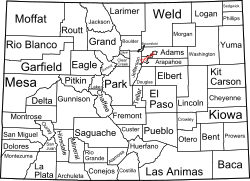
The state is organized into 64 counties and numerous municipalities, managed by a variety of state departments including the Department of Agriculture (CDA), Department of Human Services (CDHS), and the Department of Revenue (DOR). Additionally, the state utilizes over 4,000 special districts for localized governance.
History of Colorado
The history of Colorado is a complex tapestry of colonial claims and territorial shifts. Long before statehood, the region was influenced by the Spanish colony of Santa Fé de Nuevo Méjico (1598–1821) and French colonial interests in Louisiana.
The 19th century saw a rapid succession of territorial changes. Following the Louisiana Purchase (1803) and the Mexican-American War (1846–1848), the region transitioned through various designations, including the Territory of New Mexico and the Territory of Utah. The Pike's Peak Gold Rush (1858–1861) acted as a primary catalyst for settlement, leading to the creation of the Territory of Colorado in 1861.
Colorado was admitted as the 38th state of the Union on August 1, 1876. The late 19th century was marked by the Colorado Silver Boom (1879–1893), though this era ended with the Panic of 1893 and the repeal of the Sherman Silver Purchase Act.
Social and Political Milestones
Colorado has a history of progressive legislation and labor struggle. In 1893, male voters approved suffrage for women. However, the early 20th century was also marked by violent labor disputes, including the Ludlow Massacre in 1914 and the Columbine Mine massacre in 1927.
Military and Infrastructure Development
The state has long been a strategic military site, hosting the United States Air Force Academy (dedicated 1955), Fort Carson (est. 1942), and the North American Aerospace Defense Command (NORAD, est. 1958). Infrastructure grew rapidly with the arrival of the Union Pacific and Kansas Pacific railways in the 1860s and 1870s, and later with the opening of the Denver International Airport in 1995.
State Summary Table
| Category | Detail |
|---|---|
| Statehood Date | August 1, 1876 |
| Major City | Denver |
| National Parks | Mesa Verde, Rocky Mountain, Black Canyon of the Gunnison, Great Sand Dunes |
| Key Industries | Mining (Historical), Agriculture, Tourism, Military/Aerospace |
| Area Codes | 303, 719, 720, 970 |
Frequently Asked Questions
What are "fourteeners" in Colorado?
Fourteeners are mountain peaks in Colorado that reach an elevation of 14,000 feet or higher. There are 51 such peaks in the state.
When did Colorado become a state?
Colorado was admitted to the United States as the 38th state on August 1, 1876.
Which national parks are located in Colorado?
Colorado is home to Mesa Verde National Park, Rocky Mountain National Park, Black Canyon of the Gunnison National Park, and Great Sand Dunes National Park and Preserve.
What was the significance of the Pike's Peak Gold Rush?
The Pike's Peak Gold Rush (1858–1861) drove a massive influx of settlers to the region, which accelerated the transition from a territory to statehood.
What are the primary telephone area codes for Colorado?
The state uses the area codes 303, 719, 720, and 970.