Colonial American Newspapers and the Path to Independence
In the early days of the British colonies, newspapers were more than just sources of information; they were catalysts for unity. By disseminating political, social, and religious news, these early publications appealed to a growing sense of American identity and independence. This trend deeply concerned royal colonial governments, who feared that the widespread sharing of opinions would undermine British authority.
The emergence of the American press was centered in Boston, which served as the literary and typographic hub of the colonies. In the early 18th century, Boston boasted twice as many printers as all other colonies combined, producing the majority of the era's books and pamphlets.
Key Facts
- Publick Occurrences Both Forreign and Domestick (1690) was the first newspaper in the colonies, though it was quickly suppressed.
- The Boston News-Letter (1704) became the first successful, government-approved newspaper.
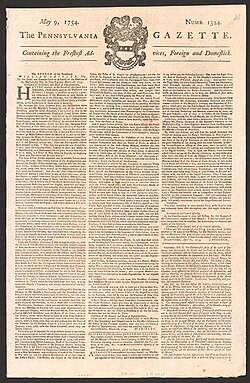
- Benjamin Franklin transformed The Pennsylvania Gazette into the most successful colonial publication.
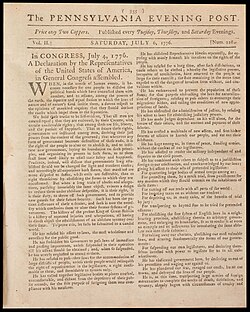
- The Pennsylvania Evening Post was the first daily newspaper in the U.S. and the first to publish the Declaration of Independence.
- The number of newspapers grew from 16 in 1740 to 37 by the start of the Revolutionary War in 1775.
The Early Press: Suppression and Success
The first attempt at a colonial newspaper occurred on September 25, 1690, with the Publick Occurrences Both Forreign and Domestick. Published in Boston by Richard Pierce for Benjamin Harris, the paper was an immediate hit with colonists but lacked the official printing license required by British law. Consequently, it became the first American newspaper to be suppressed by authorities.
Stability arrived in 1704 with The Boston News-Letter. Printed by Bartholomew Green for proprietor John Campbell, this publication had government approval and operated for 74 years until the British occupation of Boston in 1776. While The Hartford Courant is often cited as the oldest continuously published newspaper in the U.S., the News-Letter dominated the early landscape.
The Influence of Benjamin Franklin and Other Pioneers
Benjamin Franklin played a pivotal role in the evolution of the American press. After James Franklin founded the New-England Courant in 1721—where Benjamin wrote under the pseudonym Silence Dogood—the paper faced censorship for publishing seditious articles. Later, in 1729, Benjamin Franklin and Hugh Meredith purchased The Pennsylvania Gazette from Samuel Keimer, turning it into a colonial powerhouse.
Through the Gazette, Franklin also launched Poor Richard's Alamanack in 1732, a massive success that ran for over 25 years. Franklin's influence extended beyond his own papers; he frequently assisted other printers in establishing their businesses across the colonies.
Regional Expansion of the Press
- Virginia: The Virginia Gazette (1736), founded by William Rind, published Thomas Jefferson's A Summary View of the Rights of British America.
- North Carolina: James Davis established the North-Carolina Gazette in 1749 after being appointed the colony's official printer.
- Connecticut: The Connecticut Gazette (1755), founded by James Parker, served as a vital military record during the French and Indian War.
- Rhode Island: The Providence Gazette (1762), published by William and Mary Katherine Goddard, passionately defended colonial rights.
Newspapers and the American Revolution
As tensions rose following the French and Indian War, newspapers became essential tools for political mobilization. When Parliament imposed heavy taxes to pay off war debts, editors used their platforms to argue for an "American Congress" with status equal to British authority. Following the Boston Tea Party and the subsequent Intolerable Acts, newspapers spread word of British incursions, prompting the formation of the First Continental Congress.
The press was instrumental in organizing the Continental Association's boycott of British goods. Despite the risks of prosecution, many editors wrote anonymously to promote independence. By 1787, Thomas Jefferson famously remarked that he would prefer newspapers without a government over a government without newspapers.
The Declaration of Independence
The culmination of this journalistic effort occurred in 1776. John Dunlap was commissioned by the Second Continental Congress to print 200 broadsides of the Declaration of Independence, known as the Dunlap broadsides. These were distributed widely, including to General Washington's army. Shortly thereafter, The Pennsylvania Evening Post became the first newspaper to publish the document.
Summary of Early American Publications
| Publication/Event | Year | Significance |
|---|---|---|
| Publick Occurrences | 1690 | First colonial newspaper; quickly suppressed. |
| The Boston News-Letter | 1704 | First successful, government-approved paper. |
| The American Monthly Magazine | 1741 | First magazine in the American colonies. |
| Ein Geistliches Magazin | 1764 | First religious periodical in America. |
| The Pennsylvania Evening Post | 1775 | First daily newspaper; first to print the Declaration. |
Frequently Asked Questions
What was the first newspaper published in the American colonies?
The first was Publick Occurrences Both Forreign and Domestick, published in Boston on September 25, 1690. However, it was suppressed by authorities because it lacked a required printing license.
How did Benjamin Franklin contribute to early American journalism?
Franklin wrote for the New-England Courant under the name Silence Dogood, turned The Pennsylvania Gazette into the colonies' most successful paper, and published the widely popular Poor Richard's Alamanack.
What role did newspapers play in the American Revolution?
Newspapers disseminated news of British incursions, promoted the idea of an independent union, coordinated boycotts of British goods, and provided a forum for public debate during the ratification of the Constitution.
Which newspaper first published the Declaration of Independence?
The Pennsylvania Evening Post was the first newspaper to publish the Declaration of Independence following its adoption on July 4, 1776.
What were the Dunlap broadsides?
The Dunlap broadsides were 200 copies of the Declaration of Independence printed by John Dunlap by commission of the Second Continental Congress for wide distribution.