Colombia: A Comprehensive Overview of History, Geography, and Culture
The Republic of Colombia is a vibrant nation in South America, known for its diverse landscapes, rich biodiversity, and a complex history that has shaped its modern identity. From the peaks of the Andes to the shores of the Caribbean and Pacific, Colombia is a land of contrast and resilience, governed as a unitary presidential republic.
Key Facts
- Capital: Bogotá (the largest city)
- Official Language: Spanish (with 64 recognized regional languages)
- Population: Approximately 52.7 million (2024 estimate)
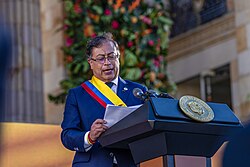
- Government: Unitary presidential republic led by President Gustavo Petro
- Currency: Colombian peso (COP)
- Total Area: 1,141,748 km²
Historical Evolution
Pre-Columbian and Colonial Eras
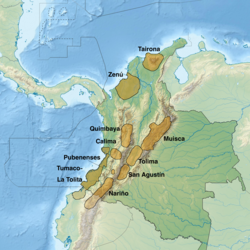
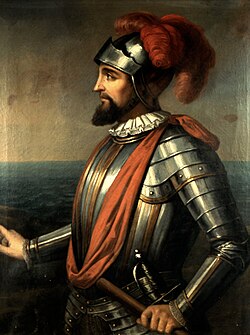
Before European arrival, the region was home to various pre-Columbian cultures. The colonial period began with Spanish exploration and the establishment of settlements, such as Santa María la Antigua del Darién, founded by Vasco Núñez de Balboa.
During the Spanish rule, the territory was part of the Viceroyalty of New Granada, a period marked by the imposition of Spanish administration and the blending of European and indigenous cultures.
![An illustration of the Battle of Cartagena de Indias, a major Spanish victory in the War of Jenkins' Ear[79]](/images/13/bb/13bb3c3c11d7834bc5030d1fd7c8d1f61d2bc700b61309173aa5a84a4c59537f.jpg)
The Path to Independence
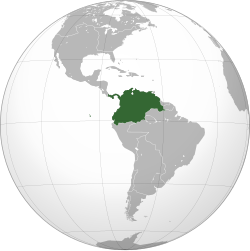
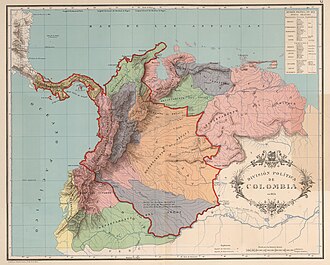
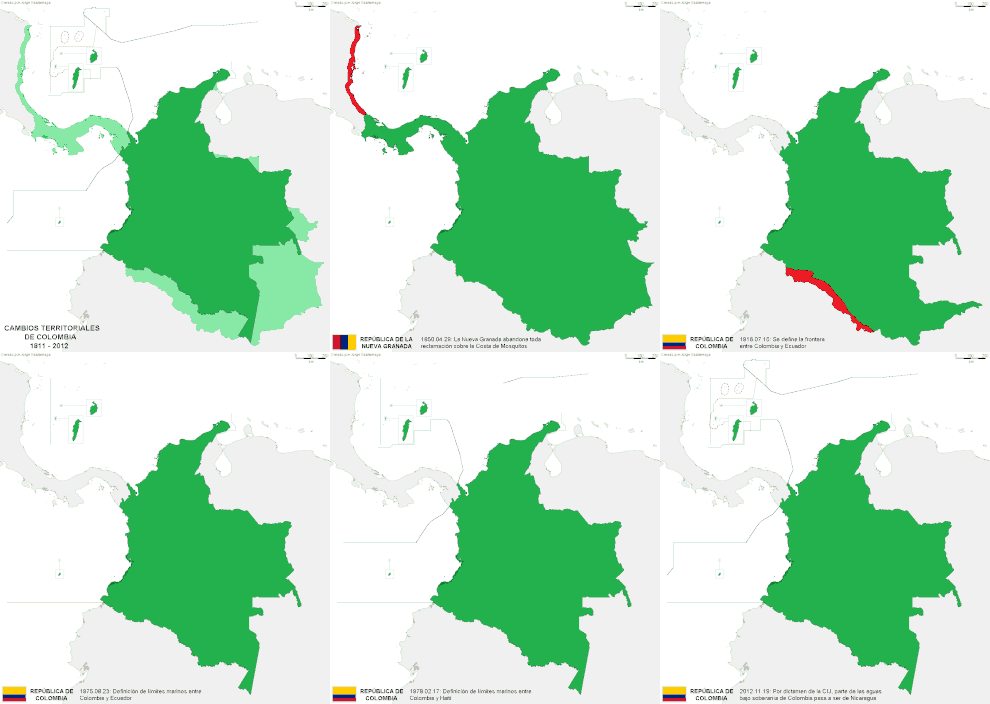
Colombia's journey toward sovereignty began with an autonomy movement on July 20, 1810. Independence was formally declared on July 16, 1813, and finally achieved on August 7, 1819. This victory led to the creation of Gran Colombia, a short-lived union of northern South American states.
Modern History
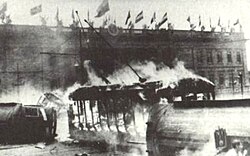
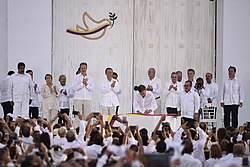
The 20th and 21st centuries have been characterized by political shifts and internal conflict. Significant events include the Bogotazo in 1948 and a long-standing internal conflict (1964–present). Recent years have seen a move toward peace, highlighted by the peace accords signed under former President Juan Manuel Santos, and the election of Gustavo Petro, the country's first left-wing president.
Geography and Environment

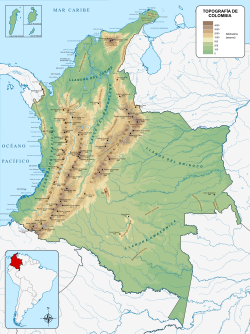
Colombia possesses a varied topography, featuring the rugged Andes mountains and the Sierra Nevada de Santa Marta. Its climate is classified by the Köppen system, reflecting a wide range of thermal floors (altitudinal zones) that influence local ecosystems.
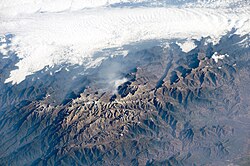
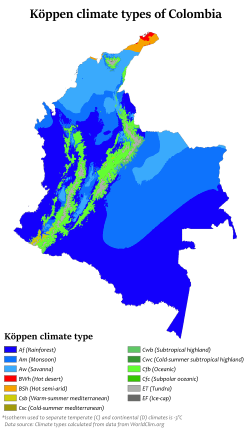
The nation is a global biodiversity hotspot, boasting an immense variety of flora and fauna. A prime example is the Cattleya trianae, the endemic national flower named after botanist José Jerónimo Triana.
![The national flower of Colombia, the endemic orchid Cattleya trianae, is named for Colombian botanist and physician José Jerónimo Triana.[186]](/images/8f/38/8f389a1b4210ee9230e5f07e6a541166300c37924b1504d2623b6075db03d86e.jpg)
Government and Administration
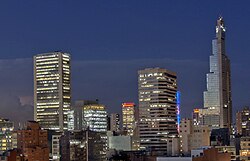
The Colombian government is structured as a presidential republic. The executive branch is headquartered at the Casa de Nariño, while the legislative branch operates from the Capitolio Nacional. The judiciary is represented by the Palace of Justice.
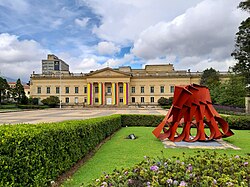
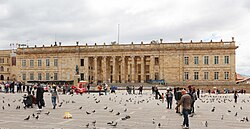
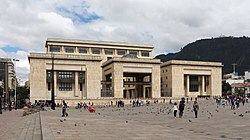
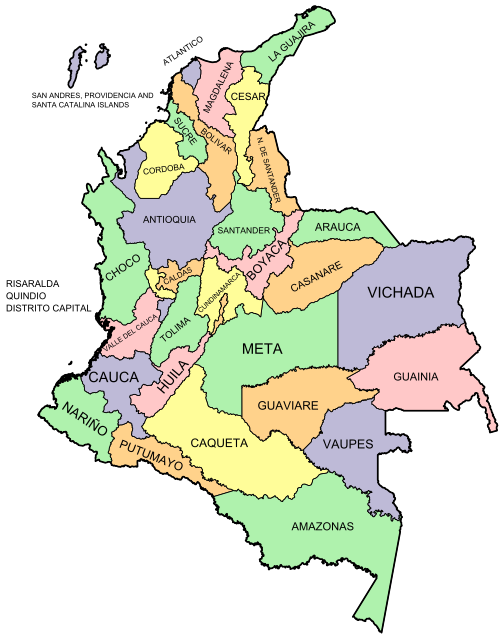
Administratively, the country is divided into 32 departments and one capital district (Bogotá). Each department has its own capital city, facilitating regional governance.
| Rank | City | Department | Population |
|---|---|---|---|
| 1 | Bogotá | Distrito Capital | 7,387,400 |
| 2 | Medellín | Antioquia | 2,382,399 |
| 3 | Cali | Valle del Cauca | 2,172,527 |
| 4 | Barranquilla | Atlántico | 1,205,284 |
| 5 | Cartagena | Bolívar | 876,885 |
Economy and Infrastructure

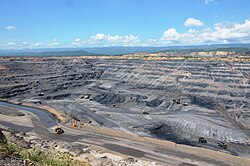
Colombia's economy is diversified across agriculture, industry, and services. Key resources include coal—with the Cerrejón mine being one of the largest open-pit mines in the world—as well as petroleum, gold, and emeralds.
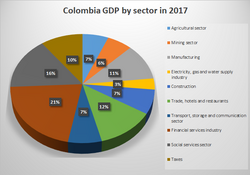
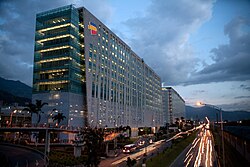
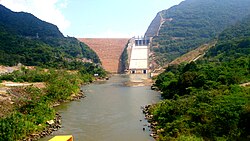
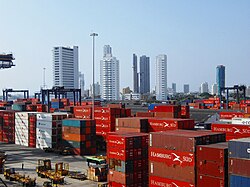
Infrastructure development is evident in the expansion of double-lane highways and the operation of major ports like the Port of Cartagena. Energy is supported by projects such as the Sogamoso Dam.
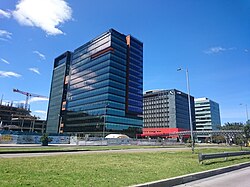
The government also invests in research through the Ministry of Science, Technology and Innovation to foster fundamental and applied scientific growth.
Society and Culture
Demographics and Language
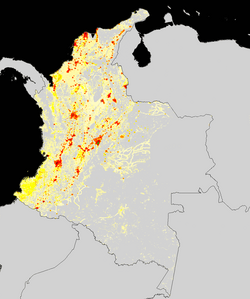
The population is predominantly Mestizo-White (84.99%), followed by Black (9.34%), Indigenous (4.31%), and Romani (0.01%) groups. While Spanish is the official language, the country recognizes 64 other languages, including Creole English in San Andrés and Providencia.
Arts and Heritage
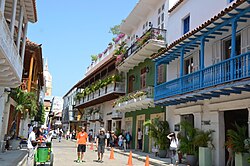
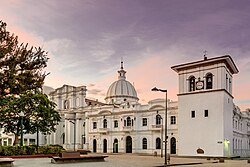
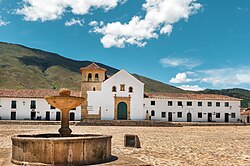
Colombia has a rich artistic legacy, from the colonial architecture of Cartagena, Popayán, and Villa de Leyva to the literary genius of Nobel laureate Gabriel García Márquez. The nation is also famous for its music, specifically Vallenato and Cumbia.
![The Nobel literature prize winner Gabriel García Márquez[404]](/images/8b/b1/8bb1a63c0803ef831100aff1a1129f51e6d91e8e8d0e80676839b82d5d73c68c.jpg)
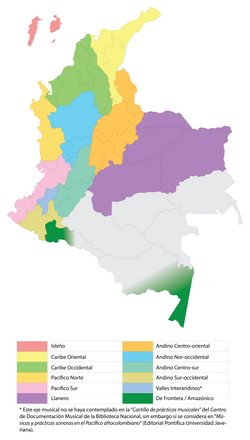
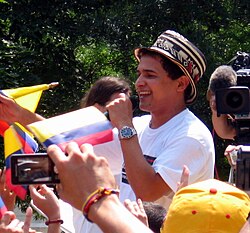
In the realm of cinema, the Cartagena Film Festival stands as the oldest cinema event in Latin America. The country's culinary traditions are highlighted by dishes such as Bandeja paisa and Ajiaco.
![The Cartagena Film Festival is the oldest cinema event in Latin America. The central focus is on films from Ibero-America.[452]](/images/99/c2/99c2533d365b886eaa8bca19735ebb339c9bfb13378c3638b18e4f4833768632.jpg)

Sports and Health
Colombia excels in sports, particularly cycling, with athletes like Mariana Pajón achieving Olympic gold. In healthcare, the country is recognized for high-quality clinics and hospitals, often leading regional rankings in Latin America.

![Colombia leads the annual América Economía ranking of the best clinics and hospitals in Latin America.[346]](/images/79/4e/794ec576b3eb630513e14a470a86e7167143a547d3491353c20de300caae646e.jpg)
Frequently Asked Questions
What is the official language of Colombia?
The official language is Spanish, although the government recognizes 64 other regional languages, including Creole English in the San Andrés and Providencia islands.
Who is the current president of Colombia?
The current president is Gustavo Petro, who is the country's first left-wing president.
What are the most popular folk music genres in Colombia?
Vallenato and Cumbia are the two most popular Colombian folk music genres, widely heard across Latin America.
What is the significance of Gran Colombia?
Gran Colombia was a state created on December 17, 1819, following the achievement of independence from Spain, aiming to unite several northern South American territories.
Which city is the capital of Colombia?
Bogotá is the capital and the largest city of Colombia.