College Station, Texas: A Hub of Education and Growth in the Brazos Valley
Located in the heart of East-Central Texas, College Station serves as a vibrant center of education and industry within the Brazos Valley. Positioned toward the eastern edge of the Texas Triangle—the region defined by the state's largest metropolitan areas—the city is strategically located 83 miles northwest of Houston and 87 miles east-northeast of Austin.
As of the 2020 census, College Station is home to 120,511 residents. Together with the neighboring city of Bryan, it forms the Bryan-College Station metropolitan area, which ranks as the 15th-largest metro area in Texas with a total population of 268,248.
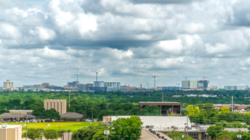
Key Facts
- Incorporated: October 19, 1938.
- Primary Driver: Home to Texas A&M University, the first public institution of higher education in Texas.
- Economic Power: The metropolitan GDP reached $18.181 billion in 2022.
- Geography: Spans approximately 51.3 square miles in Brazos County.
- Government: Operates under a Council-Manager system with Mayor John Nichols.
History and Evolution
The roots of College Station trace back to 1860 with the arrival of the Houston and Texas Central Railway. The community's trajectory changed forever in 1871 when the site was selected for the Agricultural and Mechanical College of Texas, a land-grant school. The institution, which became Texas A&M University in 1963, opened its doors in 1876 during the United States centennial.
Growth was gradual for several decades; the population was only 391 at the turn of the 20th century. Infrastructure improvements, including the extension of the I&GN Railroad in 1900 and the establishment of electric interurban service to Bryan in 1910, helped facilitate development. The community officially incorporated on October 19, 1938, with John H. Binney serving as the first mayor.
Following World War II, the city experienced a population surge. By 2000, the population had climbed to 67,890, and it continued to grow rapidly into the 21st century. The city gained significant national visibility in 1997 with the opening of the George Bush Presidential Library.
Geography and Climate
College Station covers a total area of 51.30 square miles, with the vast majority (51.16 sq mi) being land. The city sits at an elevation of 289 feet.
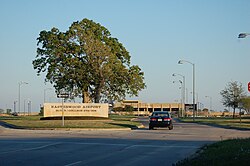
The local climate is characterized by warm to hot temperatures and significant annual precipitation. According to data from Easterwood Airport, the city averages 41.75 inches of rain per year. Summers are typically hot, with mean maximum temperatures in August reaching 102.8°F, while winters are mild, though record lows have dipped as far as -3°F.
Demographics and Community
The city's demographic profile is heavily influenced by its status as a university town. In the 2000 census, over 51% of the population fell within the 18 to 24 age range, resulting in a median age of 22 years.
The 2020 census shows a diverse population, with 63.5% identifying as White, 19.4% as Hispanic or Latino, 10.2% as Asian, and 8.1% as Black or African American. The city continues to see steady growth, with 2023 estimates placing the population at approximately 125,192.
Economy and Infrastructure
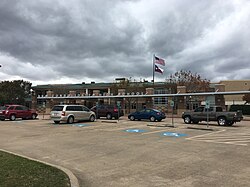
The economy of College Station is anchored by the education and healthcare sectors. The Texas A&M University System is the largest employer by a significant margin, providing over 16,000 jobs. Other major employers include the Bryan Independent School District, St. Joseph Regional Health Center, and Sanderson Farms.
The city is well-connected via a network of state highways and farm-to-market roads, including State Highway 6 (Earl Rudder Freeway) and State Highway 30 (Harvey Road). For retail and leisure, the Post Oak Mall serves as a central commercial hub.
Culture, Sports, and Landmarks
College Station is renowned for its sports culture and academic landmarks. Kyle Field, the massive stadium for Texas A&M football, is a primary point of interest, alongside other facilities like Reed Arena and Olsen Field.
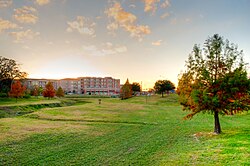
Cultural highlights include the George Bush Presidential Library, the D. A. "Andy" Anderson Arboretum, and the sculpture The Day the Wall Came Down. The city has also been home to various notable figures, including Nobel laureate David M. Lee, singer-songwriters Lyle Lovett and Robert Earl Keen, and former Secretary of Defense Robert Gates.
| Category | Detail |
|---|---|
| Population (2020) | 120,511 |
| Metro Population (2020) | 268,248 |
| Metro GDP (2022) | $18.181 Billion |
| Land Area | 51.16 sq mi |
| Primary Industry | Education (Texas A&M University) |
| Time Zone | CST (UTC-6) / CDT (UTC-5) |
Frequently Asked Questions
When was College Station officially incorporated?
College Station was incorporated on October 19, 1938, following a vote of 217 to 39.
What is the largest employer in the city?
The Texas A&M University System is the largest employer, with 16,248 employees.
What is the significance of the Texas Triangle?
The Texas Triangle is a region defined by the state's largest metropolitan areas; College Station is located toward the eastern edge of this region.
What are some of the major sports facilities in College Station?
Major facilities include Kyle Field, Reed Arena, Olsen Field, and Ellis Field.
How does the climate in College Station typically behave?
The city experiences a climate with hot summers (averaging over 100°F in August) and mild winters, with an average annual precipitation of 41.75 inches.