Colesberg: A Historic Hub of the Northern Cape
Located in the heart of the Northern Cape province, Colesberg serves as a vital link for travelers journeying between Cape Town and Johannesburg. Situated along the main N1 road, this town is more than just a convenient stopover; it is a center of agricultural excellence and a repository of South African colonial and wartime history.
From its roots as a missionary station to its current status as a renowned breeding ground for world-class livestock, Colesberg blends rural charm with a rich architectural heritage.
Key Facts
- Established: 1830
- Location: Pixley ka Seme District, Northern Cape, South Africa
- Primary Industries: Merino sheep farming, racehorse breeding, and tourism
- Demographics: Population of 16,869 (2011 Census)
- Key Landmark: Towerberg (also known as Coleskop)
- Strategic Position: Roughly the halfway point between Johannesburg and Cape Town
History and Heritage
Colesberg was founded in 1830 on the site of an abandoned London Missionary Society station. Originally named Toverberg after a nearby hill, it was later renamed in honor of Sir Galbraith Lowry Cole, the Governor of the Cape Colony. Because of its location on well-traveled routes used by explorers, hunters, and traders, the town became a critical gateway to the interior of the country.
The town's history is marked by significant conflict and faith. During the Second Anglo-Boer War, Colesberg was the site of numerous battles and skirmishes, a history now commemorated at the Colesberg Garden of Remembrance located just outside the town limits.
Religious diversity shaped the early community. While the Dutch Reformed Church was central, 1820 Settlers established Methodist and Anglican congregations. Notably, the Anglican Christ Church, construction of which began in 1852, was designed by Sophy Gray, the wife of Bishop Robert Gray.
Cityscape and Architecture
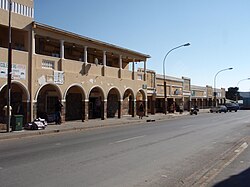
The architecture of Colesberg is a visual timeline of the 19th century. The town features a unique blend of Cape Dutch (a style characterized by ornate gables and whitewashed walls) and Georgian architecture. Many of these historic buildings are distinguished by their use of yellowwood timbers and reed ceilings.
Interestingly, the original plots of the town were sold specifically to fund the construction of the Dutch Reformed Church, cementing the institution's role in the town's early urban planning.
Economy and Natural Environment
The economy of Colesberg is deeply rooted in the land. The surrounding region, spanning over half-a-million hectares, is one of South Africa's premier sheep-farming areas, producing some of the country's finest Merino sheep. The area is equally famous for high-quality racehorses, with several prestigious stud farms nearby, including one owned by the legendary golfer Gary Player.
While the ostrich-feather boom of the early 1900s once brought immense wealth to local farmers, the modern economy relies on a mix of agriculture, small-scale industry, and tourism. Local industries include a furniture factory, a panel beater, and a sheep abattoir.
Tourism thrives due to the town's location on the N1. Visitors can find a variety of hotels, motels, and guest houses. For those seeking nature, the Doornkloof Nature Reserve, situated at the confluence of the Orange and Seekoei Rivers, offers a sanctuary for wildlife and bird watching.
| Category | Detail |
|---|---|
| Total Population | 16,869 |
| Population Density | 96.482/km² |
| Dominant Language | Xhosa (59.5%) |
| Secondary Language | Afrikaans (33.1%) |
| Total Area | 174.84 km² |
| Time Zone | UTC+2 (SAST) |
Notable People
Colesberg has been home to several influential figures across various fields:
- Zamani Saul: Premier of the Northern Cape.
- General Piet Cronje: A prominent general in both Anglo-Boer wars.
- Ricardo Loubscher: National rugby union player and coach.
- Nicolaas Theunissen: South African Test cricketer.
- Nombulelo Lilian Hermans: Member of the National Assembly and former ANC regional treasurer.
- Danie du Plessis: Co-founder of The Afrikaner Broederbond and Head of South African Railways.
- Frans du Toit: Trade Commissioner and Economist.
- Hennie Bingle: Rector of the PUK.
Frequently Asked Questions
Where is Colesberg located?
Colesberg is located in the Northern Cape province of South Africa, within the Pixley ka Seme District and the Umsobomvu Municipality, situated along the N1 highway.
What is Colesberg famous for agriculturally?
The town is renowned for breeding top-quality Merino sheep and high-performance racehorses, with several prominent stud farms in the vicinity.
What is the historical significance of Towerberg?
Towerberg (or Coleskop) is a prominent hill that served as a vital landmark for traders, hunters, and explorers traveling into the interior of South Africa.
What architectural styles can be found in Colesberg?
The town features a blend of Georgian and Cape Dutch architecture, often utilizing traditional materials like yellowwood timbers and reed ceilings.
What activities are available for tourists in the Colesberg district?
Visitors can enjoy 4x4 and mountain bike trails, bird watching, and game hunting (specifically blesbok, wildebeest, and springbok) at various guest farms, or visit the Doornkloof Nature Reserve.