Classical Music: A History of Western Art Music
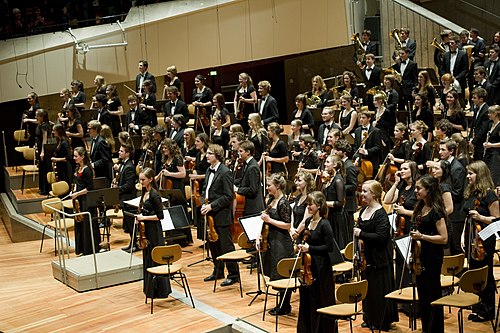
Classical music is a sophisticated tradition of art music from the Western world. Distinct from folk or popular music, it is defined by its formality, complex musical forms, and harmonic organization. A hallmark of this tradition is polyphony—the simultaneous combination of two or more independent melodic lines.
Since at least the ninth century, classical music has been primarily a written tradition. This reliance on documentation led to the creation of a complex notational system and a vast body of literature spanning musicology, philosophy, and historiography.
Key Facts

- Definition: Western art music distinguished from popular and folk traditions.
- Core Characteristics: Formality, harmonic complexity, and a strong written tradition.
- Early Roots: Heavily influenced by the patronage of European royal courts and the Church.
- The "Classical" Distinction: While the term covers all Western art music, the "Classical period" specifically refers to the era between 1750 and 1820.
- Evolution: Progressed from monophonic chants to complex orchestral symphonies and diverse contemporary forms.
The Roots of Western Art Music
Medieval Foundations
Early medieval music was predominantly vocal, religious, and monophonic (consisting of a single melodic line). The earliest surviving manuscripts originate from the Carolingian Empire (800–887), a period when Western plainchant evolved into Gregorian chant. Key musical centers flourished at the Abbeys of Saint Gall, Saint Martial, and Saint Emmeram.
By the 11th century, the development of staff notation allowed for more precise recording of music. By the mid-12th century, France became the epicenter of musical innovation. The Notre-Dame school explored organized rhythms and polyphony, while secular music thrived through the troubadour and trouvère traditions of poet-musician nobles.
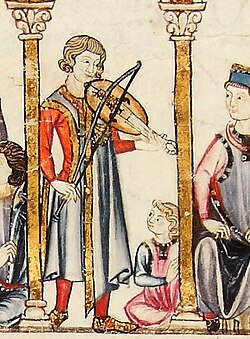
This era culminated in the French ars nova and Italian Trecento, eventually leading to ars subtilior, a style known for its extreme rhythmic diversity.
The Renaissance
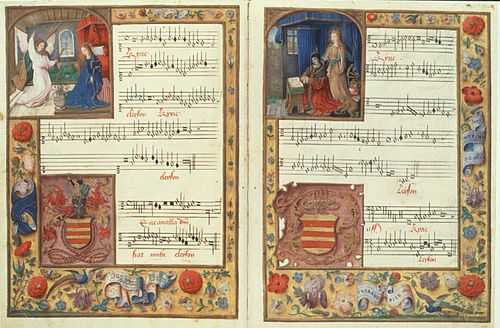
Starting in the early 15th century, the Franco-Flemish School advanced choral music, specifically the mass and motet, by incorporating harmonic principles from the English contenance angloise. Northern Italy later became the dominant region, where the Roman School developed sophisticated polyphony in genres like the madrigal, which subsequently influenced the English Madrigal School.
The Common-Practice Period
The Baroque Period (1580–1750)
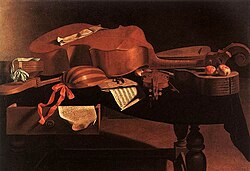
The Baroque era introduced the standardization of common-practice tonality and saw a surge in the importance of musical instruments. Italy led the way, giving birth to opera, the concerto, the sonata, and large-scale vocal works such as the oratorio and cantata.
Johann Sebastian Bach championed the fugue, a technique embodying the Baroque love for complexity. In response, simpler styles known as galant and empfindsamkeit emerged.
The Classical Period (1750–1820)
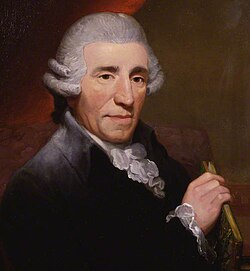
In this pivotal era, composers like Wolfgang Amadeus Mozart, Joseph Haydn, and Ludwig van Beethoven focused on absolute music—music that is not intended to represent a specific story or image. This period perfected the symphony, the string quartet, and the concerto.
The Romantic Period (1800–1910)
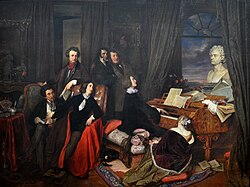
Romanticism shifted the focus toward programmatic music, which seeks to evoke a specific narrative or mood. This was expressed through art songs, symphonic poems, and various piano genres. This era celebrated virtuosity and immensity, often embedding philosophy and nationalism into the music, most notably in the operas of Richard Wagner.
Modern and Contemporary Eras
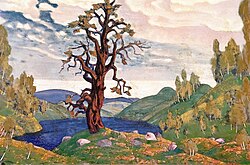
The 20th and 21st centuries brought a diversification of styles. Early 20th-century composers, including Mahler, Sibelius, and Vaughan Williams, were often influenced by the forces of nature.
Contemporary classical music is generally categorized in two ways: broadly as all post-1945 forms, or more specifically as music written by living composers since the mid-1970s. This modern landscape includes modernist, postmodern, neoromantic, and pluralist styles.
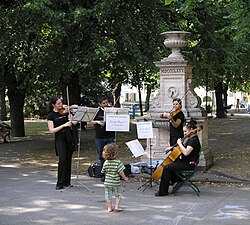
The accessibility of this music has evolved significantly with the advent of radio and recording technology, moving from exclusive court performances to commercial compilation CDs and global broadcasts.
Summary of Musical Eras
| Era | Approximate Dates | Key Characteristics | Notable Figures/Genres |
|---|---|---|---|
| Medieval | 9th Century – 1400s | Monophonic, religious, early notation | Gregorian chant, Notre-Dame school |
| Renaissance | 15th Century – 1580 | Advanced polyphony, choral focus | Franco-Flemish School, Madrigals |
| Baroque | 1580 – 1750 | Tonality, instrumental growth | J.S. Bach, Opera, Concerto |
| Classical | 1750 – 1820 | Absolute music, structural clarity | Mozart, Haydn, Beethoven |
| Romantic | 1800 – 1910 | Programmatic music, emotionalism | Richard Wagner, Symphonic poems |
| Contemporary | Post-1945 / Present | Pluralism, Modernism, Post-modernism | Living composers |
Frequently Asked Questions
What is the difference between "classical music" and the "Classical period"?
The term "classical music" is a broad umbrella covering all Western art music from the medieval era to today. The "Classical period" refers specifically to a shorter window from approximately 1750 to 1820, defined by the works of Mozart, Haydn, and Beethoven.
What is polyphony?
Polyphony is a musical texture consisting of two or more simultaneous lines of independent melody. It is a defining characteristic of much Western classical music, particularly from the Renaissance and Baroque periods.
What is the difference between absolute music and programmatic music?
Absolute music is intended to be appreciated for its own musical structure without any external narrative. Programmatic music is designed to evoke a specific story, image, or landscape.
How did the patronage system influence early classical music?
Early classical music was rooted in the patronage of the Church and royal courts, which is why much of the surviving early medieval music is religious and vocal in nature.
What defines contemporary classical music today?
In a modern context, it refers to music written by living composers, particularly those who rose to prominence from the mid-1970s onward, encompassing styles like neoromanticism and pluralism.