Clarín: The Evolution of Argentina's Largest Newspaper
Clarín (Spanish for 'Bugle') stands as the largest newspaper in Argentina and the second most circulated Spanish-language publication globally. Since its inception in the mid-1940s, it has evolved from a pioneering tabloid into a massive media conglomerate, playing a central and often controversial role in the political and social landscape of Argentina.
Founded by Roberto Noble, a former minister of the Buenos Aires Province, the newspaper has maintained a significant presence in the capital and throughout the country, adapting its format and business model to survive the transition from print dominance to the digital age.
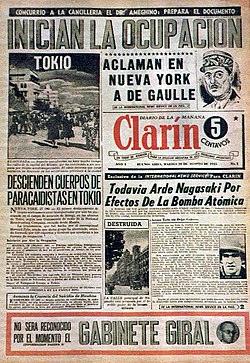
Key Facts
- Founded: August 28, 1945, by Roberto Noble.
- Headquarters: Buenos Aires, Argentina.
- Format: Tabloid.
- Ownership: Arte Gráfico Editorial Argentino S.A. (Clarín Group).
- Market Position: Largest newspaper in Argentina; second most circulated in the Spanish-speaking world.
- Digital Presence: One of the most visited news websites in Argentina via clarin.com.
Historical Development and Growth
Clarín was a trailblazer in the Argentine press, being one of the first newspapers to adopt the tabloid format. Its growth was rapid; by 1965, it became the highest-selling newspaper in Argentina, and by 1985, it achieved the title of the most widely circulated Spanish-language newspaper in the world.
The publication introduced several innovations to the market, including the launch of a Sunday magazine in 1967 and the introduction of topic-specific supplements in 1969. In 1976, the creation of Artes Gráficas Rioplatense (AGR) allowed the paper to implement high-color printing, further enhancing its visual appeal.
Leadership Transitions and Expansion
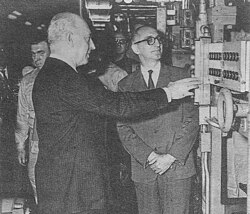
Following the death of Roberto Noble in 1969, his widow, Ernestina Herrera de Noble, took over as director. Under her leadership, the newspaper expanded its influence. In 1977, Clarín joined La Nación and La Razón in purchasing Papel Prensa. By 1999, following legal reforms, the organization expanded into a media conglomerate known as Grupo Clarín, diversifying into radio, television, and internet services.
The group's financial reach expanded globally in December 1999 when it entered an investment agreement with the American firm Goldman Sachs, which acquired an 18% minority stake in the Clarín Group.
Editorial Stance and Political Influence
Clarín defines itself as an independent newspaper, though it has historically been associated with a center-right editorial line. For several decades, it was a staunch proponent of developmentalism—an ideology focusing on industrialization, infrastructure investment, and import substitution.
The paper's political history is marked by its opposition to populism. In the 1946 general election, it supported José Tamborini of the Radical Civic Union against Juan Perón. It later supported the Revolución Libertadora, which overthrew Perón in 1955.
Conflict with the Kirchner Administrations
The relationship between Clarín and the Argentine government has been volatile. While the group initially had a functional relationship with Néstor Kirchner—who renewed transmission licenses in 2005—relations soured in 2008 when Clarín supported farmers protesting export taxes.
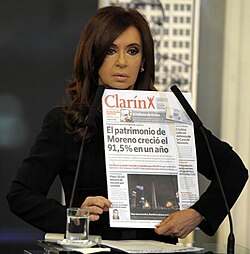
This tension escalated under President Cristina Fernández de Kirchner. The administration implemented a controversial media law intended to encourage plurality, which Clarín and its supporters viewed as an attack on freedom of expression. The conflict was highlighted by the government's "anti-Clarín" propaganda campaigns.
Circulation and Digital Reach
While Clarín remains a dominant force, it has faced the same challenges as the global print industry. In 1983, it held 35% of the Argentine newspaper market; by 2012, this share had declined to approximately 21%, with print circulation at 270,444 copies. However, it maintains a strong hold on the Buenos Aires market with a 44% share.
The transition to digital has been successful. Launched in March 1996, clarin.com became a primary news source for millions. By April 2011, the site recorded nearly 6 million unique daily visitors, ranking as the most visited Argentine-based website at the time.
| Category | Detail |
|---|---|
| Publisher | Héctor Magnetto |
| Editor-in-Chief | Ricardo Kirschbaum |
| Political Alignment | Economic Liberalism (Formerly Developmentalism) |
| Print Circulation (2012) | 270,444 |
| Digital Circulation (2018) | 100,000 |
| Market Share (Buenos Aires) | 44% |
Frequently Asked Questions
Who founded Clarín and when?
Clarín was founded by Roberto Noble, a former minister of the Buenos Aires Province, on August 28, 1945.
What is the political orientation of Clarín?
The newspaper is identified as independent with a center-right editorial line. It historically defended developmentalism and currently aligns with economic liberalism.
What is Grupo Clarín?
Grupo Clarín is a media conglomerate formed in 1999 that allows the organization to operate across various platforms, including television, radio, internet, and other newspapers.
Why did Clarín have a conflict with Cristina Fernández de Kirchner?
The conflict stemmed from the government's implementation of a media law that Clarín viewed as an attack on press freedom, as well as the newspaper's opposition to government policies regarding export taxes.
How has Clarín's circulation changed over time?
While it was the highest-selling Spanish-language newspaper in 1985, its print market share in Argentina dropped from 35% in 1983 to about 21% by 2012, though it remains a leader in digital news consumption.