The Economist: A Legacy of Liberalism and Global Insight
Since its founding in September 1843, The Economist has established itself as a preeminent voice in global affairs. For over 180 years, the publication has provided rigorous analysis of politics, business, and technology, guided by a core philosophy of economic liberalism, social liberalism, and radical centrism. By championing free trade, self-sufficiency, and laissez-faire policies, it has shaped the discourse of international political economy.
![City of Westminster's Smithson Plaza, formerly known as The Economist Building,[39][40][41][42] served as the headquarters of the paper until 2017, on St James's Street.](/images/04/21/042169061de462967d67f03d52515c7c6c91a35d75b722c7d8d5e0fc5dd2050a.jpg)
Foundations and Editorial Philosophy
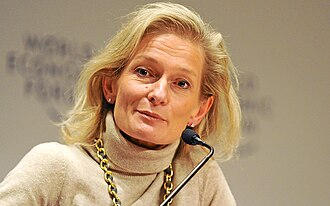
The publication was founded by James Wilson and has been shaped by a long lineage of influential editors. From the early leadership of Richard Holt Hutton and Walter Bagehot to the modern era under Zanny Minton Beddoes, the magazine has maintained a distinct identity. Beddoes, who joined the organization in 1994 as an emerging markets correspondent, has served as editor since 2015.
A defining characteristic of The Economist is its editorial anonymity. Rather than using individual bylines, the publication presents a unified voice, ensuring that the weight of its arguments rests on the collective expertise of the organization rather than the celebrity of a single writer. This approach reinforces its commitment to a consistent, principled stance on global issues.
Key Facts
- Founded: September 1843
- Current Editor: Zanny Minton Beddoes
- Political Alignment: Radical centrism, economic liberalism, and social liberalism
- Circulation: 1.225 million (as of September 2025)
- Headquarters: The Adelphi, London, United Kingdom
- Core Values: Free trade, anti-protectionism, and laissez-faire policies
Recognizing Global Change: Country of the Year
One of the publication's most celebrated traditions is the selection of the Country of the Year. This annual recognition highlights nations that have undergone significant political or economic transformations. The selection process honors countries that have demonstrated resilience, reform, or a pivotal shift in the global landscape.
Recent Country of the Year Honorees
The following table outlines recent recipients of this distinction, reflecting the magazine's focus on democratization and economic reform.
| Year | Country | Reason for Selection |
|---|---|---|
| 2021 | Italy | Economic reforms and effective COVID-19 vaccination program |
| 2022 | Ukraine | Resisting the 2022 Russian invasion of Ukraine |
| 2023 | Greece | Economic reforms and political stability |
| 2024 | Bangladesh | Transitioning towards a more liberal government |
| 2025 | Syria | A stabilising post-Assad transition |
Multimedia and Digital Evolution
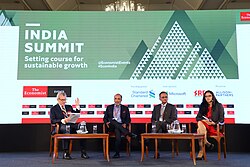
To meet the demands of a modern audience, The Economist has expanded far beyond its traditional print roots. The organization now produces a diverse array of digital content, including the Espresso news app and a wide range of specialized podcasts. These audio series allow for deep dives into specific sectors, such as technology (Babbage), finance (Money Talks), and American politics (Checks and Balance).
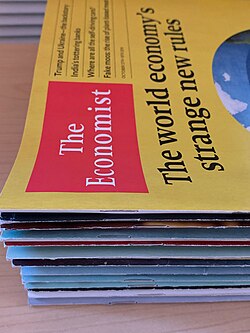
Furthermore, the publication is a leader in data journalism, utilizing complex datasets to create influential indexes and visual reports. This commitment to empirical evidence is central to its mission of providing clarity in an increasingly complex world.
Frequently Asked Questions
What is the political stance of The Economist?
The publication identifies with radical centrism, economic liberalism, and social liberalism. It generally supports free trade, globalization, and individual liberties.
Why don't articles have author names?
The Economist practices editorial anonymity. This means the magazine speaks with a single, collective voice rather than through individual contributors, emphasizing the publication's unified editorial stance.
What are some of the specialized podcast series offered?
Current productions include The Intelligence for general news, Drum Tower for coverage of China, and Babbage for technology-focused insights.
What is the significance of the 'Country of the Year' award?
The award recognizes nations that have made significant strides in political or economic reform, or those that have played a pivotal role in global events during that year.
Where is The Economist headquartered?
The headquarters is located at The Adelphi, 1–11 John Adam St, Westminster, London, United Kingdom.