Clan Munro: History, Heritage, and the Legacy of the Highland Warriors
Known in Scottish Gaelic as Clann an Rothaich, Clan Munro is a distinguished Highland Scottish clan with deep roots in the region of Easter Ross. From their traditional origins as settlers from Ireland to their role as stalwart defenders of the British Crown, the Munros have left an indelible mark on Scottish and global history. Their journey is one of transition—from Celtic chiefs to feudal lords—and a legacy defined by military prowess and academic achievement.
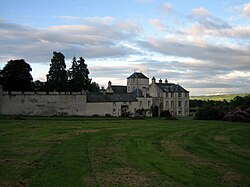
The clan's identity is anchored by their seat at Foulis Castle and a motto, "Dread God," which reflects the spiritual and moral convictions of the lineage. Whether fighting in the Thirty Years' War in Europe or charting the peaks of the Highlands, the Munros have consistently demonstrated a spirit of resilience and duty.
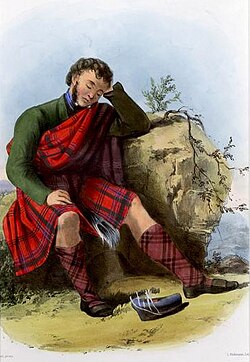
Key Facts
- Region: Highland, specifically the district of Easter-Ross.
- Chief: Hector Munro of Foulis, the 35th Chief.
- Seat: Foulis Castle.
- Motto: Dread God.
- War Cry: Caisteal Foghlais na Theine.
- Plant Badge: Common club moss.
- Allied Clans: Clan Ross, Clan Rose, Clan Fraser of Lovat, Clan Mackay, Clan Sutherland, and Clan Campbell (18th century).
- Rival Clans: Clan Mackenzie, Clan Cameron, and Clan Mackintosh.
Origins and Early History
The traditional narrative suggests that the clan was founded by Donald Munro, who migrated from the north of Ireland in the eleventh century. This is supported by the Gaelic name Rothach, meaning "Man from Ro," referring to the River Roe area in Ireland. However, contemporary written records of this tradition only appear in the late 17th century.
The first proven chief in historical records is Robert de Munro, who died in 1369. The use of the Norman particle "de" (meaning "of") suggests Norman influence, coinciding with the period when the Normans introduced the feudal system to Scotland. Robert de Munro held charters under David II of Scotland, including lands at Estirfowlys, which would eventually become the clan's ancestral heartland. His son, Hugh Munro (d. 1425), was the first to be styled "of Foulis."
![The Eagle Stone, said to commemorate a Munro battle.[22]](/images/97/d8/97d8806a8865cdfecea16896bd29ddf3520082e5d1eee473e42038909fa18eba.jpg)
Clan Conflicts and Political Alliances
The 15th and 16th centuries were marked by shifting alliances and violent clashes. In 1497, the Munros and Mackenzies reportedly joined forces to defeat MacDonald of Lochalsh at the Battle of Drumchatt, though some historians suggest the Munros and Mackenzies actually fought each other at the same site in 1501.
Conflict with Clan Cameron was particularly fierce. In 1505, William Munro of Foulis was killed by Cameron of Lochiel while on royal business. Despite these rivalries, the Munros were adept at diplomacy, signing bonds of friendship with Clan Rose and Clan Mackintosh in 1527, and an alliance with Lord Fraser of Lovat in 1529.
The clan's loyalty to the monarchy was evident during the 16th century. Robert Mor Munro, the 15th Baron of Foulis, was a devoted supporter of Mary, Queen of Scots. During the Siege of Inverness in 1562, the Munros and Frasers—regarded as the bravest clans in the north—successfully took the castle for the Queen.
Military Prowess: From Europe to the Black Watch
The Thirty Years' War
In the early 17th century, the Munros extended their military reach to continental Europe. Robert Munro, the 18th Baron (the "Black Baron"), led 700 clansmen to fight for Gustavus Adolphus of Sweden in defense of Protestantism. His cousin, General Robert Monro of the Obsdale branch, also played a pivotal role. Their soldiers were so effective in battle that they earned the nickname the "Invincibles."
The Covenanters and Civil War
During the mid-17th century, the clan was split by the religious and political turmoil of the Bishops' Wars and the English Civil War. While many served as Covenanters (Scottish Presbyterians who signed a covenant to maintain their religion), others, like Sir George Munro, eventually aligned with the Royalists. In 1650, the Munros, alongside the Rosses and Sutherlands, defeated the royalist army of the Marquess of Montrose at the Battle of Carbisdale.
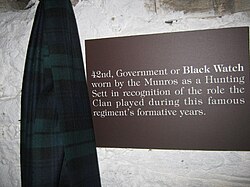
The Black Watch and the Jacobite Risings
In 1725, the Munros were instrumental in the formation of the Black Watch (Am Freiceadan Dubh), originally six Independent Highland Companies tasked with policing the Highlands. Sir Robert Munro served as lieutenant-colonel of this prestigious regiment.
Throughout the Jacobite risings, the Munros remained loyal to the British Government. During the 1715 rising, they suffered plundering by the Jacobite Earl of Seaforth, which they later retaliated for during the Siege of Brahan. Sir Robert Munro, 6th Baronet, met his end during the 1746 Battle of Falkirk; he was killed by Jacobite forces but was buried with honor by his opponents in the grave of Sir John de Graham.
![Letter to Lord Albemarle dated 23 October 1746 that reads Yesterday there was a meeting of the Camerons about five miles from this, Lochiel's brother was there & the person who tells me of it says, they have resolved to lay hold on the villain who murdered (George Munro of) Culcairn and give him up to the Justice when found, unless this be done they expect a visit from the whole race of Monros (Munros).[69]](/images/bf/e0/bfe0a47cdcfe528ea4129d46666b707dab09c461e5819515245b978a502c49c6.jpg)
Notable Figures and Global Legacy
The influence of Clan Munro extended far beyond the battlefield. In the realm of science and exploration, Sir Hugh Munro, 4th Baronet, founded the Scottish Mountaineering Club and compiled the first scientific list of Scottish mountains over 3,000 feet—now universally known as Munros.
The clan also produced distinguished military leaders in India, such as Sir Hector Munro and Sir Thomas Munro. Perhaps most notably, the 5th President of the United States, James Monroe, is believed to be a descendant of Robert Munro, 14th Baron of Foulis, via Patrick Andrew Monroe, who emigrated to America in the 17th century.
| Category | Details |
|---|---|
| Traditional Origin | River Roe area, North of Ireland |
| Primary Seat | Foulis Castle, Easter Ross |
| Key Military Contribution | Founding of the Black Watch; Thirty Years' War |
| Famous Descendant | James Monroe (5th US President) |
| Geographic Legacy | "Munros" (Scottish mountains over 3,000 ft) |
Frequently Asked Questions
Who was the founder of Clan Munro?
Traditionally, the clan was founded by Donald Munro, who came from Ireland in the 11th century. However, the first chief documented by contemporary evidence is Robert de Munro, who died in 1369.
What is the significance of "Munros" in mountaineering?
The term refers to Scottish mountains with a height of over 3,000 feet. This classification was created by Sir Hugh Munro, 4th Baronet, a founding member of the Scottish Mountaineering Club.
Did Clan Munro support the Jacobites?
No, Clan Munro generally supported the British Government and remained loyal to the Crown during the Jacobite risings, often clashing with Jacobite-aligned clans like the Mackenzies and Camerons.
What is the connection between Clan Munro and the Black Watch?
The Munros were one of the original clans used to form the Independent Highland Companies in 1725, which evolved into the famous Black Watch regiment.
Is US President James Monroe related to Clan Munro?
Yes, he is believed to be the great-great-grandson of Patrick Andrew Monroe, who emigrated from Scotland to the US in the mid-17th century and was likely a descendant of Robert Munro, 14th Baron of Foulis.