Clan Mackenzie: History, Heritage, and the Legacy of the Highlands
Clan Mackenzie, known in Gaelic as Clann Choinnich, is a distinguished Highland clan with deep roots in the district of Ross-shire. Defined by a history of fierce territorial feuds, political volatility, and military distinction, the clan has evolved from a regional power in the Scottish Highlands to a globally recognized symbol of Scottish heritage.
From their historic strongholds to their contributions in the Napoleonic Wars and the mapping of India, the Mackenzies have left an indelible mark on both Scottish and world history. Today, the clan continues to maintain its traditions under the leadership of its chief, recognized by the Court of the Lord Lyon.
Key Facts
- Chief: John Ruaridh Grant Mackenzie, 5th Earl of Cromartie.
- Motto: Luceo Non Uro ("I Shine Not Burn").
- War Cry: Tùlach Àrd ("The High Hill").
- Traditional Seat: Castle Leod.
- Historic Stronghold: Eilean Donan Castle.
- Plant Badge: Variegated Holly or Deergrass.
- Region: Highland (Ross-shire).
Origins and Early History
The origins of Clan Mackenzie are a subject of historical debate. Early traditional accounts, including those by John Mackenzie of Applecross and the 1st Earl of Cromartie, claimed the clan descended from a Fitzgerald progenitor. However, later historians, such as Alexander Mackenzie in his 1894 edition of History of the Mackenzies, moved away from this theory based on newer genealogical evidence found in MS 1467.
The clan's early presence is documented through the 14th century. During the Wars of Scottish Independence, the Mackenzies are said to have supported Robert the Bruce, participating in the Battle of Inverurie in 1308. It is recorded that Chief Iain Mac Coinnich led 500 men at the pivotal Battle of Bannockburn in 1314.
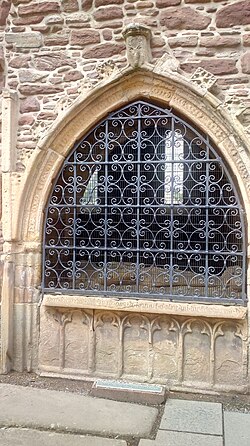
The first contemporary written record of a living Mackenzie appears in 1465 and 1466 with Alexander Mackenzie of Kintail. The earliest known physical likeness of a clan member is the effigy of Sir Kenneth Mackenzie (d. 1491/1492), located at Beauly Priory, where he was the first Mackenzie to be buried.
Power, Conflict, and the Civil War
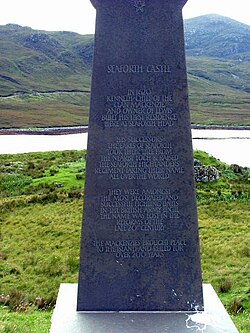
Throughout the 15th and 16th centuries, the Mackenzies were embroiled in frequent feuds with neighboring clans. By the 17th century, the clan's influence grew, and the chief was granted the title Earl of Seaforth.
The Scottish Civil War brought internal and external conflict. In 1645, Lord Seaforth fought as a Covenanter (a member of a Scottish religious and political movement) against the royalist James Graham, 1st Marquess of Montrose, at the Battle of Auldearn. Despite the Covenanter defeat, some clan members, such as Thomas Mackenzie of Pluscarden, later shifted their allegiance to the royalist cause, leading an uprising during the Siege of Inverness in 1649.
The Jacobite Risings and Political Division
The 18th century was a period of profound division for Clan Mackenzie. During the Jacobite rising of 1715, William Mackenzie, 5th Earl of Seaforth, led the clan in support of the Jacobites (supporters of the exiled House of Stuart). This period of rebellion saw the clan fight at the Battle of Glen Shiel in 1719, where they were defeated by Government forces.
The clan's loyalty was further split during the 1745 rising. The chief, Kenneth Mackenzie, Lord Fortrose, supported the British Government and raised Independent Highland Companies to oppose the rebellion. Conversely, a significant portion of the clan followed George Mackenzie, 3rd Earl of Cromartie, who joined the Jacobites.
Despite these divisions, the clan remained a formidable force. In 1721 and 1724, under the leadership of Donald Murchison and Kenneth Murchison, the Mackenzies secured victories against Government supporters from Clan Ross at the Battle of Glen Affric and the Battle of Coille Bhan. General Wade estimated the clan's strength at 3,000 men in 1724.
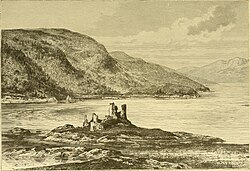
![Clan Mackenzie abandoned Eilean Donan Castle in 1719, after it was destroyed by British government ships during the Jacobite rising, and it remained in ruins for over two centuries. It was reconstructed by a MacRae descendant in the 20th century.[69]](/images/42/e2/42e2dea7c12879c839dc7f05165f3a264cb0c91f0e5c1528f88a69419218ab07.jpg)
Military Legacy and Global Influence
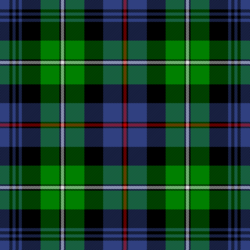
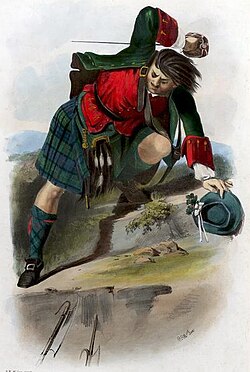
The Mackenzie name became synonymous with military excellence through several famous regiments, including the Highland Light Infantry (1777) and the Seaforth Highlanders (1778). These units, along with the Ross-shire Buffs (1793), wore the distinctive Mackenzie tartan.
The 72nd and 78th regiments, raised by Francis Mackenzie, 1st Baron Seaforth, fought with distinction against Napoleon. The clan's influence extended to India, where Colin Mackenzie (1754–1821) served as Surveyor General. An accomplished orientalist and art collector, Colin Mackenzie produced some of the first accurate maps of India and participated in the Battle of Seringapatam in 1799.
Castles and Clan Seats
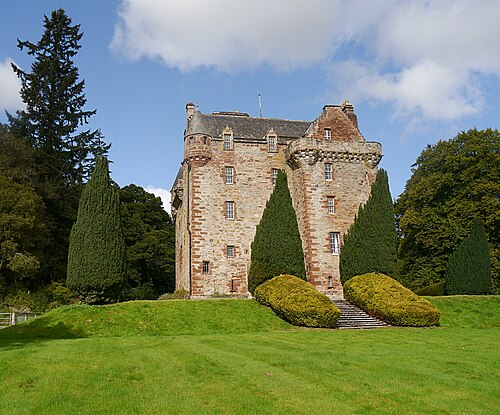
The Mackenzies have been associated with several notable fortifications. Castle Leod, dating from the 16th century, remains the traditional seat of the clan. While the chief continues to reside there, the old tower has been the subject of various restoration efforts to create a genealogical center for the public.
Other historic sites include Eilean Donan Castle, an early stronghold for the Mackenzies of Kintail and their allies, the Clan MacRae. Though destroyed by British government ships in 1719, it was reconstructed in the 20th century. The clan also held Redcastle (a ruined L-plan tower house) and Tarbat House, the latter of which was built starting in 1784 on the site of a previous mansion.
Clan Mackenzie Summary
| Category | Details |
|---|---|
| Chief | John Ruaridh Grant Mackenzie, 5th Earl of Cromartie |
| Allied Clans | Stewart, MacRae, MacLennan, Matheson, Morrison, Mackintosh, Maclean |
| Rival Clans | Ross, Rose, Munro, MacDonald, Fraser of Lovat, MacLeod of Lewis |
| Key Strongholds | Castle Leod, Eilean Donan Castle, Tarbat House |
| Military Units | Seaforth Highlanders, Highland Light Infantry |
Frequently Asked Questions
Who is the current chief of Clan Mackenzie?
The current chief is John Ruaridh Grant Mackenzie, the 5th Earl of Cromartie, who is a member of the Standing Council of Scottish Chiefs.
What is the significance of Eilean Donan Castle to the clan?
Eilean Donan was an early stronghold for the Mackenzies of Kintail and their allies, the Clan MacRae. It was destroyed during the Jacobite rising in 1719 and remained in ruins for over two centuries before being reconstructed in the 20th century.
Did Clan Mackenzie support the Jacobites?
The clan was divided. While they supported the Jacobites in 1715 under the 5th Earl of Seaforth, they were split in 1745: the chief supported the British Government, while the 3rd Earl of Cromartie joined the Jacobites.
What is the Mackenzie tartan?
The Mackenzie tartan is the traditional pattern associated with the clan and served as the regimental tartan for the Seaforth Highlanders.
Who was Colin Mackenzie?
Colin Mackenzie was a member of the clan who served as the Surveyor General of India. He is renowned for creating some of the first accurate maps of India and for his contributions to Asian studies.