Clan Donald: The Legacy of the Lords of the Isles
Clan Donald (Gaelic: Clann Dòmhnaill) stands as one of the most powerful and influential dynasties in Scottish history. Dominating the Highland and Islands regions, particularly the Inner Hebrides, the clan's history is a saga of maritime power, territorial ambition, and a long-standing struggle for autonomy against the Scottish Crown.
The clan is identified by its motto, Per mare per terras ("by sea and by land"), and its war cry, Fraoch eilean ("the heathery isle"). Their ancestral identity is deeply rooted in Gaelic tradition, with lineage traced back to the High Kings of Ireland, specifically Colla Uais and Conn of the Hundred Battles.
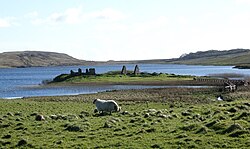
Key Facts
- Historic Seat: Finlaggan Castle.
- Current Chief: Godfrey James Macdonald of that Ilk.
- Plant Badge: Common heath.
- Primary Region: Highland and Islands, specifically Inner Hebrides and Ross.
- Notable Allies: Clan Cameron, Clan MacMillan, Clan Lamont, Clan MacNeill, Clan Matheson, and Clan Stewart (17th-18th centuries).
The Rise of the Lords of the Isles
Origins and Early Lineage
Tradition attributes the clan's descent to Somerled, with Gaelic historians (seanchaidhean) linking the lineage to the Irish High Kings. This heritage was frequently invoked in brosnachadh (incitements to battle), such as a poem from 1411 during the Battle of Harlaw, which urged the "children of Conn" to remember their hardihood in war.
The Struggle for the Earldom of Ross
In the early 15th century, Donald of Islay sought to expand his influence, securing Dingwall Castle—the principal seat of the Earldom of Ross—after defeating Clan Mackay at the Battle of Dingwall. This sparked the Battle of Harlaw on July 24, 1411, where Donald's army of approximately 10,000 men faced the forces of Robert Stewart, Duke of Albany.
![The Battle of Harlaw as depicted in The Clan Donald volume 1 (1896), by A and A MacDonald, who assert that Donald of Islay and his army of Scottish Highlanders won a victory over the Duke of Albany and his army of Scottish Lowlanders, which resulted in the "total annihilation" of the Lowland army.[14] However, some historians say the battle was indecisive with no clear victor and the Oxford Companion to Scottish History (2011) states that Donald of Islay was "defeated at great cost at Harlaw".[15]](/images/68/bb/68bbeaa217a5abac5afe9639ce7664cd4da1bd5fb19771da00b04e8839457cd1.jpg)
While some historical accounts claim a decisive victory for Donald, others suggest the battle was indecisive or that Donald was defeated at great cost. Despite the conflict, the MacDonalds continued to challenge the Crown. In 1431, during the Battle of Inverlochy, Donald Balloch MacDonald led the clan to victory over the royal army of the Earl of Mar while the Lord of the Isles was imprisoned by King James I.
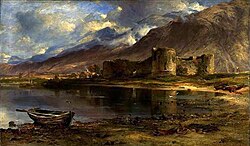
The Decline of the Lordship
Forfeiture and Internal Strife
The power of the MacDonalds began to wane in the late 15th century. In 1475, James III forfeited the Earldom of Ross, and by 1493, the Lordship of the Isles was officially forfeited. This loss triggered a period of internal instability and power struggles among the Gael. The Battle of Bloody Bay (1480) saw a familial clash where John MacDonald, Lord of the Isles, was defeated by his own son, Aonghas Óg.
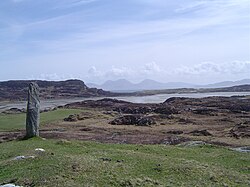
Attempts to restore the Lordship continued, including an alliance between Domhnall Dubh and Henry VIII of England, but these efforts failed by 1545. The Scottish Crown successfully divided the clan by granting separate charters to various branches, ensuring they remained fragmented and less threatening to central authority.
Conflict in the 17th and 18th Centuries
The Wars of the Three Kingdoms
The 17th century was marked by extreme violence and dislocation. In 1642, during the Irish Rebellion, a Clan Campbell-led unit committed atrocities on Rathlin Island, killing numerous MacDonnell women. In retaliation and support of the Royalists, Alasdair Mac Colla landed in Scotland in 1644 with 1,500 Irish troops. Their campaign with Montrose culminated in another victory at the Battle of Inverlochy in 1645.
The Jacobite Risings
Clan Donald remained loyal to the House of Stuart during the Jacobite risings. In 1715, members of the MacDonalds of Keppoch, Clanranald, and Glencoe fought at the Battle of Sheriffmuir. Later, during the 1745 rising, the MacDonells of Glengarry, Keppoch, and Glencoe participated in the Battle of Prestonpans.
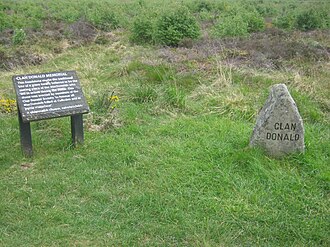
Modern Era and Heritage
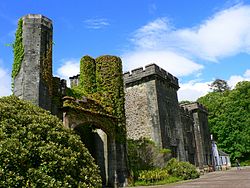
In 1947, the Lord Lyon King of Arms recognized Alexander Godfrey Macdonald, 7th Lord Macdonald, as the first High Chief of Clan Donald. He was succeeded in 1970 by his son, Godfrey James Macdonald, the current high chief. Today, the clan's history is preserved at sites like Armadale Castle on the Isle of Skye.
Clan Donald Summary
| Attribute | Details |
|---|---|
| Motto | Per mare per terras (By sea and by land) |
| Historic Seat | Finlaggan Castle |
| Key Battles | Harlaw (1411), Inverlochy (1431, 1645), Bloody Bay (1480) |
| Chief | Godfrey James Macdonald of that Ilk |
| Primary Rivals | Clan Campbell, Clan Gordon |
Frequently Asked Questions
Who were the Lords of the Isles?
The Lords of the Isles were the chiefs of Clan Donald who exercised quasi-independent rule over the Hebrides and parts of the western Highlands, often challenging the authority of the Scottish Crown.
What was the significance of the Battle of Harlaw?
Fought in 1411, it was a major conflict between Donald of Islay's Highland forces and the Lowland army of the Duke of Albany over the control of the Earldom of Ross.
Why was the Lordship of the Isles forfeited?
The Lordship was forfeited to the Scottish Crown in 1493 following repeated rebellions and attempts by the MacDonalds to maintain an independent power base in the west.
What is the relationship between Clan Donald and the Jacobites?
Clan Donald was largely supportive of the Jacobite cause, fighting in the risings of 1715 and 1745 to restore the House of Stuart to the throne.
Where is the historic seat of Clan Donald located?
The historic seat was Finlaggan Castle, which served as the administrative center for the Lords of the Isles.