Battle of Harlaw: The Clash of Highland and Lowland Scotland
The Battle of Harlaw, fought on July 24, 1411, stands as one of the most storied conflicts in medieval Scottish history. Occurring north of Inverurie, the battle was the culmination of a bitter feud between the Lordship of the Isles and the Stewart royal family. While often romanticized as a clash between the Gaelic Highlands and the Anglo-influenced Lowlands, the conflict was rooted in a complex legal struggle over land, titles, and political legitimacy.
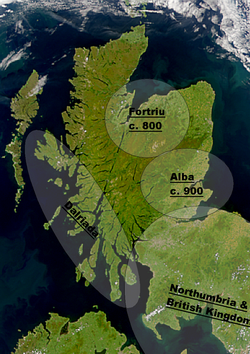
To understand Harlaw, one must look at the fragmented nature of early Scotland. The region was once a patchwork of Gaelic kingdoms like Dál Riata and Alba, and Pictish kingdoms such as Fortriu. Over centuries, these entities merged, but cultural and linguistic divides remained. By the 15th century, the tension between those speaking Gaelic and those speaking Scots created a volatile backdrop for political disputes.
Key Facts
- Date: July 24, 1411
- Location: North of Inverurie, Scotland
- Primary Belligerents: The Scottish Crown (Lowland clans) vs. The Lordship of the Isles (Highland clans)
- Outcome: Tactical draw, though some sources claim a Highland victory
- Casualties: Approximately 600 Crown forces and 900 Islesmen killed
- Core Dispute: Control of the Earldom of Ross
The Struggle for the Earldom of Ross
The catalyst for the battle was the Earldom of Ross, a massive territory spanning from Skye to Inverness-shire. The dispute began with a 1370 charter from King David II, which stipulated that if the Earl of Ross died without a male heir, the title would pass to the eldest daughter.
Following the death of Earl Uilleam in 1372, the title passed to his daughter, Euphemia. However, a series of marriages and annulments brought the Stewarts into the fray. Robert Stewart, Duke of Albany, who acted as regent of Scotland after 1406, sought to secure the earldom for his own family. He claimed wardship of Euphemia's daughter, effectively attempting to seize control of the lands.
Opposing Albany was Donald of Islay, the Lord of the Isles. Donald claimed the earldom through his marriage to Mariota, Euphemia's aunt and the oldest living female descendant of Earl Uilleam. To strengthen his position, Donald formed a strategic alliance with Henry IV of England in 1405.
The Invasion and the Field of Battle
Donald of Islay assembled a formidable force at Inverness, summoning fighting men from Boyne and Enzie. His army swept through Moray with little resistance before turning southeast toward Aberdeen. Along the way, his forces committed "great excesses" in the Garioch and Strathbogie, territories belonging to Alexander Stewart, Earl of Mar.
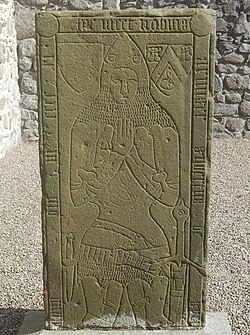
On July 23, 1411, Donald established his camp on high ground northwest of the bridge over the River Urie. The following day, the two armies collided. The Lordship of the Isles brought fewer than 10,000 men, armed with swords, bows, axes, short knives, and targe shields (traditional round shields).
The fighting was brutal and inconclusive. While the Crown forces managed to hold their ground, the Earl of Mar was severely wounded. By dawn the next morning, the Crown forces discovered that Donald had withdrawn under the cover of night, returning first to Ross and then to the Isles. While officially recorded as a tactical draw, some historical notes from the MacDonalds of Ardnamurchan describe the event as a "great victory" for the Lord of the Isles.
Aftermath and Legacy
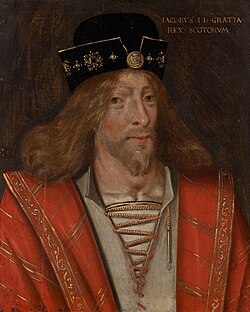
The political fallout continued for years. Euphemia eventually surrendered her titles to the Earl of Buchan (Albany's son) in 1415 and entered a nunnery. However, the return of James I from English imprisonment in 1424 shifted the power balance; he executed the Albany Stewarts and awarded the Earldom of Ross to Mariota.
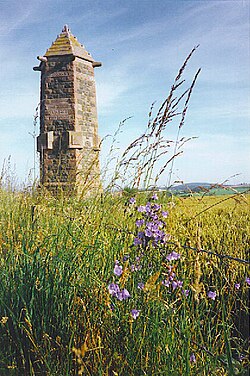
The conflict's legacy is preserved in both folklore and archaeology. Tradition suggests the Earl of Mar founded the Chapel of Garioch to pray for the fallen. In 1911, a 40-foot hexagonal granite monument was erected near Inverurie to honor the burgesses of Aberdeen who died in the clash.
| Feature | Scottish Crown Forces | Lordship of the Isles |
|---|---|---|
| Primary Leader | Earl of Mar / Duke of Albany | Donald of Islay |
| Army Composition | Lowland clans & Royalists | Highland clans & Ross men |
| Estimated Strength | Several thousand | Fewer than 10,000 |
| Estimated Deaths | 600 | 900 |
| Primary Weaponry | Standard medieval infantry | Swords, bows, axes, targes |
Frequently Asked Questions
Was the Battle of Harlaw a victory for either side?
Historically, it is regarded as a tactical draw. The Crown forces held the field, but Donald of Islay achieved his goal of demonstrating power and withdrew without being defeated. Some Highland accounts, however, claim it as a victory for the MacDonalds.
What was the primary cause of the conflict?
The battle was primarily caused by a legal dispute over the Earldom of Ross. Both the Duke of Albany (representing the Scottish Crown) and Donald of Islay (Lord of the Isles) claimed the right to the title and its vast territories.
Was this a racial conflict between Celts and Teutons?
While some 19th-century historians framed it as a clash between "savage" Highlanders and "civilized" Lowlanders, modern historians like Sir Robert Rait argue it was a political conflict between two groups of Scots—one Gaelic-speaking and one Scots-speaking—rather than a racial war.
Are there any physical remains of the battle today?
While no weapons or armor from the battle have been recovered, twelve human skeletons were found in 1837. The site is now a registered battlefield protected by Historic Scotland, and the Harlaw Monument stands as a permanent memorial.