Civil Marriage: Legal Frameworks, Global History, and Modern Regulations
A civil marriage is a union performed, recorded, and recognized by a government official. While some civil marriages are performed by religious bodies and subsequently recognized by the state, others are entirely secular—meaning they are non-religious in nature. These legal frameworks ensure that the state can track marital status and provide legal protections to spouses and their children.
Most United Nations (UN) member states have committed to registering marriages through treaties such as the 1962 Convention on Consent to Marriage, Minimum Age for Marriage, and Registration of Marriages, or the 1979 Convention on the Elimination of All Forms of Discrimination against Women. Only Iran, Somalia, South Sudan, Sudan, and Tonga have not signed or ratified either of these conventions.

Key Facts
- Definition: A marriage recognized by the state, which can be either secular or religious.
- Global Standard: Most UN member states are responsible for the registration of marriages.
- Mandatory Civil Marriage: In many European and Latin American countries, only civil ceremonies have legal validity.
- Religious-Only Systems: Some Middle Eastern countries, such as Saudi Arabia and Qatar, rely primarily on Islamic law for marriage.
- Same-Sex Marriage: As of January 2025, over 30 jurisdictions, including the US, Canada, and Germany, permit same-sex marriage.
The Evolution of Marriage Law in Europe
England and the Shift to Official Registration
In medieval Europe, marriage was governed by canon law (church law), which viewed a union as valid as long as the parties declared their intent, regardless of witnesses or officials. This changed in England with the Marriage Act 1753, which mandated that marriages be performed in state-recognized religious settings, such as the Church of England, Jewish ceremonies, or by Quakers. Unions that failed to meet these criteria were invalid, meaning children born from them could not automatically inherit titles or property.
Interestingly, this act did not apply to Scotland. This created a loophole where couples traveled to Scottish border towns, most notably Gretna Green, for "fast marriages" that required only a pledge before witnesses. It wasn't until the Marriage Act 1836 that England removed the requirement for a religious forum, granting registrars the authority to conduct non-religious ceremonies.

The Napoleonic Influence and Continental Europe
The French Revolution of 1792 established civil marriage as an independent legal entity, stripping religious ceremonies of their state recognition. Napoleon later reconciled the two through the Concordat of 1801, decreeing that religious ceremonies could only occur after a civil marriage had taken place. This model spread across Europe.
In Germany, the transition was more gradual. While the Napoleonic Code initially applied only to conquered territories, various German states eventually introduced optional or obligatory civil marriages to facilitate interfaith unions. By 1875, Chancellor Otto von Bismarck's "Civil Marriage Law" made civil marriage the only legally recognized form of union in Germany.

Modern Global Perspectives
England and Wales
Today, marriages in England and Wales must occur in authorized premises, ranging from register offices and approved hotels to registered religious buildings. Civil ceremonies are strictly non-religious; references to deities or specific denominations are prohibited, and all music and readings must be pre-approved.
The United Arab Emirates (UAE)
The UAE operates a dual system. In the Emirate of Abu Dhabi, Law No. 14 of 2021 (and subsequent amendment Law No. 15) established a secular family law system. Administered by the Abu Dhabi Civil Family Court, this system is available to expatriates and non-Muslim Emirati citizens regardless of nationality or religion. It introduces no-fault divorce and a civil inheritance system where the surviving spouse receives 50% of the estate.
Between 2022 and the end of 2025, approximately 53,000 civil marriages were registered in Abu Dhabi, averaging 70 per day. In contrast, other emirates like Dubai follow Federal Decree-Law No. 41 of 2022, which generally limits civil marriage to non-Muslim residents and maintains higher minimum age requirements.

The United States
In the U.S., marriage is regulated by state law. All states and territories require a marriage license issued by local civil authorities. While religious ministers are authorized to perform weddings, civil officials like judges or mayors also conduct ceremonies. Notably, some counties in Pennsylvania allow "self-uniting" marriages due to their Quaker heritage. The legal validity of the marriage is independent of whether the ceremony was religious or civil.
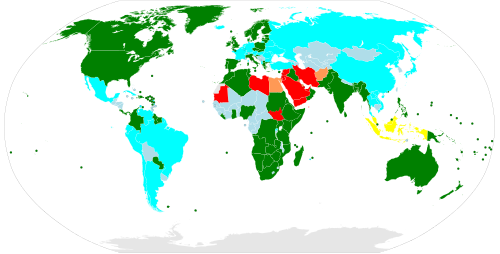
Comparative Summary of Marriage Systems
| System Type | Legal Requirement | Examples |
|---|---|---|
| Mandatory Civil | Civil ceremony is the only legal union; religious rites are optional/secondary. | France, Germany, Belgium, Netherlands |
| Hybrid/Optional | Either civil or religious ceremonies are legally binding. | United States, United Kingdom |
| Religious-Only | Marriages must be performed by religious authorities to be registered. | Saudi Arabia, Qatar, Jordan, Israel |
| Specialized Civil | Civil marriage available specifically for expatriates or non-Muslims. | Abu Dhabi (UAE), Dubai (UAE) |
Same-Sex Unions and Civil Partnerships
As of January 2025, same-sex marriage is legally permitted in numerous jurisdictions, including the United Kingdom, United States, Canada, Brazil, South Africa, Taiwan, and Thailand. Some countries, such as Israel and Armenia, recognize same-sex marriages performed abroad. Additionally, 22 countries offer civil unions or domestic partnerships, which provide rights similar to, but not identical to, full marriage.
Frequently Asked Questions
What is the difference between a civil marriage and a secular marriage?
A civil marriage is any marriage recognized by the government. A secular marriage is a specific type of civil marriage that is entirely non-religious.
Can you have a religious ceremony if a civil marriage is mandatory?
Yes. In countries like France, couples often have a religious ceremony for personal or spiritual reasons, but it must take place after the legal civil ceremony and has no legal effect on the state's recognition of the marriage.
How does the Abu Dhabi Civil Family Court differ from other UAE laws?
The Abu Dhabi system is secular and open to both Muslims and non-Muslims, regardless of residency. Other emirates generally limit civil marriage to non-Muslim residents and follow different age and judicial requirements.
What happens if a marriage is not registered with the state?
In jurisdictions with mandatory registration, an unregistered union may not be legally recognized, which can affect inheritance rights, property ownership, and the legal status of children.
Do all U.S. states require a religious official for a wedding?
No. Civil officials such as judges, mayors, and justices of the peace are empowered to conduct civil ceremonies. In some parts of Pennsylvania, no official is required at all due to self-uniting marriage traditions.