Ciudad Jardín Lomas del Palomar: A Unique Garden City Neighborhood
Ciudad Jardín Lomas del Palomar is a vibrant, socially diverse neighborhood characterized by its colorful atmosphere and lively community spirit. Home to approximately 6,650 families within a compact area of 2.4 km (0.93 sq mi), this district stands out for its distinct urban character and commitment to a human-centric design.
The Garden City Influence
The neighborhood was inspired by the Garden city movement, an urban planning philosophy that seeks to combine the benefits of both city and country living. This influence is evident in the pedestrian-scale layout, which prioritizes walkability and green spaces over heavy traffic.
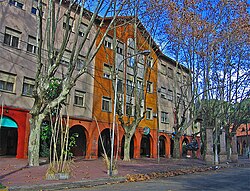
Residential areas are composed of tree-lined streets and boulevards featuring a mix of free-standing chalets and row-style homes with traditional tile roofs.
Urban Layout and Social Spaces
The design of Ciudad Jardín ensures that essential cultural facilities—including schools, churches, clubs, and parks—are integrated and located within easy walking distance of residential housing. This layout fosters a strong sense of community and accessibility.
Central to the neighborhood's social life are three arcaded, three-storey residential-commercial plazas. These town squares serve as community hubs, featuring central greenery, fountains, and children's playgrounds, all surrounded by a variety of shops, pubs, and al fresco dining options.
Gastronomy and Local Business
Beyond the main plazas, the area is dotted with various plazoletas (mini plazas) that host a range of businesses. The neighborhood is particularly renowned for its first-class gastronomy, offering authentic ethnic cuisines including Italian, German, Chinese, and Japanese.

Historical Significance
A significant portion of the city is occupied by the Colegio Militar de la Nacion. This area is home to several sites of immense historical importance, including the National Historic Monument, El Palomar de Casero, and the Casa de Diego Casero.
These landmarks served as the epicenter of the Battle of Caseros and were the site of the preliminary negotiations for the Pact of San José de Flores, marking them as critical locations in the nation's history.
Key Facts
- Population: Approximately 6,650 families.
- Total Area: 2.4 km (0.93 sq mi).
- Design Philosophy: Based on the Garden city movement.
- Architecture: Tile-roofed chalets and row houses on tree-lined streets.
- Key Infrastructure: Three main residential-commercial plazas with arcades.
- Historical Sites: Includes the Casa de Diego Casero and El Palomar de Casero.
| Feature | Details |
|---|---|
| Urban Scale | Pedestrian-oriented |
| Housing Styles | Free-standing and row-style chalets |
| Commercial Hubs | 3 main plazas and multiple plazoletas |
| Cuisine Types | Japanese, Chinese, Italian, and German |
| Major Institution | Colegio Militar de la Nacion |
Frequently Asked Questions
What is the Garden city movement?
The Garden city movement is an urban planning approach that emphasizes the creation of planned communities combining residential areas with green belts and pedestrian-friendly layouts to balance urban and rural living.
How many families live in Ciudad Jardín Lomas del Palomar?
The neighborhood is home to approximately 6,650 families.
What makes the plazas in this neighborhood unique?
The neighborhood features three three-storey residential-commercial plazas with arcades, which integrate greenery, playgrounds, and fountains with surrounding shops and restaurants.
Which historical events are linked to this area?
The area was the epicenter of the Battle of Caseros and hosted the preliminary negotiations for the Pact of San José de Flores.
What types of international food can be found here?
The neighborhood is known for high-quality authentic ethnic food, specifically German, Italian, Chinese, and Japanese cuisines.