City Status in the United Kingdom: History, Criteria, and Evolution
In the United Kingdom, city status is a prestigious honor granted by the monarch to specific population centers. As of November 22, 2022, there are 76 recognized cities across the nations: 55 in England, eight in Scotland, seven in Wales, and six in Northern Ireland. While this designation confers no special legal rights or powers, it serves as a significant marker of prestige and a source of immense local pride.
Key Facts
- Granting Authority: City status is awarded exclusively by the monarch via letters patent.
- Historical Link: Until 1889 in England and Wales, city status was tied to the presence of a diocesan cathedral.
- Modern Criteria: Current grants are based on various factors, including population size and local government history.
- Geographic Scope: Status can be granted to a specific town or a wider local government district.
- Prestige: The title is ceremonial and does not change the legal administrative powers of the local council.
The Evolution of City Status
The Era of Cathedral Cities
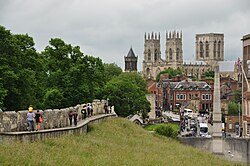
For centuries, the definition of a city in England and Wales was inextricably linked to the church. In the early 1540s, King Henry VIII established this precedent by founding dioceses—administrative districts of the church—and granting city status to the towns containing the cathedral (the see city). These locations became known as cathedral cities.
Breaking the Cathedral Tradition
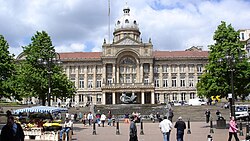
The link between Anglican cathedrals and city status remained until the late 19th century. In 1888, Belfast in Ireland broke this mold, followed by Birmingham in 1889. Birmingham successfully petitioned for the status based on its significant population and a record of effective local government, despite lacking an Anglican cathedral at the time.
This shift opened the door for other large municipalities. Leeds and Sheffield were designated cities in 1893, while Bradford, Kingston upon Hull, and Nottingham received the honor in 1897 to mark Queen Victoria's Diamond Jubilee. By 1905, Cardiff was granted city status and a Lord Mayoralty, being recognized as the "Metropolis of Wales."
Modern Granting Processes
In the 20th and 21st centuries, the process became more flexible. While a 1907 policy suggested a minimum population of 300,000, modern grants are awarded based on a variety of criteria. Recent examples include Southend-on-Sea, which was granted city status in 2022 in memory of its MP, Sir David Amess.
Administrative Variations and Local Government
Local Government Districts
Since the reorganization of local government in 1974, city status has often been awarded to entire districts rather than single towns. These districts may encompass several towns and rural villages. For example, the City of Bradford includes the towns of Bingley, Ilkley, Keighley, and Shipley. The City of Winchester is currently the largest such district by area, covering approximately 250 square miles.
The Case of Rochester
The history of Rochester provides a unique example of status fluctuation. Recognized as a city from 1211 to 1998, it lost its independent city council in 1974 when it became part of the Borough of Medway. While it initially maintained the style of "City of Rochester" to preserve its heritage, the city status was eventually transferred to the entire borough in 1982.
Comparative Statistics
The scale of UK cities varies wildly, from small historic centers to massive urban agglomerations. While some cities are defined by their historic charters, others are defined by their sheer size.
| Metric | Rank 1 | Rank 2 | Rank 3 |
|---|---|---|---|
| Largest Population | Birmingham (1,144,919) | Leeds (811,956) | Glasgow (~620,700) |
| Largest Area (District) | City of Winchester (255.2 sq mi) | City of Lancaster (222.34 sq mi) | City of Doncaster (219.3 sq mi) |
| Largest Built-up Area | Greater London (9,787,426) | Greater Manchester (2,553,379) | West Midlands (2,440,986) |
Frequently Asked Questions
Does city status provide any special legal powers?
No. City status is a ceremonial honor and does not grant any additional legal rights, powers, or funding to the local authority.
Is a cathedral still required to become a city?
No. While cathedrals were the primary requirement until 1889 in England and Wales, modern city status is granted based on criteria such as population, history, and local government quality.
What are letters patent?
Letters patent are open documents issued by the monarch that announce a grant of right, monopoly, title, or status to a person or community.
Why are some large towns not cities?
City status is not automatic based on population. Many populous towns, such as Reading or Luton, have not been granted city status by the monarch, despite their size.
How does city status work in Scotland and Northern Ireland?
In Scotland, state recognition of city status only began in the 19th century. In Northern Ireland, the presence of a cathedral has generally not been sufficient for city status, with exceptions like Armagh.