Citadel of Aleppo: A History of One of the World's Oldest Fortresses
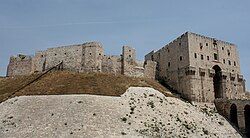
Dominating the skyline of northern Syria, the Citadel of Aleppo is a massive medieval fortified palace located in the heart of the old city. Recognized as one of the oldest and largest castles globally, this limestone marvel has served as a strategic stronghold for millennia. As a central part of the Ancient City of Aleppo, it has been a UNESCO World Heritage Site since 1986.
The site is more than just a military fortification; it is a layered archive of human civilization. From its earliest roots in the 3rd millennium BC to its role as a modern tourist attraction, the Citadel has been occupied by the Arameans, Assyrians, Romans, Byzantines, Arabs, Ayyubids, Mamluks, and Ottomans.
Key Facts
- Location: Aleppo, Syria.
- Age: Usage dates back to the middle of the 3rd millennium BC.
- Primary Material: Limestone.
- UNESCO Status: Part of the Ancient City of Aleppo World Heritage Site (since 1986).
- Key Architectural Period: Most current structures date to the Ayyubid period.
- Dimensions: The mound base measures 450m by 325m, with a height of 50m.
Ancient Origins and Classical Eras
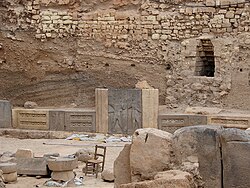
The history of the Citadel begins with the temple of the storm-god Hadad, which dates the hill's use to the middle of the 3rd millennium BC. During this era, Aleppo was the capital of Yamhad and was known as the "City of Hadad." Archaeological evidence, including reliefs discovered by Kay Kohlmeyer, shows the temple remained active from the 24th century BC until at least the 9th century BC.
Following the Neo-Hittite decline, the region was ruled by the Neo-Assyrian, Neo-Babylonian, and Achaemenid empires. The transition to a fortified acropolis—a fortified part of an ancient city typically built on a hill—is attributed to Seleucus I Nicator after the conquest by Alexander the Great. Under the Seleucids, the city was renamed Beroia, and remnants of Hellenistic settlement still exist on the site today.
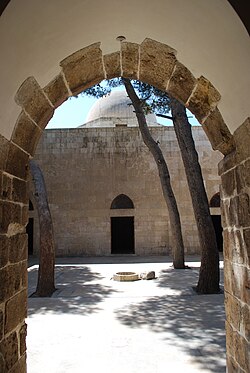
During the Roman and Byzantine periods, the hill maintained its religious importance. Emperor Julian recorded offering a white bull to Zeus there in 363 AD. While few Roman physical remains exist, the Byzantine era left a lasting mark; the two mosques currently inside the Citadel were originally converted from Byzantine churches.
The Islamic Golden Age and Crusader Conflicts
Captured by Arab armies in 636 AD, the Citadel became a frontier outpost for the Umayyad and Abbasid empires. It saw a political and economic renaissance under the Hamdanid prince Sayf al-Dawla in 944 AD, who moved his residence to the Citadel after Byzantine raids in 962 AD.
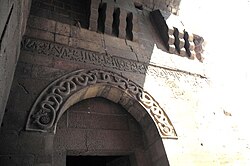
The fortress reached its peak importance during the Crusades. The Zengid ruler Nur ad-Din (1147–1174) fortified the walls and built a high brick-walled entrance ramp. The Citadel became a high-profile prison for Crusader leaders, including the King of Jerusalem, Baldwin II.
The Ayyubid Transformation
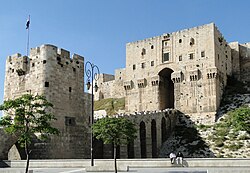
Between 1193 and 1215, al-Zahir al-Ghazi, son of Saladin, undertook a massive reconstruction that defined the Citadel's current form. He smoothed the outcrop, increased the depth of the moat, and constructed the iconic bridge-cum-viaduct that still serves as the entrance. By the early 13th century, the Citadel had evolved into a "palatial city," featuring residential palaces, baths, mosques, and military arsenals.
Mamluk and Ottoman Influence
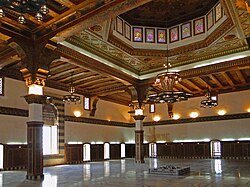
Despite damage from Mongol invasions in 1260 and Timur's invasion in 1400–1401, the Mamluks restored the site. Prince Sayf al-Din added advance towers and a new palace, while Sultan al-Ashraf Qansuh al-Ghawri replaced the flat ceiling of the Throne Hall with nine domes.
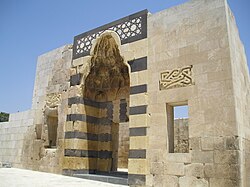
As Aleppo grew into a commercial metropolis during the Ottoman period, the Citadel's military role diminished, though it remained a barracks for soldiers and Janissaries (elite Ottoman military corps). Following a devastating earthquake in 1822, the site was further modified, including the construction of a windmill and new barracks under Ibrahim Pasha.
Modern Era and Recent Challenges
In the 20th century, the French Mandate (1920–1945) brought archaeological excavations and the restoration of the Mamluk Throne Hall. In 1980, a modern amphitheater was added to host cultural events.
The 21st century has been a period of turmoil. During the Syrian Civil War, the Citadel was used as a military base, leading to significant damage from shelling and tunnel bombs. It was reopened to the public in 2018, though some war damage was preserved as a historical record. More recently, the 2023 Turkey–Syria earthquake caused extensive damage, prompting new restoration phases for the southern forward tower and the Ayyubid Mosque.
Architectural Highlights
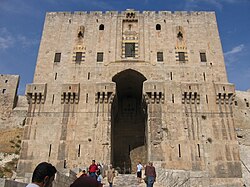
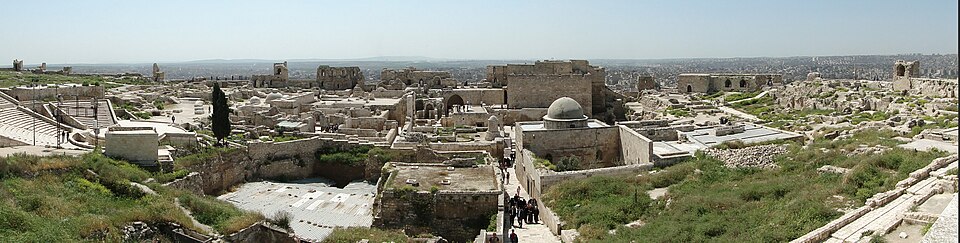
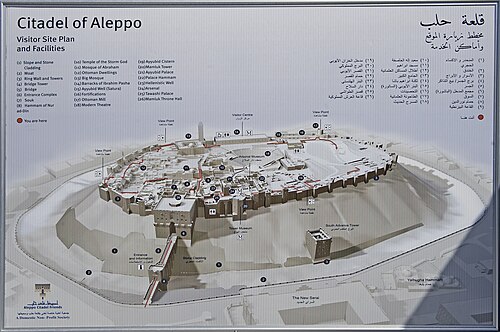
The Citadel is characterized by its elliptical mound and a 22-meter-deep moat. The entrance is a masterpiece of defensive engineering, requiring visitors to navigate five right-angle turns and three large gates to reach the inner castle.
Internal Sites of Interest
- Entrance Block: A vaulted ramp featuring machicolations (floor openings used to drop stones or liquids on attackers) and figurative reliefs.
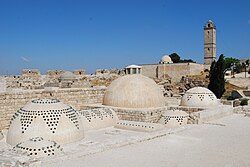
- Ayyubid Palace and Hammam: A complex featuring muqarnas (honeycomb vaulting) and a traditional three-section bathhouse (dressing, warm, and hot/steam rooms).
- The Throne Hall: A Mamluk-era hall used for official functions and audiences.
- Underground Infrastructure: Deep wells reaching 125 meters and secret passages connecting the crown to the advance towers.
| Feature | Detail |
|---|---|
| Mound Dimensions | 450m x 325m (Base); 50m Height |
| Moat Dimensions | 22m Deep, 30m Wide |
| Key Materials | Limestone, Brick |
| Major Eras | Bronze Age, Hellenistic, Roman, Byzantine, Islamic (Ayyubid, Mamluk, Ottoman) |
| Current Status | Partially ruined; undergoing restoration |
Frequently Asked Questions
Who built the majority of the current Citadel structures?
While the site has been used since the 3rd millennium BC, the majority of the construction as it stands today originates from the Ayyubid period, particularly under the rule of al-Zahir al-Ghazi.
What is the significance of the Temple of Hadad?
The Temple of Hadad proves that the Citadel hill was used as early as the middle of the 3rd millennium BC, establishing Aleppo as the "City of Hadad" and the capital of Yamhad.
How did the Citadel's entrance protect against attackers?
The entrance was designed as a "bent entrance" with a vaulted ramp requiring six turns. It featured machicolations, allowing defenders to pour hot liquids on assailants from above.
What happened to the Citadel during the Syrian Civil War?
The Citadel suffered significant damage from shelling and tunnel bombs. It was used as a military base by the Syrian Army, with its walls and arrow slits utilized for defense and sniping.
Was the Citadel affected by the 2023 earthquake?
Yes, the magnitude 7.8 Turkey–Syria earthquake caused extensive damage. Restoration efforts began shortly after, focusing on the southern forward tower, the Ayyubid Mosque minaret, and the Throne Hall façade.