Cisplatine War: The Conflict That Created Uruguay
The Cisplatine War (1825–1828) was a pivotal struggle for territorial control in the River Plate basin, pitting the Empire of Brazil against the United Provinces (modern-day Argentina). This conflict was not merely a clash of armies, but the culmination of centuries of colonial friction and the birth pangs of a new nation: Uruguay.
At its heart, the war was fought over the Banda Oriental, a region of strategic importance that Brazil had annexed as the province of Cisplatina. The struggle eventually shifted from a quest for annexation to a fight for independence, fundamentally reshaping the map of South America.
Key Facts
- Duration: December 10, 1825, to August 27, 1828.
- Primary Belligerents: The Empire of Brazil and the United Provinces.
- Core Dispute: Control of the Cisplatina province (Banda Oriental).
- Outcome: The Preliminary Peace Convention, resulting in the independence of Uruguay.
- Naval Strategy: Brazil utilized its superior naval power to impose a blockade on Buenos Aires.
Colonial Roots and the Road to War
The Struggle for the River Plate
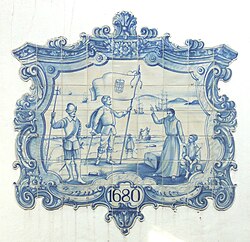
The conflict originated in the unresolved borders of the Portuguese and Spanish colonial empires. In 1680, the Portuguese crown established the fortress town of Colônia do Sacramento on the right bank of the River Plate. This move was designed to secure access to the interior of the continent and divert the smuggling of silver from Upper Peru away from Buenos Aires.
Brazilian Annexation and Failed Diplomacy
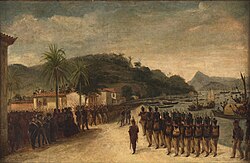
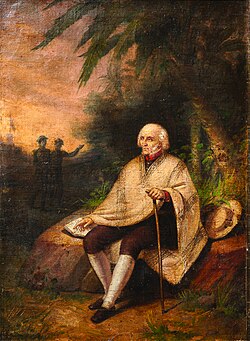
In 1816, the United Kingdom of Portugal, Brazil, and the Algarves invaded the Banda Oriental, defeating local resistance led by José Gervasio Artigas and annexing the territory as Cisplatina. Even after Brazil gained independence in 1822, the region remained under Brazilian control.
The United Provinces viewed this annexation as an infringement on their territory. In 1823, they sent a diplomatic mission led by José Valentín Gómez to Rio de Janeiro to negotiate a peaceful withdrawal. However, the Imperial government of Emperor Pedro I flatly rejected any cession of the province in February 1824.
The Uruguayan Rebellion
The Thirty-Three Orientals
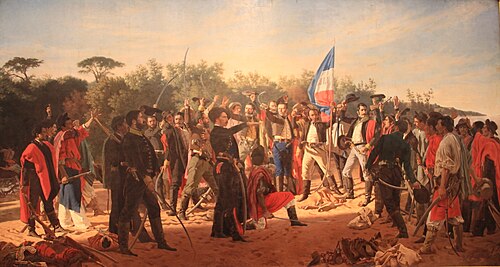
The spark of war came from a group of patriots known as the Thirty-Three Orientals. Led by Juan Antonio Lavalleja and supported by the Argentine government, this group launched a rebellion against Brazilian rule in 1825.
![The landing of the Thirty-Three Orientales [Uruguayans] on Agraciada beach, by Josefa Palacios](/images/19/d3/19d3b766ff9742144ea31e3a311b7f8641b356a41f5c4a8be27f1cba30d76ff8.jpg)
On August 25, 1825, at the Congress of Florida, the rebels declared Cisplatina's independence from Brazil and its unification with the United Provinces. This declaration forced the hand of the Argentine government, which officially proclaimed the reintegration of the province on October 25.
Early Military Successes
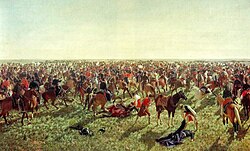
The rebellion gained momentum through a series of tactical victories. Despite an initial defeat at Puntas del Águila, the insurgent forces, aided by the defection of Fructuoso Rivera, secured critical wins at Rincón and Sarandí. These victories effectively challenged Brazilian authority in the countryside and prompted Brazil to formally declare war on December 10, 1825.
Military Capabilities and Strategy
The Empire of Brazil
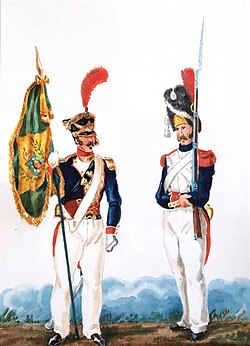
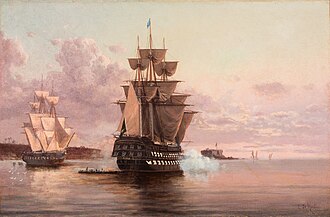
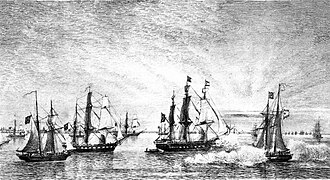
Brazil entered the war as the dominant naval power in the Americas. Its fleet consisted of approximately 65 large warships and 690 guns, supplemented by smaller packet boats and gunboats. This naval superiority allowed Brazil to implement a strategic blockade of the River Plate, targeting the trade-heavy port of Buenos Aires.
![The Brazilian declaration of war, signed by the Viscount of Santo Amaro[l]](/images/7c/70/7c70e7382d6ce54fe9e28e4999a426aefdc79a9d18ee535853667fdb28807662.jpg)
The United Provinces
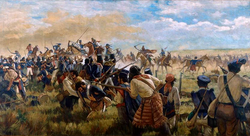
The Argentine forces relied heavily on their land army, the "Observation Army," which was intended to reach a strength of 8,000 men. While capable on land, they struggled to counter the Brazilian naval blockade, which caused significant economic distress in Buenos Aires by disrupting trade with British, American, and French merchants.
The Path to Peace
The war was characterized by a stalemate: Brazil controlled the seas and the coast, while the United Provinces held significant ground in the interior. The economic toll of the blockade and the cost of maintaining a prolonged military campaign eventually led both parties to the negotiating table.
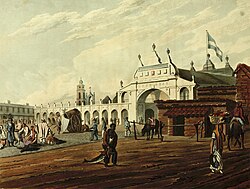
The conflict concluded with the Preliminary Peace Convention of 1828. Rather than granting the territory to either Brazil or the United Provinces, the agreement established the Banda Oriental as an independent state, creating the modern nation of Uruguay.
| Feature | Empire of Brazil | United Provinces |
|---|---|---|
| Key Leaders | Pedro I, Marquess of Barbacena | Juan Antonio Lavalleja, William Brown |
| Primary Strength | Naval Superiority (65+ warships) | Land Army (Observation Army) |
| Military Goal | Maintain control of Cisplatina | Reintegrate Banda Oriental |
| Casualties | ~8,000 | Unknown |
| Final Result | Independence of Uruguay |
Frequently Asked Questions
What was the primary cause of the Cisplatine War?
The war was caused by a territorial dispute over the Banda Oriental (Cisplatina). Brazil had annexed the region, while the United Provinces claimed it as their own, leading to a conflict over borders and regional influence.
Who were the Thirty-Three Orientals?
The Thirty-Three Orientals were a group of patriots led by Juan Antonio Lavalleja who launched a rebellion against Brazilian rule in 1825, eventually declaring the independence of the region and its union with the United Provinces.
How did Brazil use its navy during the conflict?
Brazil leveraged its status as the largest naval power in the Americas to impose a blockade on the River Plate. This was intended to cripple the economy of Buenos Aires by stopping international trade.
What was the final outcome of the war?
The war ended in 1828 with the Preliminary Peace Convention. Instead of one side winning the territory, the region became the independent state of Uruguay.
Which battles were most significant for the rebels?
The battles of Rincón and Sarandí were critical early victories for the insurgent forces, as they proved the rebellion could defeat Brazilian regulars and forced the United Provinces to formally enter the war.