Argentine War of Independence: The Struggle for Sovereignty (1810–1825)
The Argentine War of Independence was a complex series of military campaigns and political upheavals spanning from May 25, 1810, to April 7, 1825. This conflict ultimately ended Spanish colonial rule and led to the consolidation of Argentina as a sovereign nation. The struggle was not merely a local uprising but part of the broader Spanish American wars of independence, involving territories in modern-day Argentina, Chile, Uruguay, Paraguay, Bolivia, Peru, and Ecuador.
Key Facts
- Duration: May 25, 1810 – April 7, 1825.
- Formal Declaration: Independence was officially declared on July 9, 1816, by the Congress of Tucumán.
- Primary Adversaries: The Patriots (United Provinces of the Río de la Plata and allies) against the Royalists (Kingdom of Spain and the Viceroyalty of the Río de la Plata).
- Key Military Feat: The Crossing of the Andes led by General José de San Martín.
- Outcome: Argentine victory and the establishment of a self-governing nation.
The Seeds of Revolution
The path to independence began with the militarization of Buenos Aires during the British invasions of the Río de la Plata. In 1806, the city was captured by British forces but later liberated by Santiago de Liniers. To prevent further attacks, the local population—including slaves—was organized into military bodies. By 1807, a second British attempt was defeated, leaving the criollos (people of Spanish descent born in the colonies) with significant military experience and political influence.
The Regiment of Patricians emerged as a powerful political force, and the deposition of Viceroy Rafael de Sobremonte during the British conflict signaled a shift in power away from the Spanish Crown.
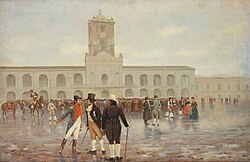
The Revolutionary Outbreak and Initial Campaigns
The revolution gained momentum with the establishment of the Primera Junta, the first local government. Under the leadership of figures like Cornelio Saavedra, the patriots launched several early campaigns to secure their territory, including offensives in Upper Peru, Paraguay, and the Banda Oriental (modern-day Uruguay).
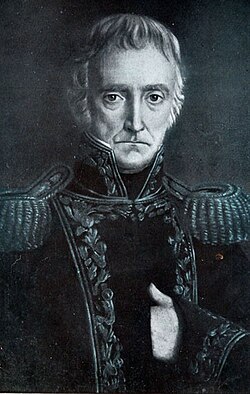
The Battle of San Lorenzo and Naval Success
In 1813, the Spanish navy attempted to bypass land blockades by raiding the west bank of the Uruguay river. On February 3, 1813, a specialized unit known as the Granaderos, led by José de San Martín, decisively defeated Spanish troops at the Battle of San Lorenzo. This victory ended Spanish raids on the Paraná river and earned San Martín the rank of general.
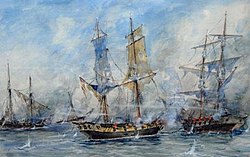
Simultaneously, the patriots recognized the need for naval power. Under the command of William Brown, an improvised patriot navy defeated the Spanish fleet in May 1814. This naval victory secured the port of Buenos Aires and led to the fall of Montevideo on June 20, 1814, effectively ending the Spanish Viceroyalty of the Río de la Plata.
The Army of the Andes and the Liberation of Chile
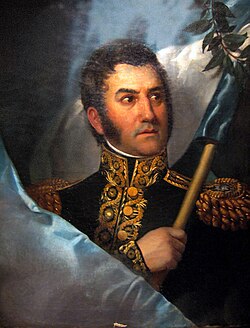
General San Martín recognized that Argentine independence was not secure as long as royalists held power in Peru and Chile. In early 1817, he executed the daring Crossing of the Andes, leading his army into Chile. This campaign resulted in a decisive victory at the Battle of Chacabuco on February 17, 1817.
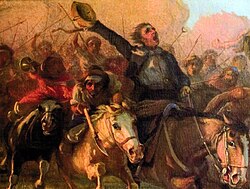
San Martín declined the governorship of Chile, instead supporting Bernardo O'Higgins as the supreme director. Although royalist forces under General Mariano Osorio launched a surprise attack at Cancha Rayada, San Martín regained control and inflicted a final, crushing defeat on the royalists at the Battle of Maipú on April 5, 1818. This victory ensured the independence of Chile and protected Argentina's borders.
Formal Independence and Political Turbulence
While military victories were being won, the political foundation of the new nation was laid at the Congress of Tucumán. On July 9, 1816, the United Provinces of South America formally declared their independence from Spain and King Ferdinand VII.
Following independence, the nation was plagued by internal strife. Two primary factions emerged: the Unitarians, who wanted a centralized government in Buenos Aires, and the Federalists, who advocated for provincial autonomy. This tension led to the Argentine Civil Wars, starting around 1814.
The Rise of the Caudillos
The conflict between these factions culminated in the Battle of Cepeda in 1820, where federalist caudillos (regional military leaders) Estanislao López and Francisco Ramírez defeated the central government. This led to the Treaty of Pilar, which rejected the centralizing Constitution of 1819 and guaranteed provincial autonomy.
The Cisplatine War and the Argentine Confederation
In the 1820s, Argentina entered the Cisplatine War against Brazil over the disputed Cisplatine province. This conflict led to the brief presidency of Bernardino Rivadavia, whose liberal and centralizing policies were widely rejected. The war ended in 1828 with the creation of the independent Republic of Uruguay.
The resulting political vacuum allowed Juan Manuel de Rosas, a powerful federalist cattle rancher, to rise to power. By 1831, Rosas established the Argentine Confederation, ruling as a dictator until 1852.
| Category | Details |
|---|---|
| Timeline | 1810 – 1825 |
| Key Leaders | José de San Martín, Cornelio Saavedra, William Brown, Bernardo O'Higgins |
| Major Battles | San Lorenzo, Chacabuco, Maipú, Cepeda |
| Political Factions | Unitarians (Centralists) vs. Federalists (Autonomists) |
| Final Result | Independence from Spain; formation of the Argentine Confederation |
Frequently Asked Questions
When was Argentine independence officially declared?
Formal independence was declared on July 9, 1816, during the Congress of Tucumán.
Who was the most influential military leader of the war?
General José de San Martín was pivotal, particularly for his leadership of the Army of the Andes and his victories at San Lorenzo and Maipú.
What was the difference between Unitarians and Federalists?
Unitarians sought a strong, centralized government based in Buenos Aires, while Federalists fought for the autonomy of the individual provinces.
What was the significance of the Battle of Maipú?
The Battle of Maipú in 1818 was a decisive victory that ended major royalist offensives in Chile, thereby securing the independence of both Chile and Argentina.
How did the Cisplatine War end?
The conflict between Argentina and Brazil ended in 1828 with the establishment of the Republic of Uruguay as a buffer state.