Circassians: History, Culture, and the Global Diaspora
The Circassians, who refer to themselves as Adyghe, are a Northwest Caucasian ethnic group with a rich history of resilience, artistry, and a complex relationship with the lands of their ancestors. Known for their distinct languages and a storied military tradition, the Circassian people are now spread across a vast global diaspora, primarily residing in Turkey, Russia, and the Middle East.
From the rugged mountains of the Caucasus to the administrative centers of the Ottoman Empire, the Circassian influence has been felt across centuries of political and social change. Today, they maintain a strong sense of national identity through their unique customs, traditional dances, and a shared memory of their ancestral homeland.
Key Facts
- Total Population: Approximately 5.3 million people worldwide.
- Primary Regions: Turkey (2–3 million), Russia (approx. 751,487), Jordan, Syria, and Egypt.
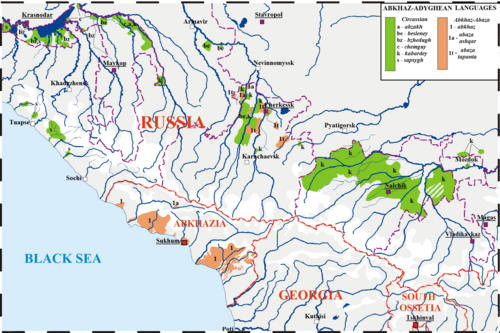
- Languages: Adyghe and Kabardian (part of the isolated Northwest Caucasian language family), and the now-extinct Ubykh.
- Religion: Predominantly Sunni Islam.
- Related Groups: Abkhazians and Abazins.
The Circassian Diaspora and Population
The modern distribution of the Circassian people is the result of centuries of migration and forced displacement. While a significant population remains in the Russian Federation—specifically in the republics of Adygea, Kabardino-Balkaria, and Karachay-Cherkessia—the largest concentration of Circassians now lives in Turkey.
Beyond Turkey and Russia, substantial communities exist in Jordan (100,000–250,000), Syria (80,000–120,000), and Egypt (50,000). Smaller populations are found in Germany, Libya, Iraq, the United States, and Saudi Arabia, reflecting a global spread that spans several continents.
| Region/Country | Estimated Population |
|---|---|
| Turkey | 2,000,000 – 3,000,000 |
| Russia | 751,487 |
| Jordan | 100,000 – 250,000 |
| Syria | 80,000 – 120,000 |
| Egypt | 50,000 |
| Germany | 40,000 |
Historical Trajectory
Medieval and Early Modern Periods
Historically, Circassians were organized into various tribes and clans. Their strategic location in the Caucasus made them key players in regional politics. Many Circassians rose to prominence in the Ottoman Empire, serving as high-ranking officials, governors, and military leaders. For example, Hadim Yusuf Pasha served as the Ottoman Governor of Baghdad in the early 17th century.
![Hadim Yusuf Pasha, Ottoman Governor of Baghdad in 1605-1606, a Circassian by birth and a eunuch. Sefernāme of Muhlisi (BNF, Turc 127).[82][83]](/images/c6/d9/c6d94fcf716ba0ff017afc97aa2de97ef070dc823bac218944cf37f70136719b.jpg)
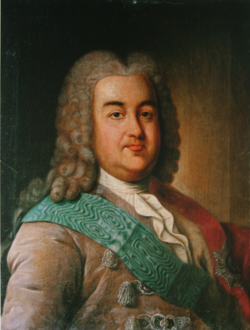
In the Russian Empire, individuals of Circassian descent also reached the highest echelons of power, such as Alexey Cherkassky, who served as the Chancellor of the Russian Empire.
The Caucasian War and Genocide
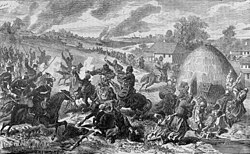
The 19th century marked a tragic turning point for the Circassian people. Following the Caucasian War, a massive expulsion took place, which many historians and international bodies recognize as the Circassian Genocide. Hundreds of thousands were forced from their homes and pushed toward the Ottoman Empire.
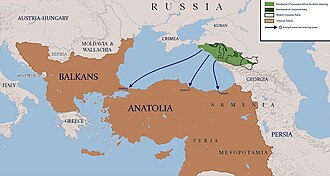
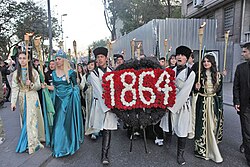
This period of banishment remains a central point of collective trauma and political activism, with annual commemorations held in cities like Istanbul to remember those lost during the expulsion.
Culture and Identity
Language and Linguistics
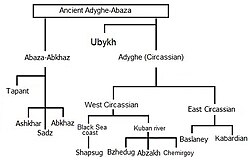
The Circassian languages, primarily Adyghe (West Circassian) and Kabardian (East Circassian), belong to the Northwest Caucasian language family. This family is noted by linguists for being highly isolated, meaning it has no proven relationship to other known language families in the world.
Tribal Structure
The Circassian society was traditionally divided into several major tribes, each with its own dialect and geographical area. Some of the most prominent include:
- Kabardians: The largest group, primarily associated with Eastern Circassian.
- Shapsugs: A major tribe found in both Russia and Turkey, and the largest group in Israel.
- Abzakh: A significant tribe with large populations in Jordan and Turkey.
- Ubykhians: A group whose specific language, Ubykh, is now extinct.
Traditions and Arts
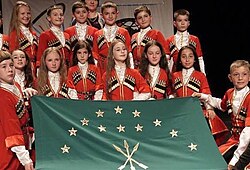
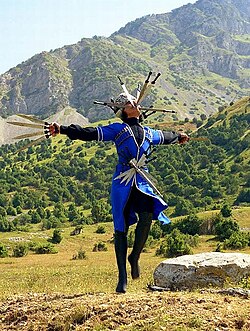
Circassian culture is renowned for its elegance and discipline. This is most evident in their traditional clothing, which emphasizes a sharp, noble silhouette, and their traditional dances, which often blend grace with athletic precision, including the famous sword dance.
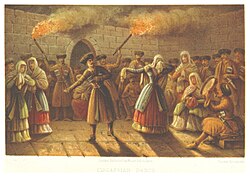
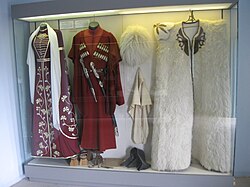
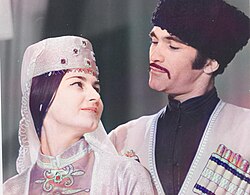
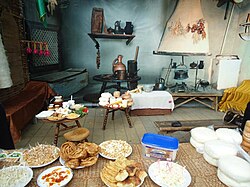
The culinary tradition is equally distinct, featuring unique snacks such as Haliva (Хьэлжъо) and Mataz (Мэтазэ), which remain staples of Adyghe hospitality.
Circassians in the Middle East
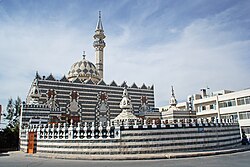
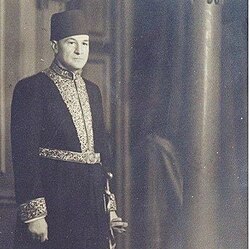
The settlement of Circassians in the Middle East led to significant contributions to the development of those nations. In Jordan, the mosque of Abu Darwish stands as a landmark of their presence. In Egypt, the Circassian influence was profound, particularly during the Mamluk era and the reign of Muhammad Ali, with families like the House of Abaza playing key roles in Egyptian political life.

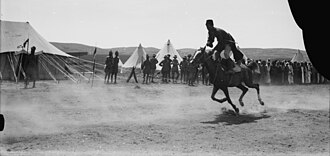
Their reputation for exceptional horsemanship also persisted well into the 20th century, as seen in historical records from Transjordan in the 1920s.
Frequently Asked Questions
What is the difference between Adyghe and Circassian?
Adyghe is the endonym, the name the people use for themselves. Circassian is the exonym, the name used by outsiders (derived from the term "Cherkess" in Russian).
Where do most Circassians live today?
The largest population of Circassians resides in Turkey, followed by the Russian Federation, Jordan, and Syria.
What is the Northwest Caucasian language family?
It is a small, isolated group of languages that includes Adyghe and Kabardian. It is considered isolated because it does not share a clear genetic relationship with any other language family.
What was the Circassian Genocide?
It refers to the mass expulsion and killing of Circassians by the Russian Empire in the 19th century, following the Caucasian War, which forced the majority of the population into the Ottoman Empire.
Are Circassians related to Abkhazians?
Yes, Circassians, Abkhazians, and Abazins are closely related ethnic groups who share linguistic and cultural ties within the Northwest Caucasian family.