Churruca-Class Destroyers: A History of Spanish and Argentine Naval Power
The Churruca class represents a significant era of naval engineering and geopolitical shift for Spain and Argentina. Originally conceived during the turmoil of the early 20th century, these destroyers—fast, agile warships designed to escort larger vessels and engage in torpedo attacks—became central players in the conflicts that shaped the Iberian Peninsula and South America.
The origins of the class date back to 1915, when the Spanish government authorized an extensive building program. Initially, the first three ships were intended to be part of the Alsedo class, which was based on the British M class. However, financial constraints during World War I delayed construction. By the time funding was secured in 1922, the Spanish Navy opted for a newer, more advanced design, giving birth to the Churruca class.
The first vessels began entering service in 1929, though the production timeline was erratic. While the first and second groups were established early on, a third group faced severe delays due to the Spanish Civil War and World War II, eventually completing their construction after the global conflict ended.
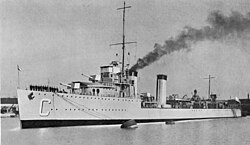
Key Facts
- Origin: Developed by the Spanish Navy, evolving from the British M class influence.
- International Sale: Two early vessels were sold to Argentina and renamed ARA Cervantes and ARA Juan de Garay.
- Top Speed: The ARA Cervantes recorded a speed of 39.76 knots during sea trials.
- Combat Role: Heavily involved in the Spanish Civil War, including the sinking of the cruiser Baleares.
- Longevity: The class remained in service in various capacities until 1982.
Service in the Spanish Navy
The Churruca-class destroyers were thrust into the chaos of the Spanish Civil War. At the onset of the rebellion in Morocco, these ships were deployed to the Gibraltar Strait to block rebel crossings. The history of the individual ships during this period was often volatile; for example, the Churruca initially joined the Nationalists and transported troops to Cádiz, only for its crew to arrest the officers and return the ship to the Spanish Republican Navy.
Major Naval Engagements
The class participated in several pivotal battles:
- Battle of Cape Espartel: The Almirante Ferrándiz was sunk by the Nationalist cruiser Canarias.
- Battle of Cape Cherchell: Involved the Lepanto, Almirante Valdes, Almirante Antequera, Gravina, Jorge Juan, and Escaño.
- Battle of Cape Palos: The Lepanto achieved a major victory by sinking the Nationalist cruiser Baleares using torpedoes.
Other vessels suffered varying fates. The Ciscar was sunk by aircraft in Gijón harbour, later refloated and used by rebels. The Sánchez Barcaiztegui was bombed and sunk in Cartagena in 1939, though it was later raised. The José Luis Díez was beached in Catalan Bay after an encounter with the Canarias and was interned in Gibraltar until the war's end.
Post-War Evolution
Following the war, the entire class was turned over to the Nationalists. During the 1950s, the first and second groups underwent modernization. The third group, completed after World War II, was modernized in the early 1960s and rerated as fast frigates (smaller, faster warships used for escort and patrol). The Liniers served as a training ship for midshipmen at the Naval Academy until it was finally stricken in 1982.
Service in the Argentine Navy
On June 10, 1926, while still under construction, the Churruca and Alcalá Galiano were sold to Argentina. They were renamed the ARA Cervantes (E1) and ARA Juan de Garay (E2), respectively, and commissioned on September 3, 1927.
These ships were modernized after World War II and reclassified as torpederos (destroyer escorts) in 1952. The Juan de Garay served as a training vessel from 1952 to 1959. The Cervantes had a more turbulent end; during the 1955 Revolución Libertadora, it was severely damaged by Gloster Meteor fighters while evacuating personnel from the Río Santiago naval base.
| Ship Name (Original/Argentine) | Key Event/Role | Final Status |
|---|---|---|
| Lepanto | Sank cruiser Baleares at Cape Palos | Modernized/Stricken |
| Almirante Ferrándiz | Sunk at Battle of Cape Espartel | Sunk in combat |
| ARA Cervantes | Damaged by Gloster Meteor fighters (1955) | Stricken 1961 |
| ARA Juan de Garay | Training vessel (1952-1959) | Stricken 1960 |
| Liniers | Midshipman training vessel | Stricken 1982 |
| Ciscar | Sunk in Gijón; later ran aground off Ferrol | Stricken 1958 |
Frequently Asked Questions
What was the original design inspiration for the Churruca class?
The class was originally intended to be part of the Alsedo class, which was based on the British M class destroyers.
Which Churruca-class ship was responsible for sinking the Baleares?
The Lepanto sank the Nationalist cruiser Baleares using torpedoes during the Battle of Cape Palos.
How did the ARA Cervantes perform during its sea trials?
The ARA Cervantes demonstrated impressive speed, reaching 39.76 knots (approximately 73.64 km/h) during its trials.
What happened to the third group of Spanish destroyers?
Their construction was delayed by the Spanish Civil War and World War II, meaning they were finished after the war and later rerated as fast frigates in the 1960s.
Why were the ARA Cervantes and ARA Juan de Garay reclassified in 1952?
In 1952, the Argentine Navy reclassified these two vessels as destroyer escorts, known in Spanish as torpederos.