Chuck Ruff: The Percussion Powerhouse of The Edgar Winter Group
In the world of classic rock, few drummers provided as steady and powerful a foundation as Chuck Ruff. Born on May 25, 1951, in Reno, Nevada, to Charles W. "Bill" Ruff II and Georgie Ruff, he developed a career defined by high-energy performances and collaborations with some of the most influential names in the genre.
Early Career and the Rise of Sawbuck
Ruff's professional journey began in his hometown of Reno. From 1968 to 1970, he was a member of the rock group Sawbuck, where he played alongside Ronnie Montrose and Bill Church. This early period established the musical chemistry that would lead to his future breakthroughs in the national music scene.
The Golden Era: The Edgar Winter Group
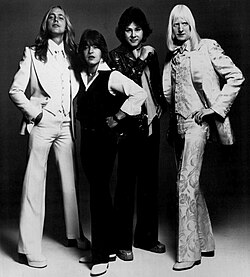
The pinnacle of Ruff's commercial success arrived in 1972 when he and Ronnie Montrose joined forces with Edgar Winter and Dan Hartman to form The Edgar Winter Group. This ensemble became a powerhouse of the 1970s rock era, blending technical skill with catchy hooks.
The band's 1973 album, They Only Come Out at Night, produced some of the most enduring hits of the decade. The track "Frankenstein" climbed to No. 1 in the U.S. in May 1973, while the single "Free Ride" reached No. 14 that same year. The group continued their momentum with the album Shock Treatment, which featured the charting singles "Easy Street" and the top 40 hit "River's Risin'."
Collaborations with Sammy Hagar and Later Projects
In 1977, Ruff transitioned to working with Sammy Hagar. He contributed his drumming talents to the 1979 albums Street Machine and Danger Zone. Notably, he performed on the song "Bad Reputation," which was featured in the film Up the Academy.
Returning to his roots in Reno, Nevada, Ruff remained active in the music community throughout his later years. He performed with the Chuck Ruff Group and The Max Volume Band, the latter of which saw him play drums on the 2007 album Illuminaughty. His final musical endeavor was a project known as Geezersläw.
Equipment and Legacy
Throughout his extensive career, Ruff was known for his loyalty to his gear, playing Gretsch Drums exclusively. His precision and power helped define the sound of several landmark albums and singles that remain staples of rock radio today.
| Period/Year | Band/Project | Notable Work/Achievement |
|---|---|---|
| 1968–1970 | Sawbuck | Early collaboration with Ronnie Montrose |
| 1972–1976 | The Edgar Winter Group | "Frankenstein" (No. 1) and "Free Ride" (No. 14) |
| 1977–1979 | Sammy Hagar | Albums Street Machine and Danger Zone |
| 2007 | The Max Volume Band | Album Illuminaughty |
Key Facts
- Birth: May 25, 1951, in Reno, Nevada.
- Major Hit: Drummed on "Frankenstein," which hit No. 1 in the U.S. in 1973.
- Key Collaborators: Edgar Winter, Ronnie Montrose, and Sammy Hagar.
- Preferred Gear: Used Gretsch Drums throughout his entire career.
- Film Contribution: Performed on "Bad Reputation" for the movie Up the Academy.
Frequently Asked Questions
Which band gave Chuck Ruff his biggest commercial success?
Chuck Ruff achieved his greatest success with The Edgar Winter Group, particularly with the 1973 album They Only Come Out at Night.
What are some of the most famous songs Chuck Ruff played on?
He is best known for playing on the No. 1 hit "Frankenstein" and the top 15 hit "Free Ride," as well as "River's Risin'" and "Easy Street."
Did Chuck Ruff work with Sammy Hagar?
Yes, Ruff joined Sammy Hagar in 1977 and performed on the 1979 albums Street Machine and Danger Zone.
What brand of drums did Chuck Ruff use?
Chuck Ruff played Gretsch Drums throughout his professional career.
Where did Chuck Ruff spend his later musical years?
He returned to Reno, Nevada, where he performed with the Chuck Ruff Group, The Max Volume Band, and his final project, Geezersläw.