Christmas Rose: The Winter-Blooming Beauty and History of Helleborus niger
As the depths of winter settle in and most garden life lies dormant, one striking plant defies the frost to offer a burst of color. Known commonly as the Christmas rose or black hellebore, Helleborus niger is an evergreen perennial that has long captivated gardeners and historians alike. Despite its name, this plant is not a true rose; it belongs to the buttercup family, Ranunculaceae.
Botanical Profile and Taxonomy
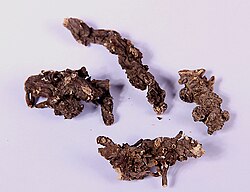
First described by the renowned botanist Carl Linnaeus in 1753, Helleborus niger is a member of the genus Helleborus, which contains approximately 20 species. The specific name niger, meaning "black," is believed to refer to the color of the plant's roots.
There are two recognized subspecies of this plant:
- H. niger subsp. niger: Typically found in mountainous regions across Switzerland, southern Germany, Austria, Slovenia, Croatia, and northern Italy.
- H. niger subsp. macranthus: Found in northern Italy and adjacent parts of Slovenia, this subspecies is noted for its larger flowers, which can reach up to 9 cm (3.75 inches) across.
Physical Characteristics
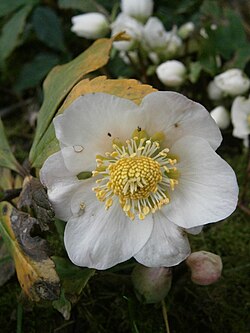
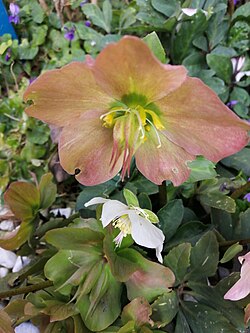
The plant is characterized by dark, leathery, pedate leaves (leaves divided into lobes arranged like a bird's foot) carried on stems reaching 23–30 cm in height. Its large, flat flowers emerge from midwinter to early spring. While typically white, these blooms may occasionally feature a pink tinge, pink or green-flushed petal tips, and a prominent yellow central boss.
Key Facts
- Scientific Name: Helleborus niger
- Family: Ranunculaceae (Buttercup family)
- Bloom Period: Midwinter to early spring
- Toxicity: Highly poisonous; all parts are toxic if ingested or if sap touches skin.
- Preferred Soil: Moist, humus-rich, and alkaline.
- Hardiness: Awarded the Royal Horticultural Society's Award of Garden Merit (AGM) H4.
Natural Distribution and Habitat
In the wild, Helleborus niger thrives in various mountainous terrains. Its range extends from the eastern northern Alps and southern Alps to the Apennines and the northern Dinaric Alps. It is a resilient species, observed at elevations as high as 1,900 meters. In Germany, it is native specifically to Bavaria, though it is not indigenous to the Allgäu Alps.
Horticulture and Cultivation
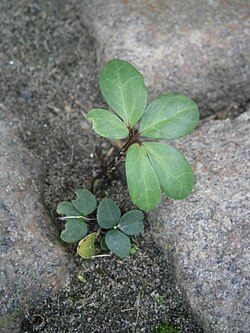
The Christmas rose is a staple of the traditional cottage garden due to its unique winter flowering habit. However, it can be demanding to grow. It does not tolerate acidic soil, poor/dry conditions, or full sun. Instead, it prefers dappled shade and moist, alkaline, humus-rich soil. Gardeners can improve heavy clay or light sandy soils by digging in leaf-mould, and can "sweeten" acidic soils by adding lime.
Notable Cultivars and Hybrids
Since the 1950s, the cultivar 'Potter's Wheel' has been highly regarded for its exceptionally large flowers. Other notable cultivars include 'Marion' (a double-flowered variety) and 'Praecox' (known for early flowering).
Plant breeders have also worked to create hybrids to expand the color palette. Some confirmed hybrids include:
- Helleborus 'Walberton's Rosemary': A pink-flowered hybrid between H. niger and oriental hellebores.
- H. × nigercors: A tough hybrid between H. niger and H. argutifolius, prized as a cut flower.
- H. × ericsmithii: A hybrid combining the hardiness of H. niger with the leaf and flower colors of H. lividus.
- H. × ballardiae: A cross between H. niger and H. lividus.
Toxicity and Safety Warnings
It is vital to note that all parts of the Christmas rose are toxic. This toxicity is a defense mechanism against herbivores and is caused by various glycosides (organic compounds that can act as toxins).
Aerial and Root Toxins
The leaves, stems, and flowers contain ranunculin and ranuncoside. When the plant tissue is damaged, these break down into protoanemonin, a toxin that can cause skin, eye, and mucosal irritation. Ingestion can lead to mouth and throat blistering, gastroenteritis, and vomiting.
The roots contain Hellebrin, a bufadienolide with cardiac activity. While less toxic than the glycosides found in Digitalis, its degradation products can interfere with the heart's ion channels, potentially leading to dangerous arrhythmias.
Folklore and Historical Medicinal Use
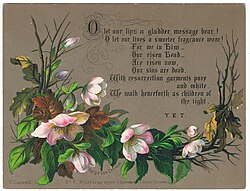
The name "Christmas rose" is tied to legend; one tale suggests the flower grew from the tears of a young girl who had no gift for the Christ child. Another legend links its blooming to the Abbey in England, suggesting its appearance near January 6th (the old Julian calendar Christmas) was an omen so significant it influenced England's adoption of the Gregorian calendar.
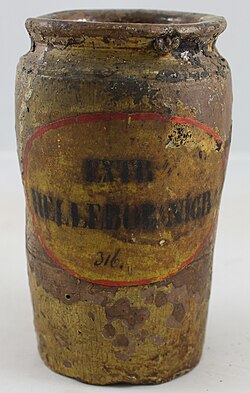
In the Middle Ages, the plant was used to ward off evil, bless animals, and protect against witches. Historically, "black hellebore" was used by ancient physicians like Hippocrates to treat ailments such as melancholy, gout, and epilepsy. However, modern research suggests that the lethal reputation of black hellebore in antiquity may have resulted from preparations containing other species, such as Helleborus viridis, rather than H. niger itself.
Summary of Helleborus niger
| Feature | Details |
|---|---|
| Common Names | Christmas rose, Black hellebore |
| Flower Color | White, occasionally pink or green-flushed |
| Soil Preference | Alkaline, moist, humus-rich |
| Light Requirement | Dappled shade |
| Toxicity Level | High (contains ranunculin and hellebrin) |
Frequently Asked Questions
Is the Christmas rose a true rose?
No. Despite its common name, it belongs to the Ranunculaceae (buttercup) family, not the Rosaceae (rose) family.
Why is it called "black" hellebore?
The name niger (black) is thought to refer to the color of the plant's roots.
Can I grow Christmas rose in full sun?
No, full sun is unsuitable. The plant prefers dappled shade and moist, alkaline soil.
Is Helleborus niger safe for pets and children?
No. All parts of the plant are toxic if ingested, and the sap can cause skin and eye irritation upon contact.
When does the Christmas rose bloom?
It is a winter-blooming plant, typically flowering from midwinter through early spring.