Christianity in Lebanon: History, Demographics, and Political Influence
Lebanon holds a unique position in the Middle East, boasting the highest proportion of Christians of any country in the region. This presence is not merely a matter of faith but is deeply woven into the nation's political fabric, historical identity, and social structure. From the secluded mountain retreats of the Maronites to the urban centers of Beirut, the Christian community has played a pivotal role in shaping the modern Lebanese state.
The identity of Lebanese Christians is often characterized by a tension between Arabism (identification with the Arab world) and Lebanism, a philosophy that emphasizes the nation's distinct Mediterranean and Phoenician heritage.
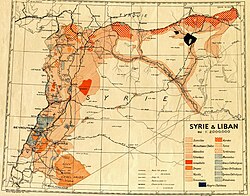
Key Facts
- Highest Proportion: Lebanon has the largest percentage of Christians in the Middle East.
- Political Power-Sharing: Under the National Pact, the President of the Republic must always be a Maronite Christian.
- Major Denominations: The Maronite Church is the largest Christian group, followed by the Greek Orthodox and Melkite Greek Catholic Churches.
- Parliamentary Balance: The Lebanese Parliament is split equally, with 64 seats for Christians and 64 for Muslims.
- Demographic Stability: Registered voter data from 2014 to 2022 shows a stable Christian population share of approximately 37%.
Historical Foundations and the State of Lebanon
The history of Christianity in Lebanon is marked by a quest for autonomy. The Maronites, facing persecution in the seventh century, sought refuge in the rugged mountains and valleys of Lebanon. This isolation allowed them to develop a distinct cultural and religious identity, led by the Maronite patriarch.
Following World War I, ambitious Maronite leaders, including Patriarch Elias Peter Hoayek, advocated for the creation of a sovereign state. This led to the establishment of Greater Lebanon by France in 1920, reviving the entity of the Principality of Lebanon (1515–1840).
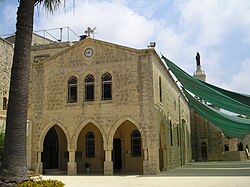
The National Pact and Confessionalism
To maintain stability in a multi-religious society, the 1943 National Pact—an unwritten agreement between Maronite President Bshara el-Khoury and Sunni Prime Minister Riad as-Solh—established a confessional power-sharing system. This system distributed key government roles by denomination: the President is a Maronite, the Prime Minister is a Sunni Muslim, and the Speaker of Parliament is a Shi'a Muslim.
While the pact acknowledged Lebanon's "Arab face," it stopped short of defining it as having a purely Arab identity, allowing for the preservation of its unique Mediterranean character.
Demographics and Distribution
Determining the exact size of the Christian population has been a subject of long-standing dispute. Estimates vary, with the CIA World Factbook suggesting 33.7% in 2018, while other estimates from 2012 placed the figure at 40.5%.
Official voter registration data provides a more granular look at the community's growth and distribution between 2014 and 2022.
| Denomination | 2014 Population | 2022 Population | Numerical Growth | % Growth |
|---|---|---|---|---|
| Maronites | 701,920 | 797,174 | +95,254 | 11.95% |
| Orthodox | 270,180 | 312,725 | +42,545 | 13.60% |
| Melkites | 167,736 | 210,541 | +42,805 | 20.33% |
| Other Christians | 159,348 | 189,872 | +30,526 | 16.01% |
| Total | 1,299,175 | 1,510,305 | +211,130 | 13.97% |
Regional Concentration
The distribution of Christians varies significantly by governorate. The Keserwan-Jbeil Governorate remains a stronghold, with Christians making up approximately 87.92% of its population as of 2022. In contrast, the Nabatieh Governorate has the lowest Christian concentration at roughly 12.22%.
Major Christian Denominations
Maronite Catholic Church
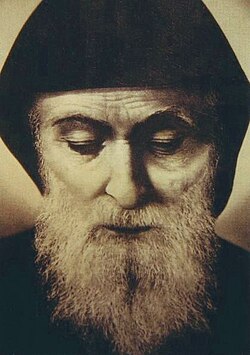
The Maronites are the most influential Christian group in Lebanon. Historically isolated in the mountains, they developed a semi-autonomous status under French protection during the 19th century. This culminated in the 1860 Mount Lebanon Mutasarrifate, a Christian-governed Ottoman district.
Greek Orthodox Church of Antioch
The Greek Orthodox community maintains a significant presence across Lebanon, particularly in urban centers and the Beqaa region. They are represented in the Lebanese Parliament with 14 dedicated seats.
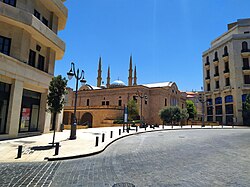
Melkite Greek Catholic Church
The Melkites emerged as a distinct group in 1724 following a split from the Greek Orthodox Church over the election of the Patriarch of Antioch. While they accept Catholic doctrines from the Holy See, they retain the Byzantine rite and ancient rituals, utilizing both Arabic and Greek.
Other Denominations and Minorities
- Armenian Apostolic and Catholic Churches: Significant communities resulting from the Armenian diaspora.
- Protestantism: Including the Lebanese Baptist Evangelical Convention, founded in 1955.
- Coptic Orthodox Church: An ancient church established by Saint Mark; ethnic Copts in Lebanon are estimated at 3,000–4,000.
- Other groups: Including the Syriac Catholic, Syriac Orthodox, Chaldean Catholic, and Latin Catholic Churches.
Political Challenges and Internal Conflict
The political role of Christians was further shaped by the Ottoman millet system, which granted religious communities autonomous governance. However, the 20th century brought internal strife. Rivalries between militia leaders and differing foreign alignments led to violent clashes.
A notable rift occurred in 1977 within the Lebanese Front between the Lebanese Phalanges (Kataeb), who sought strategic alignment with Israel, and the Marada Movement, who remained anti-Zionist and aligned with Syria. This period of inter-Christian violence saw the forced integration of various militias, such as Dany Chamoun’s Tiger Militia, into the Lebanese Forces under Bashir Gemayel.
Frequently Asked Questions
Which Christian denomination is the largest in Lebanon?
The Maronite Catholic Church is the largest Christian denomination in Lebanon, holding the highest number of parliamentary seats and the presidency.
What is the National Pact of 1943?
The National Pact is an unwritten agreement that established a confessional power-sharing system in Lebanon, reserving the presidency for a Maronite Christian, the premiership for a Sunni Muslim, and the speakership of parliament for a Shi'a Muslim.
How many seats do Christians hold in the Lebanese Parliament?
Christians hold 64 seats in the Lebanese Parliament, which is equal to the 64 seats held by Lebanese Muslims.
What is the difference between Arabism and Lebanism?
Arabism is the identification of Lebanon as part of the broader Arab world, while Lebanism emphasizes a unique national identity rooted in Mediterranean and Phoenician heritage.
What is the Melkite Greek Catholic Church?
The Melkites are a Catholic church that split from the Greek Orthodox Church in 1724. They follow the Byzantine rite and use Arabic and Greek in their liturgy while remaining in communion with the Holy See.