Chinookan Culture: Social Hierarchy, Traditions, and Linguistic History
The Chinookan peoples were a sophisticated society of the Pacific Northwest, characterized by their settled lifestyle and deep connection to the coastal environments of Oregon and Washington. Unlike migratory groups, the Chinook established stable communities supported by the region's abundant natural resources, allowing for the development of a complex social structure and a rich oral tradition.
Key Facts
- Diet: Primarily based on salmon, supplemented by elk, nuts, seeds, and roots.
- Housing: Lived in large red cedar plank longhouses accommodating over 50 relatives.
- Social Structure: A stratified society divided into distinct castes, including shamans, warriors, and traders.
- Distinctive Practice: Head binding was used by the elite to signify high social status.
- Documentation: Significant cultural and linguistic records were preserved by anthropologists Franz Boas and George Gibbs.
Societal Structure and Daily Life
The Chinookan society was defined by social stratification, a system where the population was divided into castes of varying status. The upper castes—composed of successful traders, warriors, and shamans—represented a minority of the population. These elites maintained their status through social discrimination, which included limiting interactions with commoners and forbidding children from different social groups to play together.
In some tribes, the practice of slavery was adopted from northern Pacific Northwest tribes. Captives taken during warfare served as slaves and were often used to perform thefts for their masters. This arrangement allowed the high-status elite to benefit from stolen goods while avoiding the act of thievery themselves, which they considered unworthy of their rank.
The Practice of Head Binding
One of the most striking markers of social hierarchy was head binding. To distinguish the elite from the commoners, parents would flatten the foreheads and tops of their infants' skulls. This process began when the child was approximately three months old and continued until they reached one year of age, using boards to apply pressure.
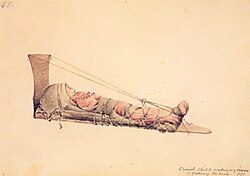
This physical modification served as a permanent sign of rank; those with flat heads held a higher status than those with round heads. This distinction was so ingrained that individuals with flattened skulls refused to enslave others who bore the same mark, further cementing the association between a round head and servility. Because of this custom, early European explorers referred to them as the "Flathead Indians."
Environment and Architecture
Living along the Pacific coast, the Chinook leveraged the rich biodiversity of their territory. They were expert fishermen and elk hunters, with salmon serving as the primary mainstay of their diet. While men hunted and fished, women gathered and processed various roots, seeds, and nuts.
Because the Chinook were settled and possessed ample resources, they experienced relatively little conflict over land compared to migratory tribes. Their primary dwellings were longhouses—massive structures built from red cedar planks. These homes typically measured between 20 to 60 feet in width and 50 to 150 feet in length, often housing more than fifty people related through extended kinship.
| Category | Details |
|---|---|
| Primary Food Source | Salmon and Elk |
| Housing Material | Red Cedar Planks |
| Elite Status Marker | Flattened Skull (Head Binding) |
| Social Castes | Shamans, Warriors, Traders, and Commoners |
| Longhouse Capacity | 50+ people per household |
Preserving the Chinookan Legacy
Much of what is known about the Chinookan people today comes from the work of 19th-century anthropologists who sought to document their language and folklore.
The Contributions of Franz Boas
Between 1890 and 1891, Franz Boas spent summers in Oregon and Washington collecting indigenous narratives. His work resulted in several key publications:
- The Journal of American Folk-Lore (1888): Featured Chinook songs provided in both the original language and English translation.
- Native Legends of Oregon and Washington Collected (1893): A comprehensive collection of folklore and legends.
- Chinook Texts (1894): A reference book detailing the myths, customs, beliefs, and historical tales as told by the Chinookan people.
The Linguistic Work of George Gibbs
Anthropologist George Gibbs focused on the linguistic aspects of the culture, producing the "Alphabetical Vocabulary of the Chinook Language." Because the Chinookan population had dwindled by the time of his research, Gibbs gathered words from various tribes and relied heavily on translations provided by traders. He was assisted in this effort by Robert Shortess, Solomon H. Smith, and A. C. Anderson.
Frequently Asked Questions
What was the purpose of head binding among the Chinook?
Head binding was used as a visual marker of social status. A flattened forehead indicated that the individual belonged to the elite caste, distinguishing them from commoners who had round heads.
What did the Chinookan people eat?
Salmon was the most important part of their diet. They also hunted elk and gathered various seeds, nuts, and roots from the surrounding environment.
How were Chinook longhouses constructed?
Longhouses were built using planks made from red cedar trees. They were large communal structures, often reaching up to 150 feet in length, and housed extended family groups.
Who were the primary anthropologists who documented the Chinook?
Franz Boas and George Gibbs were the two most prominent figures. Boas focused on folklore, songs, and myths, while Gibbs focused on creating a vocabulary of the Chinook language for trading purposes.
How did the Chinook view slavery?
Slavery was a practice borrowed from northern tribes. Captives were taken during war and used to perform tasks—such as thievery—that the high-status elite considered beneath their dignity.