Chinese Cotton Textile Industry: A History of Growth, Conflict, and Recovery
The evolution of the cotton textile industry in China is a saga of rapid industrialization, foreign competition, and resilience through war. From the late 19th century, when foreign imports first reshaped rural weaving, to the modern era of market reform, the industry has served as a mirror to China's broader economic and political transformations.
Establishment and Early Foreign Influence
In the late 1800s, the influx of cotton yarn from British India created a booming market for weavers in northern China's countryside. Foreign investors were drawn to the region by several strategic advantages: a vast consumer market, low transport costs, abundant raw materials, and the availability of cheap labor with longer working hours.
The first foreign enterprises emerged immediately following the Sino-Japanese War of 1904–05, appearing shortly after the first domestic Chinese factories. Due to the peace treaty ending the conflict, foreign companies enjoyed significant advantages over native firms, including exemptions from tariff duties and fewer political restrictions. While the British were the first to establish a presence, Japanese enterprises followed closely behind.
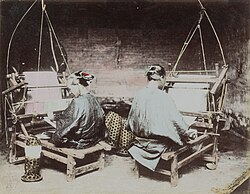
Rapid Expansion and Technological Shifts
World War I acted as a catalyst for growth. As imports of Western manufactured goods ceased, the cotton industries in both China and Japan expanded rapidly to meet Asian demand. Initially, the sector relied entirely on machinery and accessories imported from the United States and Britain, establishing a 20th-century pattern of importing technology to export finished goods.
By the 1920s, the technological landscape shifted. Japan became the primary supplier of machinery, and China began producing its own equipment. This led to the birth of a domestic textile-machine-tools industry that eventually grew large enough to supply neighboring countries.
The Struggle for Market Dominance
By the 1930s, a stark contrast existed between Chinese and Japanese mills. Although Chinese mills possessed greater total capacity, Japanese-owned mills produced one-third of the cotton yarn and half of the cotton goods in China. This dominance was driven by superior technology, greater capital, and stable financial backing, which allowed Japanese firms to survive the Great Depression more effectively than their Chinese counterparts, who struggled with management inefficiency and financial weakness.
In the industrially significant region of Shandong, the Japanese leveraged infrastructure previously built by the Germans. Utilizing existing ports, electric power, and local mechanical knowledge, they quickly established seven modern spinning mills and implemented electric-powered weaving machines to maximize efficiency.
Domestic Efforts for Improvement
In 1934, the National Economic Council of China created the Cotton Industry Commission to upgrade raw cotton quality and refine spinning, weaving, and dyeing techniques. However, high debt and a lack of capital kept production costs high. In 1936, Chinese mill owners began moving operations inland to be closer to raw materials and rural markets in an attempt to lower costs.
Impact of the Sino-Japanese War
The outbreak of war in July 1937 halted dramatic expansion plans. At the start of the conflict, the industrial landscape was divided as follows:
- Chinese Ownership: 2.75 million spindles and 25,500 looms.
- Japanese Control: 2.38 million spindles and 33,800 looms.
- British Control: 220,000 spindles and 4,000 looms.
The war devastated the industry, particularly around Shanghai, where 44% of Chinese mills were located. Because fighting began so suddenly, 60 Chinese-owned mills—representing roughly 70% of their manufacturing equipment—were lost. While some equipment was successfully moved inland to areas like Wuhan and Honan, many Shanghai mills were either seized by the Japanese or converted into military headquarters and hospitals.
The Strategy of "Cooperative Management"
Japanese forces attempted to maintain production through a "cooperative management" system. Under this arrangement, Japanese managers would run the mills and take 51% of the profits, while Chinese owners were forced to bear all repair costs. Most Chinese owners rejected these terms.
The Legacy of the Rong Family
Rong Zongjing and Rong Desheng, known as the "cotton and flour kings," operated a massive empire including ten Shenxin textile mills. By the mid-1930s, they controlled nearly 20% of the spindles in Chinese-owned mills. The war hit them hard; by August 1937, they had lost five of their seven Shanghai mills to bombing or seizure.
To protect their remaining two mills in the neutral International Settlement, the Rongs used a deceptive strategy: they registered as foreign entities, "leased" the mills to foreign owners, and hired fake foreign managers to fly a foreign flag. Despite the chaos, these mills remained profitable due to high demand and low supply.
Following the eruption of the Pacific War, the Japanese seized these remaining mills as enemy property. Eventually, some mills were returned to Chinese industrialists who agreed to publicly support the Japanese occupation. To survive raw cotton shortages caused by Japanese control, the Rongs turned to the black market and rented equipment to small rural workshops to evade taxes and controls.
Post-War Recovery and Transition
China finally gained full ownership of its textile industry after Japan's defeat in 1945. However, the victory came with significant challenges. Lack of maintenance during the war meant that by 1947, efficiency was only 65% to 80% of prewar levels, and total output was just 40% of 1937 levels.
The government established the Chinese Textile Industries Corporation (CTIC), taking over 40 mills to clothe the army and reduce the budget deficit. This resulted in the state controlling 50% of the industry. While these government mills were efficient due to previous Japanese maintenance, the state focused on reaping profits rather than expanding capacity.
Private mills faced inflation and a lack of foreign exchange for machinery. As the Chinese Communist Party rose to power, many industrialists moved their operations to Hong Kong, shifting the center of development.
Modern Reform and Opening Up
During the era of Reform and Opening Up, China transitioned the sector toward market activity. The Ministry of the Textile Industry was abolished and replaced by the Association of the Textile Industry, a non-governmental body typically led by a retired deputy minister from the Ministry of Industry and Information Technology.
Key Facts
- Foreign Entry: British and Japanese firms entered China after the 1904–05 Sino-Japanese War, benefiting from tariff exemptions.
- Technological Shift: The industry moved from relying on British/American machinery to Japanese and eventually domestic Chinese tools.
- War Losses: Approximately 70% of Chinese-run manufacturing equipment was lost in the Shanghai region during the 1937 conflict.
- The Rong Empire: The Rong brothers once controlled nearly 20% of all spindles in Chinese-owned textile mills.
- State Control: Post-WWII, the CTIC brought 50% of the textile industry under government control.
| Ownership | Spindles (Millions) | Looms (Count) |
|---|---|---|
| Chinese | 2.75 | 25,500 |
| Japanese | 2.38 | 33,800 |
| British | 0.22 | 4,000 |
Frequently Asked Questions
Why did foreign companies prefer operating in China over exporting?
Foreign interests were attracted by the massive domestic market, the availability of cheap raw materials and labor, longer allowable working hours, and lower transportation costs compared to shipping finished goods from abroad.
How did Japanese mills maintain an advantage over Chinese mills in the 1930s?
Japanese mills possessed superior technology, more capital, and more stable financial backing. In regions like Shandong, they also utilized existing German-built infrastructure and electric power to increase production efficiency.
What was the "cooperative management" system?
It was a proposal by Japanese forces where they would manage Chinese mills and take 51% of the profits, while the original Chinese owners were required to pay for all repairs. Most owners rejected this system.
How did the Rong family protect their mills during the war?
They registered their remaining Shanghai mills as foreign entities, hired fake foreign managers, and flew foreign flags to seek protection within the neutral International Settlement.
What happened to the textile industry after the 1945 victory?
China gained ownership of efficient Japanese mills, but output remained low (40% of 1937 levels) due to war damage and poor maintenance. The government formed the CTIC to control 50% of the industry to supply the army and reduce deficits.
Where did many mill owners go after the rise of the Chinese Communist Party?
Many mill owners moved their operations to Hong Kong to ensure their survival, which sparked a new stage of textile development in that region.