Chilean Air Force: History, Fleet, and Strategic Operations
The Chilean Air Force (Spanish: Fuerza Aérea de Chile, or FACh) serves as the aerial warfare branch of the Chilean Armed Forces. With a legacy spanning nearly a century, the FACh is tasked with safeguarding Chilean airspace and providing critical logistical support across the country's diverse geography, from the peaks of the Andes to the frozen reaches of Antarctica.
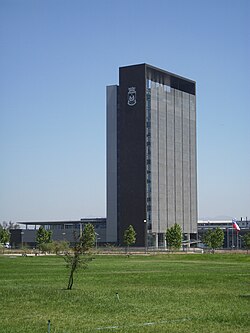
Headquartered at the Edificio Delphos in Cerrillos, Santiago, the force operates under the motto "Quam celerrime ad astra" (With full speed to the stars). Today, it maintains a sophisticated fleet of 193 aircraft and a dedicated force of 10,600 personnel.
Key Facts
- Founded: March 21, 1930.
- Personnel: 10,600 total, including 700 conscripts.
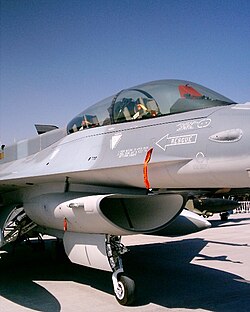
- Primary Combat Aircraft: F-16 Fighting Falcon and Northrop F-5.
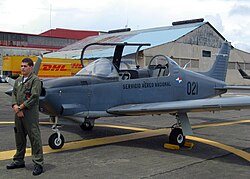
- Indigenous Industry: ENAER, responsible for the T-35 Pillán trainer.
- Headquarters: Edificio Delphos, Cerrillos, Santiago.
- Specialized Units: Comandos de Aviación (Air Force Special Forces).
Historical Evolution
The foundations of Chilean military aviation were laid in 1911 when Captain Manuel Ávalos Prado trained in France at the Louis Blériot flying school. This led to the establishment of the Military Aviation School in February 1913, which continues to operate today under Ávalos Prado's name.
Early milestones focused on long-distance flights and conquering the Andes using aircraft such as the Avro 504 and Bleriot XI. A significant precursor to the modern FACh was the Airmail Line of Chile, created in 1929, which eventually evolved into the nation's leading commercial airline. On March 21, 1930, the army and navy aviation elements were merged to create the National Air Force.
The FACh saw its first combat action during the 1931 sailors' rebellion in Coquimbo. Over the following decades, the force transitioned into the jet age in 1954, acquiring a diverse array of aircraft from the United States, United Kingdom, and France, including the Lockheed F-80C and the Mirage 5MA.
Throughout its history, the FACh has been involved in several critical national events, including the 1973 coup d'état and the Beagle conflict. In more recent years, it has shifted toward international cooperation, hosting the Salitre joint exercise in 2014 and participating in five United Nations peacekeeping missions.
Organizational Structure
The FACh is organized into several specialized commands to ensure operational readiness and logistical efficiency.
Combat Command of the Air Force
The Combat Command is divided into five Air Brigades, each headquartered at a strategic base:
- First Air Brigade: Los Cóndores Air Base (Iquique).
- Second Air Brigade: Pudahuel Air Base (Santiago).
- Third Air Brigade: El Tepual Air Base (Puerto Montt).
- Fourth Air Brigade: Chabunco Air Base (Punta Arenas), which includes the 19th Antarctic Exploration Squadron.
- Fifth Air Brigade: Cerro Moreno Air Base (Antofagasta).
Personnel and Logistics Commands
The Personnel Command manages education through the Air War Academy and the Air Force Polytechnical Academy, as well as health services via the General Hospital of the Air Force. The Logistics Command oversees maintenance, administration, and infrastructure.
Special Operations
The Comandos de Aviación (Air Force Special Forces) consist of up to 350 specialists. Their roles are comparable to US Air Force Combat Control Teams, focusing on assault, reconnaissance, Air Traffic Control, and command and communications.
Aviation Industry and ENAER
Chile maintains a significant level of aerospace autonomy through ENAER, its own aviation industry. ENAER is most famous for designing the T-35 Pillán trainer, based on the Piper PA-28R Saratoga, which has achieved international export success.
Beyond design, ENAER performs critical maintenance and modifications. Notably, Chile became the fifth country authorized to modify its own F-16 fleet under the Pacer Amstel programme. ENAER has also been in discussions with Brazil's Embraer to co-design a South American military transport plane.
Aircraft Inventory
The FACh operates a versatile fleet tailored for multirole combat, transport, and surveillance.
| Category | Model | Role | Origin |
|---|---|---|---|
| Combat | F-16 Fighting Falcon | Multirole | USA |
| Combat | Northrop F-5 | Light Fighter | USA |
| AEW&C | E-3 Sentry | Airborne Early Warning | USA |
| Transport | C-130 Hercules | Heavy Transport | USA |
| Tanker | KC-135 Stratotanker | Aerial Refueling | USA |
| Trainer | T-35 Pillán | Basic Trainer | Chile |
| UAV | Hermes 900 | Surveillance | Israel |
| Helicopter | UH-60 Black Hawk | Utility/Transport | USA |
Frequently Asked Questions
When was the Chilean Air Force officially founded?
The Fuerza Aérea de Chile was officially established on March 21, 1930, following the amalgamation of the army and navy aviation elements.
What is the role of ENAER in the Chilean Air Force?
ENAER is the national aviation industry that designs, assembles, and maintains aircraft. Its most notable achievement is the T-35 Pillán trainer aircraft.
Which aircraft does the FACh use for multirole combat?
The primary multirole combat aircraft in the fleet is the F-16 Fighting Falcon, supplemented by the Northrop F-5 light fighter.
Does the Chilean Air Force operate in Antarctica?
Yes, the FACh maintains a presence in Antarctica through the 19th Antarctic Exploration Squadron, based at the Fourth Air Brigade in Punta Arenas.
What are the Comandos de Aviación?
They are the Air Force Special Forces, a unit of up to 350 personnel specialized in assault, reconnaissance, and Air Traffic Control.