Chief of Staff: Roles and Responsibilities in Civilian and Military Contexts
The title Chief of Staff (or head of staff) represents a critical leadership position, though its meaning varies significantly depending on whether it is used in a civilian or military context. While the core of the role involves organization and support, the scale of authority and the nature of the duties differ between a corporate boardroom, a government palace, and a military headquarters.
Key Facts
- Civilian Role: Acts as a primary aide-de-camp, providing a buffer and strategic support to a high-ranking leader.
- Military Role: Often refers to the head of a complex organization or the senior officer managing a commander's staff.
- Global Community: Organizations like the Chief of Staff Association provide executive education for professionals in this role.
- Government Variation: Titles vary by country, ranging from "Principal Secretary" in India to "Cabinet Secretary" in the UK.
The Civilian Chief of Staff
In business and civilian government, a chief of staff serves as the primary aide-de-camp to a leader, such as a president or CEO. Rather than managing a department, they manage the leader's environment. They act as a buffer between the chief executive and the direct-reporting team, resolving disputes and solving problems before they ever reach the executive's desk.
The role is multifaceted, often described through several metaphors:
- Air Traffic Controller: Managing the flow of information and priorities for the leader and senior team.
- Integrator: Connecting different work streams to prevent organizational silos.
- Communicator: Linking the leadership team with the broader organization.
- Honest Broker: Providing a wide-ranging, truthful perspective without a personal organizational agenda.
Depending on the organization's size, a senior operational partner known as an Associate Chief of Staff (ACoS) may be hired to support the Chief of Staff (CoS).
Governmental Applications
Across global governments, the chief of staff is a pivotal political and administrative role. While the core function remains the same—supporting the head of state or government—the titles differ by region.
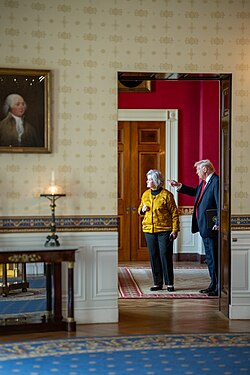
In the United States, the White House Chief of Staff is one of the most powerful positions in the executive branch, while members of Congress also employ chiefs of staff as their most senior staff members.
Other nations utilize different nomenclature. For example, India and Pakistan use the title Principal Secretary, while Germany utilizes the Head of the German Chancellery. France employs a more tiered system: the chef de cabinet manages the agenda, the directeur de cabinet handles political decisions, and the Secrétaire général de la présidence de la République serves as the de facto chief of staff and closest advisor to the President.
The Military Chief of Staff
In military organizations, the term "Chief of Staff" can be used in two distinct ways. First, it can refer to the overall leader of a national armed force or a specific branch (e.g., Chief of the Army Staff). Second, it refers to the senior staff officer who manages the operational staff for a high-ranking commander. In the latter case, the role is sometimes called a Principal Staff Officer (PSO).
International Military Structures
Many nations follow a similar structure where a top-level Chief of Defence (or Chief of the Defence Staff) oversees the various service chiefs. For instance, in the United Kingdom, the Chief of the Defence Staff (CDS) is the professional head of the British Armed Forces, assisted by a Vice-Chief of the Defence Staff.
The United States Military Model
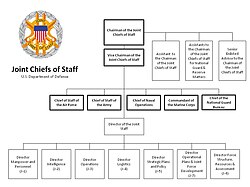
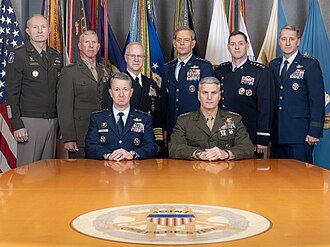
The U.S. utilizes the Joint Chiefs of Staff, led by the Chairman of the Joint Chiefs of Staff (CJCS). Below this level, each branch has its own Chief of Staff (e.g., Chief of Staff of the Army), who is a general (O-10) but remains subordinate to the CJCS.
In unified combatant commands, the Chief of Staff is typically a major general or rear admiral (O-8) who oversees directorates. In smaller commands, the role may be filled by a colonel or captain (O-6) who manages the general officer's command staff.
Summary of Chief of Staff Roles
| Context | Primary Focus | Key Responsibility | Example Title |
|---|---|---|---|
| Civilian/Corporate | Executive Support | Buffer, integrator, and confidant | Chief of Staff (CoS) |
| Government | Political Administration | Agenda management and policy coordination | Principal Secretary / Cabinet Secretary |
| Military (Strategic) | Force Leadership | Command and control of armed forces | Chief of the Defence Staff |
| Military (Operational) | Staff Management | Managing the commander's staff | Principal Staff Officer (PSO) |
Frequently Asked Questions
What is the difference between a civilian and military Chief of Staff?
A civilian Chief of Staff is primarily an aide and advisor who manages the executive's time and priorities. A military Chief of Staff can either be the top leader of an entire military branch or a senior officer responsible for managing the staff of a commanding general.
What does an "air traffic controller" mean in a corporate Chief of Staff context?
This metaphor refers to the Chief of Staff's ability to manage the flow of information, people, and projects entering the executive's office, ensuring that the leader focuses on the most critical priorities without being overwhelmed.
Who is the highest-ranking military Chief of Staff in the United States?
The Chairman of the Joint Chiefs of Staff (CJCS) is the highest-ranking officer, overseeing the Joint Chiefs of Staff and serving as the primary military advisor.
How does the French government structure its staff roles?
France uses a three-tier system: the chef de cabinet (agenda), the directeur de cabinet (political decisions), and the Secrétaire général de la présidence, who acts as the overall de facto chief of staff to the President.
What is an Associate Chief of Staff?
An Associate Chief of Staff (ACoS) is a senior operational role that serves as a partner to the primary Chief of Staff to help manage the workload of a large organization.