Chase Bank: A History of Growth, Mergers, and Financial Influence
Chase Bank, operating as JPMorgan Chase Bank, N.A., is a cornerstone of the American financial landscape. As the consumer and commercial banking subsidiary of the multinational holding company JPMorgan Chase, it stands as one of the "Big Four" banks in the United States. Headquartered at the McCoy Center in Columbus, Ohio, Chase provides a vast array of retail financial services, card services, and commercial banking solutions to millions of customers.
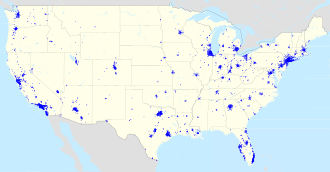
With a footprint that spans more than 100 countries and a unique presence in every contiguous U.S. state, Chase is a dominant force in global finance. As of 2023, the bank manages 18.5 million checking accounts and serves 25 million debit card users through a massive network of physical and digital touchpoints.
Key Facts

- Founded: September 1, 1799 (as The Manhattan Company).
- Parent Company: JPMorgan Chase.
- Leadership: Jamie Dimon (Chairman and CEO).
- Scale: Over 5,000 branches and 15,000 ATMs nationwide.
- Financials (2022): US$124.54 billion in revenue and US$42.12 billion in net income.
- Total Assets (2022): US$4 trillion.
- Workforce: 250,355 employees (as of 2022).
The Evolution of a Banking Giant

Foundational Roots: The Manhattan Company and Chase National Bank
The origins of Chase date back to September 1, 1799, with the founding of The Manhattan Company by John Thompson and Aaron Burr, the 3rd Vice President of the United States. For over 150 years, the company operated under this name until a pivotal shift in 1955.

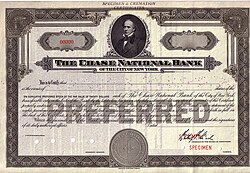
Parallel to this, the Chase National Bank was established in 1877. These two entities eventually merged in 1955 to form The Chase Manhattan Bank, combining their resources to expand their influence over various non-financial corporations.

Strategic Mergers and the Path to JPMorgan Chase
The latter half of the 20th century was defined by aggressive expansion. In 1985, Chase Manhattan entered Arizona by acquiring Continental Bank, and in 1991, it expanded into Connecticut via the acquisition of two insolvent banks.
A major turning point occurred in August 1996 when Chase Manhattan merged with Chemical Bank of New York. Although Chemical was the nominal survivor, the company retained the "Chase" name due to its stronger global brand recognition and a legal requirement in the original Chase charter. This was followed by the landmark acquisition of J.P. Morgan & Co. in December 2000, resulting in the creation of JPMorgan Chase.
Modern Expansion and Acquisitions
The 21st century saw further consolidation. In 2004, the merger with Chicago-based Bank One Corporation brought Jamie Dimon into the organization, who eventually became CEO in 2006. This merger established Chase as the largest credit card issuer in the U.S.
During the financial instability of 2008 and 2009, JPMorgan Chase acquired the deposits and most assets of Washington Mutual (WaMu) from the FDIC for $1.888 billion, as well as Bear Stearns. More recently, in May 2023, the bank acquired the assets of First Republic Bank.
Operational Reach and Infrastructure
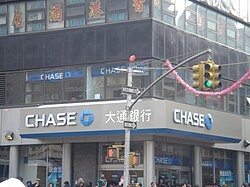
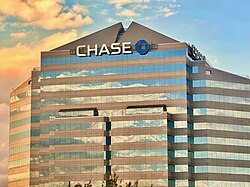
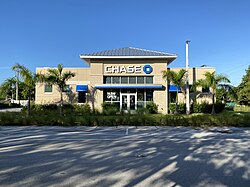
Chase maintains a massive physical presence to support its retail operations. From bustling hubs in Manhattan's Chinatown to corporate office centers in Delaware, the bank integrates traditional brick-and-mortar banking with modern financial technology.
The bank's growth has been supported by targeted acquisitions, such as the 2006 purchase of Collegiate Funding Services to build its student loan portfolio and the acquisition of The Bank of New York Co.'s retail network, which added 338 branches and 700,000 customers across several states.
Corporate Challenges and Controversies
Despite its success, Chase has faced significant legal and ethical challenges. Historical records indicate a controversial relationship with Nazi Germany between the late 1930s and 1941, involving the transfer of funds through South America despite U.S. executive orders.
In the modern era, the bank has paid approximately $16 billion in fines and settlements between 2011 and 2013. These penalties stemmed from various issues, including misleading investors, illegal flood insurance commissions, and wrongful foreclosures on military veterans.
The bank has also faced scrutiny over social and equity issues. A 2012-2018 analysis in Chicago revealed significant lending disparities between white and Black neighborhoods, leading CEO Jamie Dimon to pledge $600 million in new mortgages for Black homeowners in Chicago. Additionally, the bank paid $5 million in 2017 to settle a gender-based parental leave discrimination case.
Summary of Chase Bank Profile
| Category | Details |
|---|---|
| Parent Company | JPMorgan Chase |
| Headquarters | Columbus, Ohio, USA |
| Total Assets (2022) | US$4 trillion |
| Revenue (2022) | US$124.54 billion |
| Branch Network | 5,000+ branches / 15,000+ ATMs |
| Global Presence | 100+ countries |
Frequently Asked Questions
When was Chase Bank founded?
The bank's earliest predecessor, The Manhattan Company, was founded on September 1, 1799.
Who is the current CEO of Chase?
Jamie Dimon serves as the Chairman and CEO of JPMorgan Chase.
How did Chase become the largest credit card issuer in the U.S.?
This position was largely achieved following the merger with Bank One Corporation in 2004.
What is the relationship between Chase and JPMorgan?
Chase is the consumer and commercial banking subsidiary of the parent holding company, JPMorgan Chase & Co.
Does Chase operate in every U.S. state?
Yes, it is the only bank with a presence in all of the contiguous United States.