Charles H. Bonesteel III: The General Who Defined the Korean Border
General Charles Hartwell Bonesteel III was a distinguished American military leader whose strategic decisions helped shape the geopolitical landscape of East Asia. From his early days as an Eagle Scout to his high-level commands during the Cold War, Bonesteel's career was defined by leadership, academic excellence, and pivotal contributions to international stability.
Born in Plattsburgh, New York, on September 26, 1909, Bonesteel belonged to a lineage of military service. He was the son of Major General Charles Hartwell Bonesteel Jr. and the grandson of Major Charles H. Bonesteel Sr. This legacy of service would culminate in a career spanning nearly four decades within the United States Army.
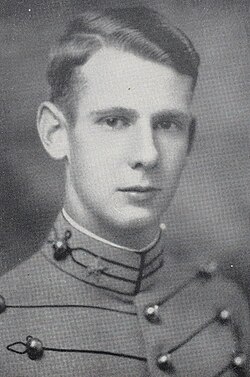
Early Life and Academic Excellence
Before entering the military, Bonesteel demonstrated leadership through the Boy Scouts of America, eventually earning the prestigious Distinguished Eagle Scout Award. His path to military leadership began at the United States Military Academy at West Point, where he graduated in 1931. It was during his time at West Point that his classmates bestowed upon him the lifelong nickname "Tick."
Following his graduation, Bonesteel furthered his education as a Rhodes Scholar at the University of Oxford, a distinction that underscored his intellectual depth alongside his tactical training.
A Pivotal Role in Post-WWII Diplomacy
During World War II, Bonesteel held several senior positions across the United States and Europe. However, one of his most enduring contributions occurred in August 1945. As the surrender of Japan approached, Bonesteel was part of a specialized group at the Pentagon—including General George A. Lincoln and Colonel Dean Rusk—tasked with drafting General Order No. 1.
This order was designed to define the specific areas of responsibility for American, Soviet, and Chinese forces. With Soviet troops moving through Manchuria into northern Korea, Bonesteel proposed the 38th parallel as the dividing line for the country. This proposal was cabled to the Soviets on August 15, 1945, and was accepted the following day, establishing a boundary that would have profound historical consequences.
Command and the Korean DMZ Conflict
In the postwar era, Bonesteel’s expertise transitioned into diplomatic and high-level command roles. He served as a special assistant to the Secretary of State and visited Saigon, South Vietnam, in 1958. His command trajectory included leading the 24th Infantry Division (1961–1962) and the VII Corps (1962–1963).
From 1966 to 1969, Bonesteel held a massive responsibility as the Commander of United States Forces Korea, Commander-in-Chief of the United Nations Command Korea, and Commanding General of the Eighth U.S. Army. During this tenure, he managed the complexities of the Korean DMZ Conflict, defending against North Korean infiltration and navigating the intense tensions following the Pueblo incident in January 1968.
Key Facts
- Full Name: Charles Hartwell Bonesteel III
- Nickname: "Tick"
- Military Rank: General
- Service Years: 1931–1969
- Major Conflicts: World War II and the Korean DMZ Conflict
- Key Achievement: Proposed the 38th parallel as the division of Korea in 1945
- Burial Site: Arlington National Cemetery
Summary of Military Service and Honors
| Category | Details |
|---|---|
| Major Commands | 24th Infantry Division, VII Corps, Eighth U.S. Army, U.S. Forces Korea |
| Primary Awards | Distinguished Service Medal (2), Legion of Merit (2) |
| International Honors | Honorary Officer of the Order of the British Empire, Croix de Guerre (France) |
| Education | West Point (1931), University of Oxford (Rhodes Scholar) |
Frequently Asked Questions
What was Bonesteel's most significant strategic contribution?
Bonesteel is credited with proposing the 38th parallel as the dividing line for Korea in August 1945, a decision that defined the areas of responsibility for American and Soviet forces following World War II.
What was the Korean DMZ Conflict?
The Korean DMZ Conflict (1966–1969) refers to the period of heightened tension and North Korean infiltration along the Demilitarized Zone, during which Bonesteel served as Commander of U.S. Forces Korea.
What honors did he receive for his service?
He was awarded the Distinguished Service Medal twice and the Legion of Merit twice. He also received international recognition, including the French Croix de Guerre.
Where is General Bonesteel buried?
General Bonesteel is buried at Arlington National Cemetery, where he rests near his father and grandfather.
How did he earn his nickname "Tick"?
The nickname "Tick" was given to him by his classmates during his time at the United States Military Academy at West Point.