The Maritime Legend of Chang Pogo: Master of the Yellow Sea
In the 9th century, the waters of the Yellow Sea were a perilous landscape of pirates and bandits. Amidst this instability, one man rose from humble beginnings to become the most powerful maritime figure in East Asia. Chang Pogo (787–841), a Silla native, transformed himself from a commoner into a legendary admiral, effectively controlling the vital trade routes between Silla, Heian Japan, and Tang China.
Through a combination of military brilliance, strategic political maneuvering, and a formidable private fleet, Chang Pogo established a maritime empire that left a lasting legacy on Korean history and culture. Today, he is remembered not just as a commander, but as a figure of mythic proportions.
Early Life and Rise in Tang China
Born as Kungbok, the son of a boatman, Chang Pogo’s early life was defined by physical prowess. His childhood name, Kungbok, translates to "a good archer," reflecting his early mastery of martial arts and swimming. However, due to his low social status, he realized that the rigid class structure of the Silla Kingdom would prevent him from ever becoming a general.
Seeking greater opportunities, he traveled to the Tang Dynasty (China), where he adopted the name Chang Pogo. Alongside his companion Jeong Yeon—a man legendary for his ability to swim long distances underwater—Chang excelled in horsemanship and spear combat. Their skills earned them military commissions as Junior Generals of the Wuning District in what is now Jiangsu province.
During his time in China, Chang witnessed the hardships faced by Silla subjects living abroad. These expatriates were frequently targeted by pirates and bandits who sold captives into slavery. Driven by a desire to protect his countrymen, Chang eventually returned to Silla around 825 with the intent to change the maritime landscape of the region.
The Establishment of Cheonghaejin
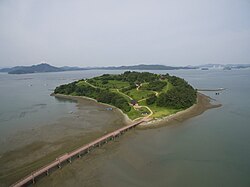
Upon his return, Chang Pogo petitioned King Heungdeok of Silla to establish a permanent maritime garrison to secure the Yellow Sea. In 828, the King granted him permission and an army of 10,000 men to form the Cheonghae Garrison (Cheonghaejin) on Wando Island.
This garrison became the epicenter of Chang's power. While nominally serving the Silla state, the garrison functioned effectively as a private force under Chang's absolute control. He became the primary arbiter of commerce and navigation in the region. His influence was so vast that even foreign travelers, such as the Japanese monk Ennin, relied on Chang’s maritime expertise to complete their pilgrimages to China.
Key Facts about Chang Pogo
- Lifespan: 787–841 AD.
- Primary Base: Cheonghae Garrison on Wando Island.
- Historical Role: Maritime commissioner and controller of Yellow Sea trade.
- Military Strength: Commanded a force of approximately 10,000 men.
- Legacy: Worshipped as a deity in Korea, China, Japan, and Vietnam.
Political Influence and the Path to Power
Chang Pogo’s military strength allowed him to exert significant influence over the volatile politics of the Silla court. Despite his success, he was often viewed with suspicion by the Silla aristocracy, who resented his rise from commoner origins to a position of immense authority.
In 839, Chang played a decisive role in a major political shift. He supported Kim Ujing (later King Sinmu) in seizing the throne from a usurper. By dispatching 5,000 men under the command of his advisor Jeong Yeon, Chang ensured Sinmu's victory. In recognition of this support, Chang was elevated to the position of Prime Minister.
Assassination and Death
The height of Chang's political involvement proved to be his downfall. He attempted to solidify his status by arranging a marriage between his daughter and King Munseong, the son of King Sinmu. This move incensed the Silla aristocratic factions, who viewed his growing influence as a threat to their traditional power.
In 841, Chang Pogo was assassinated at his headquarters in the Cheonghae Garrison. According to the Samguk sagi, an emissary named Yŏm Chang gained Chang's trust by pretending to be a refugee from the capital, only to attack him with a concealed knife during a shared meal of wine. Following his death, the Cheonghae Garrison was disbanded in 851.
Legacy in Culture and Modern Korea
Chang Pogo’s impact extends far beyond the 9th century. He has become a symbol of maritime strength and national pride in South Korea.
Modern Honors and References
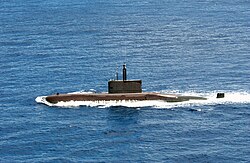
- Naval Tribute: The Republic of Korea Navy named its first Type 209 submarine the Admiral Chang Bogo.
- Anti-Piracy: The ROK Navy's "Cheonghae Anti-piracy Unit," formed to combat piracy off the coast of Somalia, is named after his historic garrison.
- Pop Culture: His life has been dramatized in films like Admiral Jang (1965) and television series such as Emperor of the Sea (2004).
- Mythology: In Korean shamanism, he is worshipped as a god, particularly on Jangdo island.
| Category | Details |
|---|---|
| Original Name | Kungbok (or Kungp'a) |
| Primary Title | Maritime Commissioner of Cheonghaejin |
| Key Achievement | Eliminated piracy and controlled Yellow Sea trade |
| Political Rank | Prime Minister of Silla |
| Year of Death | 841 AD |
Frequently Asked Questions
Why did Chang Pogo move to the Tang Dynasty?
Because he was born to a commoner family, the social hierarchy of Silla prevented him from rising to the rank of general. He moved to China to seek military opportunities and advancement.
What was the purpose of the Cheonghae Garrison?
The garrison was established to combat the pirates and bandits that were terrorizing Silla merchants and citizens traveling through the Yellow Sea, thereby securing maritime trade routes.
How did Chang Pogo die?
He was assassinated in 841 at his headquarters by Yŏm Chang, an emissary from the Silla court who used a concealed knife to attack him during a meeting.
Is Chang Pogo a real historical figure?
Yes. His life is documented in several historical records, including the Chinese New Book of Tang, the Japanese Shoku Nihon Kōki, and the Korean Samguk sagi.
What is the connection between Chang Pogo and modern South Korean naval units?
The South Korean Navy honors his legacy by naming a class of submarines after him and naming their anti-piracy unit in Somalia after his famous Cheonghae Garrison.